
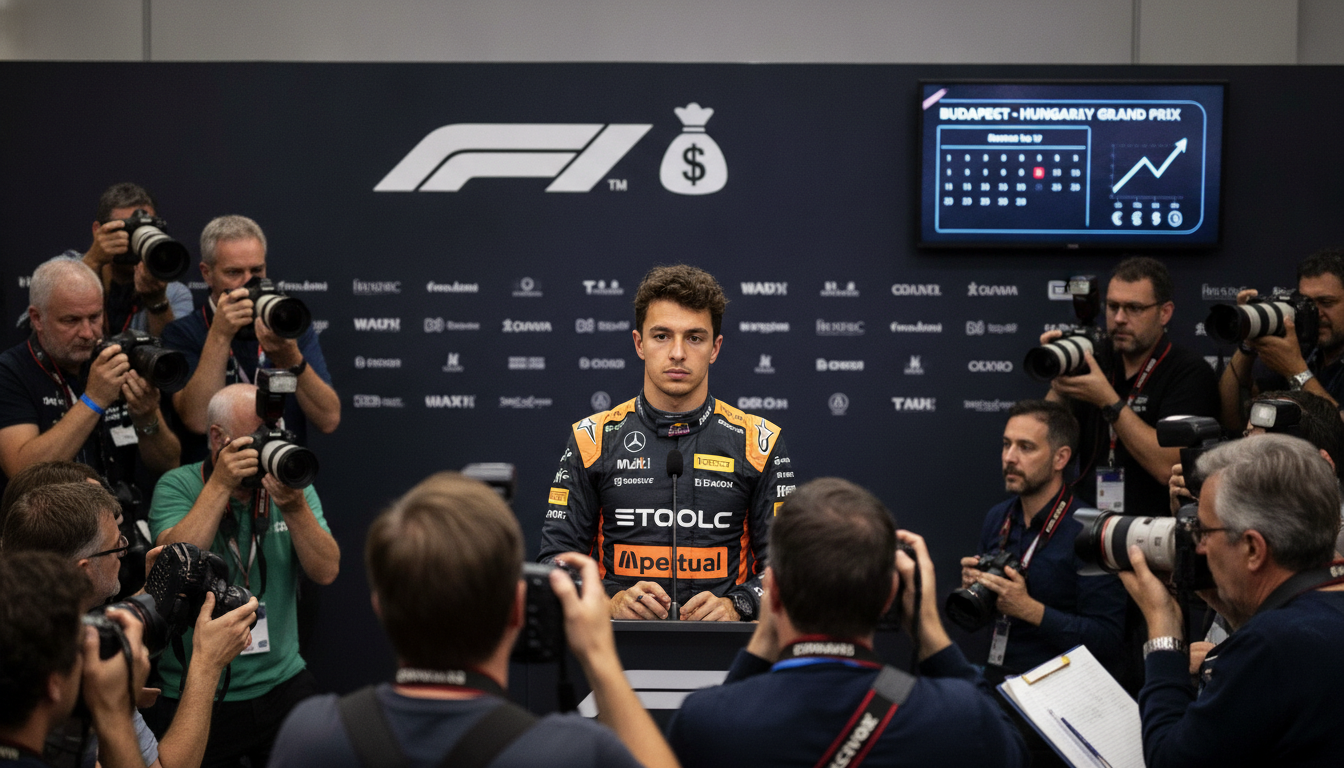
Lando Norris says F1 too business-driven as drivers rail against slower cars ahead of Hungarian GP
Lando Norris warns F1 has become too business-driven, saying new regulations have curbed speed. His remarks came as drivers voiced frustration ahead of the 2026 Hungarian Grand Prix.
Lando Norris criticised the direction of Formula One on the eve of the Hungarian Grand Prix, arguing commercial priorities have overtaken the sport’s competitive instincts. Norris said drivers feel sidelined in decisions that have, in their view, reduced on-track speed and made cars less enjoyable to race.
Norris: sport being shaped by business
Norris told reporters that Formula One’s recent rule changes reflect commercial compromises rather than improvements to racing quality. He suggested that decisions aimed at attracting manufacturers and boosting revenue have altered the character of the sport.
The McLaren world champion said drivers, who experience the cars and races daily, understand what makes competition compelling and safe. Norris argued that the balance has tipped toward financial objectives at the expense of driver input.
Drivers’ concerns over reduced speed
Several drivers have expressed frustration that new technical regulations have delivered slower lap times and a diminished driving experience. The complaints grew louder following the Belgian Grand Prix, where many drivers felt the updated package constrained performance.
Drivers say tweaks to power-unit proportions and aerodynamic rules have changed the car balance and reduced on-track excitement. Those voices have stressed that technical changes should prioritise racing quality as much as commercial appeal.
Audi’s entry and hybrid power-unit changes
The arrival of Audi this season, after its takeover of Sauber, has been cited as one factor behind some regulatory shifts. New rules increased the electrical contribution of the power unit, a change aimed at making the sport more attractive to manufacturers investing in electrification.
Organisers have already signalled revisions for 2027 intended to reduce the electrical share, reflecting ongoing debate about the correct technical direction. Teams and stakeholders continue to negotiate how to reconcile manufacturer interests with racing spectacle.
F1 management pushes back on criticism
Formula One’s commercial operators defended their approach, saying the sport’s growth has benefited teams and drivers alike. A spokesperson emphasised that on-track action remains the priority and that commercial decisions support a broader strategic outcome.
Management argues that increased revenues and manufacturer involvement deliver more resources, better competition across the grid and expanded global reach. That position, however, has done little to calm drivers who want a greater role in shaping the technical agenda.
Practice pace and the Hungarian order
On Saturday at the Hungaroring, Norris topped final practice with a best lap of 1:17.939, setting the tone for the weekend. He was listed as quickest ahead of Lewis Hamilton, with championship leader Kimi Antonelli third and Ferrari’s Charles Leclerc close behind.
McLaren team-mate Oscar Piastri and Mercedes’ George Russell were also competitive in the session, while Red Bull’s Max Verstappen and team-mate Isack Hadjar appeared further down the timesheets. The practice times provided a reminder that, even amid debate, teams and drivers are finding performance differentials to exploit.
Norris said that while he remains optimistic about the sport’s long-term appeal, he wants governance to prioritise racing quality. He called for greater driver involvement in technical discussions so changes reflect what makes the sport engaging for both competitors and fans.
Fan base split and the influence of media
Norris also highlighted a cultural shift among the sport’s audience since the debut of high-profile media such as the Netflix series that popularised many drivers. He noted that a newer, more personality-focused fan base sometimes views Formula One through the lens of individual storylines rather than the technical nuances of racing.
That divergence, he said, complicates decisions over rule-making because organisers must balance traditionalists’ expectations with the interests of a growing, entertainment-oriented audience. The comment underscores tension between commercial expansion and preserving the sport’s core competitive identity.
The debate over F1’s future — whether to prioritise commercial expansion, manufacturer involvement or the driving experience — is likely to persist as teams, drivers and commercial partners continue negotiations. For now, the paddock moves to the Hungarian Grand Prix with the sport’s balance of interests firmly in the spotlight.
