
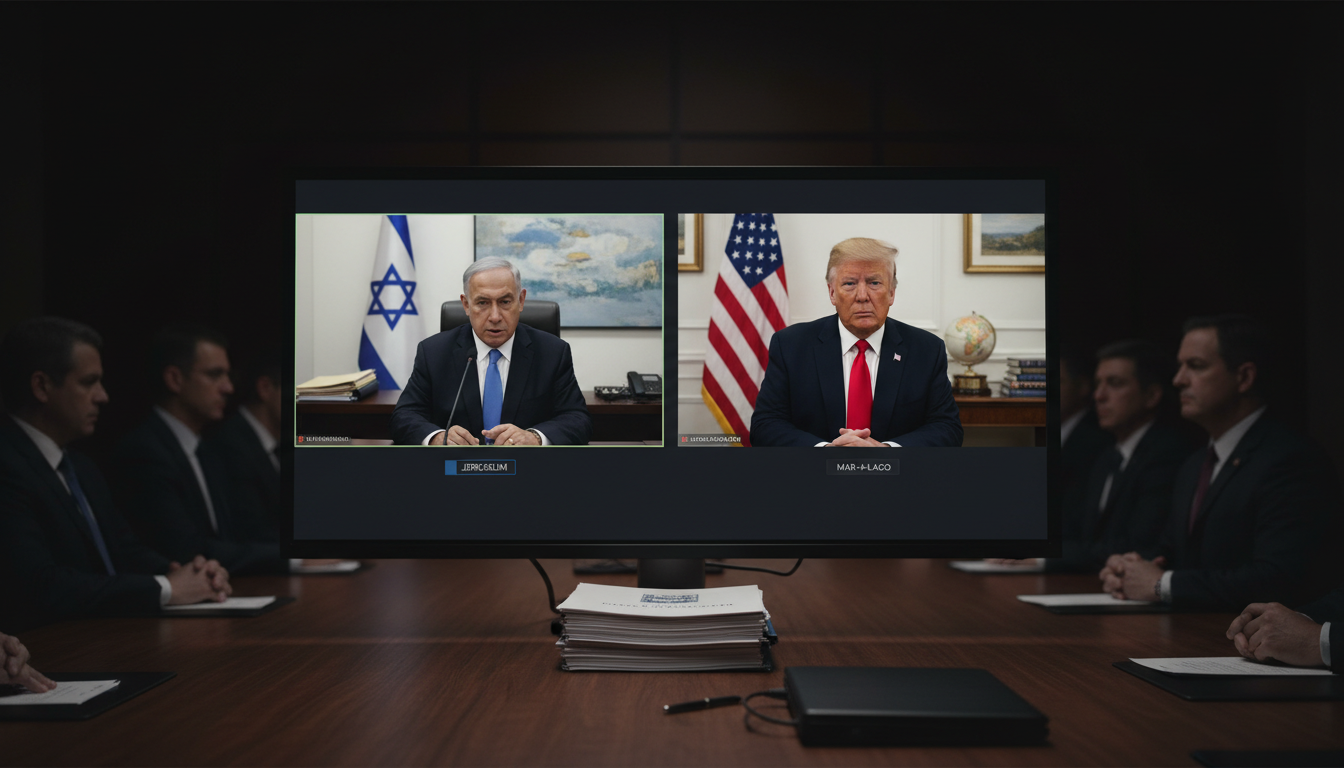
Netanyahu to speak with Trump on Sunday, to be briefed on China visit and discuss Iran
Israeli Prime Minister Benjamin Netanyahu said he will speak with U.S. President Donald Trump on Sunday, expecting a briefing on Trump’s China visit and discussions on Iran.
Prime Minister Announces Call with U.S. President
Benjamin Netanyahu announced that he will speak with U.S. President Donald Trump on Sunday, telling aides he expects to receive a briefing on the president’s recent trip to China.
The disclosure came as Netanyahu signalled that the conversation will also cover regional security concerns, with Iran specifically listed among topics to be addressed.
Netanyahu framed the call as a routine but strategically important exchange between close allies.
Israeli officials described the telephone discussion as an opportunity to align positions ahead of potential diplomatic and security moves.
Trump’s China Visit to Be Addressed
Netanyahu said he expects to be updated on key outcomes from President Trump’s visit to China during the call.
Israeli diplomats noted that the China trip could involve discussions on global trade, security coordination, and bilateral ties that indirectly affect regional dynamics in the Middle East.
Analysts say an update on the China visit would help Israel assess shifts in U.S. priorities that may influence its own foreign policy.
A White House summary or readout of the call could clarify whether economic or strategic elements from that visit have direct implications for Israeli interests.
Iran to Feature Prominently in Conversation
Israeli statements indicate that Iran will be a central subject in the Netanyahu‑Trump exchange, reflecting long-standing concerns in Jerusalem.
Netanyahu has historically prioritized Iran’s nuclear and regional activities as top security threats, and he is expected to press for firm U.S. commitments on containment measures.
Security officials in Jerusalem will be watching the tone of Washington’s statements for any change in posture or policy.
Even a modest shift in language or proposed actions from the United States could prompt recalibration of Israeli diplomatic and defence planning.
Regional Security Context and Reactions
The planned call comes amid continuing regional tensions that have kept Israel and the United States closely coordinated on security matters.
Neighboring states, international partners, and regional actors will likely monitor any public readout for signals about future cooperation or pressure points.
Israeli defence and diplomatic channels routinely use such high‑level consultations to synchronise responses to emerging threats.
Experts caution that while phone calls can convey intent, concrete policy changes generally require follow‑up meetings and clearly articulated commitments.
Domestic and International Implications
Domestically, Netanyahu’s announcement could serve to reassure constituents that Jerusalem is actively engaging with Washington on matters of national security.
Political observers note that high‑profile interactions with the White House have domestic political resonance and can influence public perceptions of government effectiveness.
Internationally, the exchange may shape multilateral discussions if it leads to coordinated steps among allies on sanctions, intelligence sharing, or maritime security.
Any joint statements or coordinated actions following the call would be scrutinised for their potential to alter the regional balance.
Diplomatic Channels and Possible Outcomes
Diplomats expect that the immediate outcome will be a public readout outlining the subjects discussed, though some details may remain confidential.
Follow‑up could include briefings for allied capitals, consultations with defence officials, and potential scheduling of further bilateral or multilateral meetings.
Observers will watch for concrete signals such as new security arrangements, changes in sanction policy, or coordinated diplomatic initiatives.
Even absent immediate policy moves, the tone of the conversation may be used to gauge bilateral alignment on priorities in Asia and the Middle East.
The Netanyahu‑Trump exchange is positioned as both a briefing and a strategic consultation, with Jerusalem seeking clarity on Washington’s global engagements and reaffirmation of shared priorities.
