
Sana airport attack risks collapse of 2022 Saudi-Houthi truce as tensions spike
Sana airport attack risks collapse of the 2022 Saudi-Houthi truce as both sides trade accusations, raising fears of wider regional escalation and renewed humanitarian suffering.
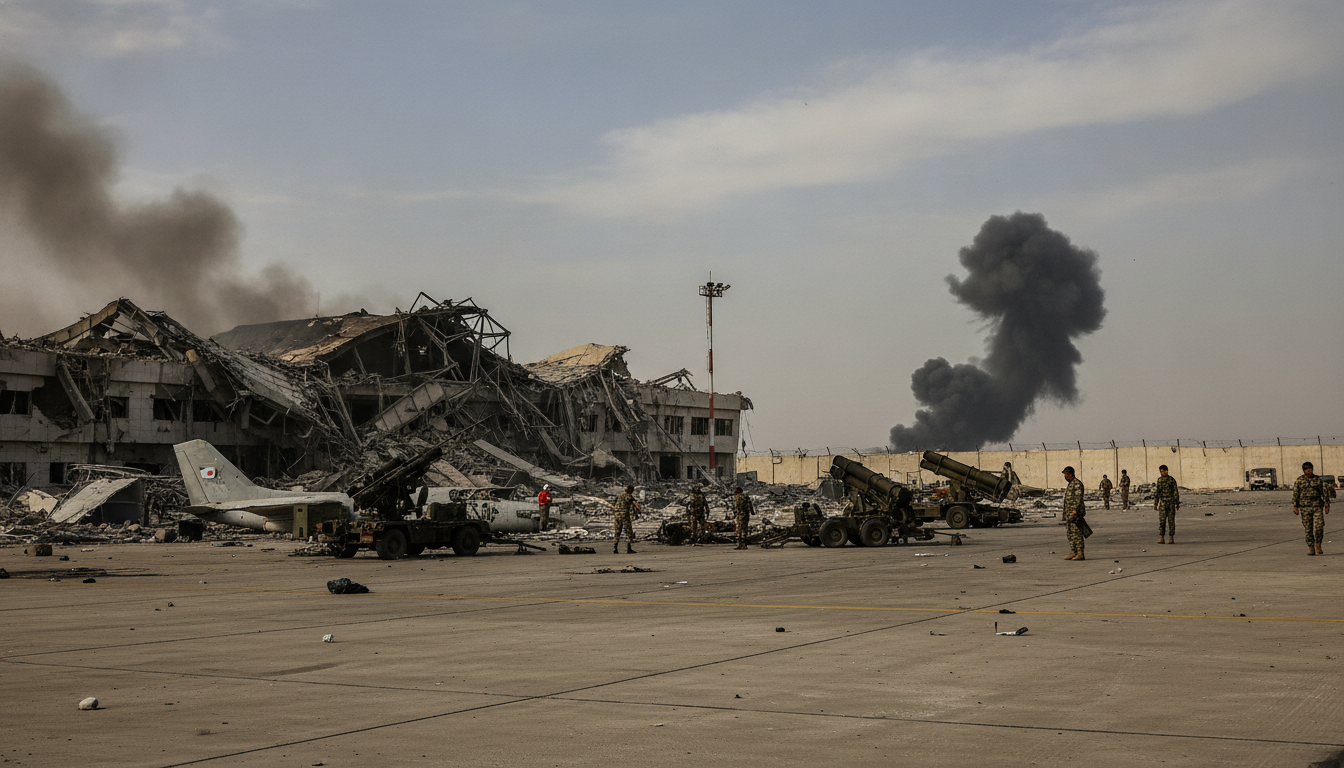
The Sana airport attack on Monday threatened to unravel the fragile 2022 truce between Saudi Arabia and the Iran-backed Houthi movement, with each side accusing the other of initiating strikes that could widen the conflict. Houthis said Saudi aircraft bombed Sana’a International Airport to stop an Iranian plane from landing, while Yemen’s Saudi-backed government claimed responsibility for an attack intended to prevent another Iranian flight, creating contradictory accounts of the incident. The exchange followed heightened tensions after an Iranian plane landed in Sana’a earlier this month, and officials and envoys warned that any further military steps could shatter the relative calm that had largely held since the ceasefire took effect.
Sana airport strike and competing narratives
The incident centred on Sana’a International Airport, which the Houthis said was struck by Saudi forces in what they described as an attempt to halt an incoming Iranian aircraft, a claim the Saudi government did not publicly confirm. Yemen’s internationally recognised government, which relies on Saudi support and lacks an independent air force, said it had conducted the action to prevent another Iranian plane from touching down, producing a contested version of events. Iran’s state media later reported that one of its aircraft landed safely in Hodeidah, near the Red Sea, but provided few operational details, deepening the uncertainty over flight movements and the precise sequence that led to the strike.
Missile launches and Saudi air-defence response
Following the reported bombing, Houthi forces fired ballistic missiles towards Saudi territory, prompting statements by the Saudi-led coalition that its air-defence systems had intercepted and “dealt with” the incoming threats. A Houthi military spokesman, Yahya Saree, publicly said the group targeted an airport in Abha, Saudi Arabia, and cautioned commercial carriers against entering Saudi airspace, signaling a direct escalation in tactics and warnings. The coalition’s response framed the missile launches as evidence of continued Houthi aggression and reiterated its readiness to respond, while aviation authorities and regional actors monitored developments for any broader impact on commercial flights.
Diplomatic alarms and U.N. mediation efforts
The U.N. special envoy for Yemen, Hans Grundberg, expressed deep concern about the danger of wider escalation and said he was contacting the parties to urge restraint and de‑escalation, reflecting international alarm at the breakdown in communication. Grundberg warned that any widening of the confrontation would exacerbate an already dire humanitarian situation and could reverse months of fragile stability, making swift diplomatic engagement essential. International and regional stakeholders, who had largely managed to keep Yemen out of the broader cross‑border exchanges linked to the U.S.-Israel‑Iran tensions this year, now face pressure to revive channels of dialogue to prevent a return to open warfare.
Historical context and the 2022 truce
The confrontation comes against the backdrop of a near‑decade of conflict that began in 2014 when Houthi forces seized Sana’a and pushed the internationally recognised government into southern strongholds and exile, and a subsequent Saudi-led campaign in 2015 that failed to dislodge the militia. A truce brokered in 2022 created a window for reduced hostilities, limited commercial flights and humanitarian access, and had, until recent weeks, largely contained cross‑border exchanges despite heightened regional tensions. That pause was already fragile: airspace restrictions and a near‑complete blockade of Yemeni aviation for large parts of the war left airports and civilian travel vulnerable to politicisation and sudden suspension.
Humanitarian consequences and security risks
Any collapse of the truce threatens to worsen Yemen’s humanitarian catastrophe, where millions remain dependent on aid and basic services are precarious, and to disrupt the limited flow of medical evacuations and civilian travel that resumed under the ceasefire arrangements. Ground clashes reported in Hodeidah and other flashpoints in recent days underline how local fighting can quickly compound airspace incidents and diplomatic standoffs, pushing communities deeper into insecurity. Aid organisations and regional actors have repeatedly cautioned that a renewed full‑scale conflict would not only deepen human suffering inside Yemen but also create new security risks for Red Sea and Gulf maritime routes and neighbouring states.
The latest exchanges underscore how a single incident involving civilian air movement can trigger broad strategic responses in a theatre already sensitised by proxy ties and regional rivalry.
