
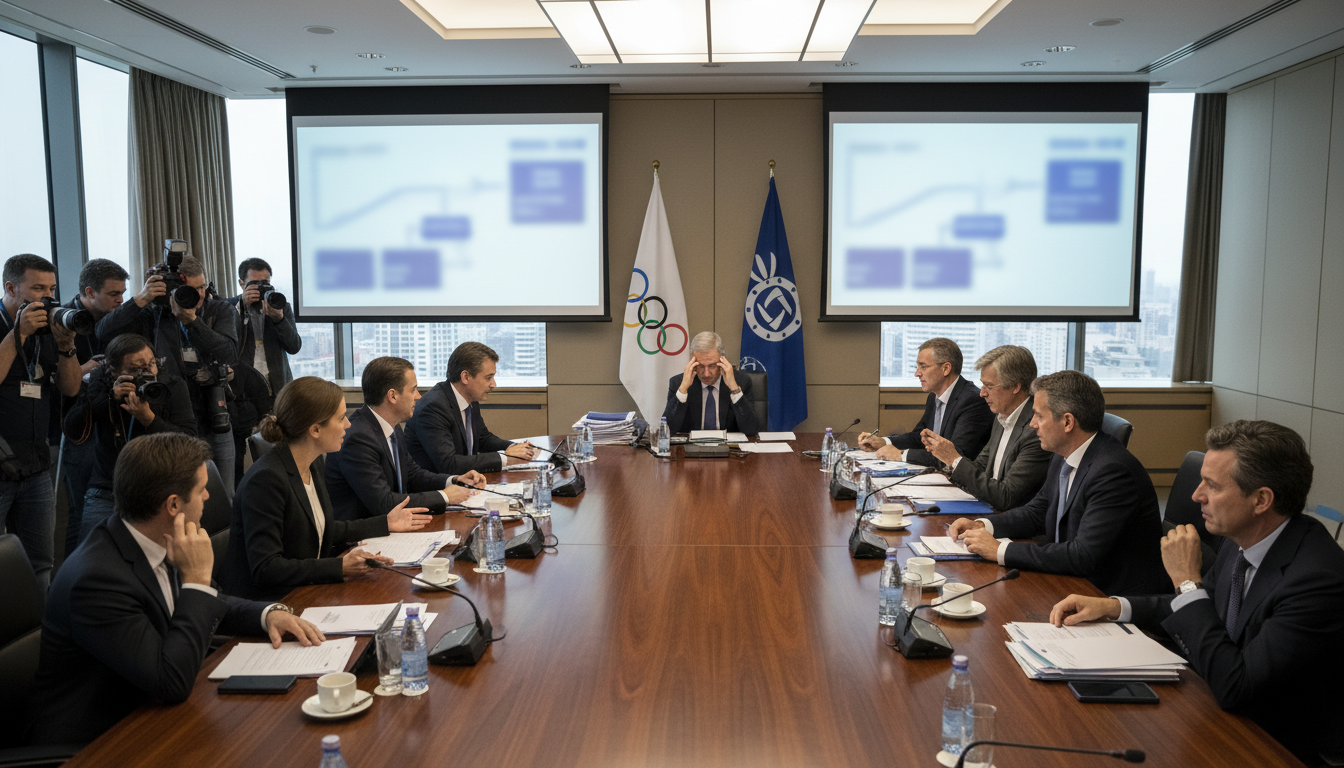
Sports federation board conflict in UAE sparks administrative disruption
UAE sports federation board conflict disrupts technical and administrative work, sparking calls for mediation, clearer mandates and an urgent statutory review.
A growing sports federation board conflict has emerged within the governing body of an individual sport following recent appointments, sources say. What was publicly presented as consensus has given way to overlapping authorities among some board members, producing uncertainty across multiple operational files. The dispute has unsettled technical planning and administrative processes, prompting stakeholders to demand swift clarification.
Boardroom Rift Emerges After Recent Appointments
Several new appointments to the federation’s board are at the center of the dispute, according to people familiar with internal meetings. Members who accepted roles publicly are reported to be pursuing different decision-making approaches behind closed doors. That divergence has led to duplicated directives and inconsistent instructions to technical staff and committees.
Tensions appear to stem not from policy differences on sport development but from unclear boundaries in responsibilities assigned after the reshuffle. Observers note that when collective responsibility is not matched by precise task allocation, operational paralysis can follow. The board’s inability to present unified guidance has already affected routine administrative cycles.
Administrative Workflows and Event Planning Affected
The federation’s competition calendar and logistical planning have been interrupted by last-minute changes and competing approvals. Event organisers and technical directors have received conflicting signals about budgets, venues and selection criteria, sources said. Those inconsistencies have complicated vendor contracts and the coordination of training camps.
Administrative staff reported delays in processing approvals and payments while attempts to reconcile overlapping mandates continue. Sponsorship negotiations and partner communications have also been tested as external stakeholders seek certainty. The resulting slowdown risks eroding confidence among commercial and sporting partners.
Bylaws and Role Clashes Cited by Insiders
Insiders point to vague or outdated bylaws as a root cause, saying the governance framework does not adequately define where certain powers begin and end. Several board members are believed to have assumed executive-style responsibilities while others see their roles as strategic and oversight-focused. That mismatch has produced frequent jurisdictional disputes over technical decisions and administrative oversight.
Legal and governance experts contacted by sources recommend an immediate reading of the federation’s statutes and a targeted amendment where gaps are found. Clear job descriptions, delegation authorities and escalation procedures are standard fixes in such situations. Without these reforms, confusion is likely to persist and decision-making will remain fragmented.
Stakeholders Call for Neutral Mediation and Rapid Review
Athlete representatives, coaches and some board members have privately asked for neutral mediation to de-escalate tensions and restore operational continuity. A short, independent review of governance arrangements is being proposed to map responsibilities and reconcile conflicting interpretations. Stakeholders emphasise the need for an expedited process that avoids politicising routine sporting administration.
Several insiders say a temporary mediation panel composed of respected figures from outside the federation could issue binding recommendations to re-establish stable functioning. Such an approach would aim to protect the technical workflow and preserve trust among athletes and staff. The goal, they contend, is to return to transparent, predictable governance within weeks rather than months.
Athlete Programs and Competition Calendar at Risk
Coaches and program managers warn that prolonged uncertainty will have a direct impact on athlete preparation and selection pathways. Training schedules, international participation approvals and funding allocations require clear sign-off, and prolonged board disagreement can hinder athletes’ competitive readiness. Youth development initiatives and talent identification programs are particularly vulnerable to funding and staffing disruptions.
If left unresolved, sponsors and regional partners could reconsider commitments, which would further strain the federation’s capacity to deliver events and athlete services. Participants and parents have expressed concern about the knock-on effects on performance and career planning. Restoring a functional governance environment is therefore portrayed by stakeholders as an urgent sporting priority.
The federation’s public communications have so far stressed unity and ongoing work on strategic goals, but internal sources say practical reconciliation must accompany those statements. Moving forward, stakeholders expect a timetable for mediation, a transparent review of bylaws and clearer role definitions that lock in accountability and streamline decision-making.
