
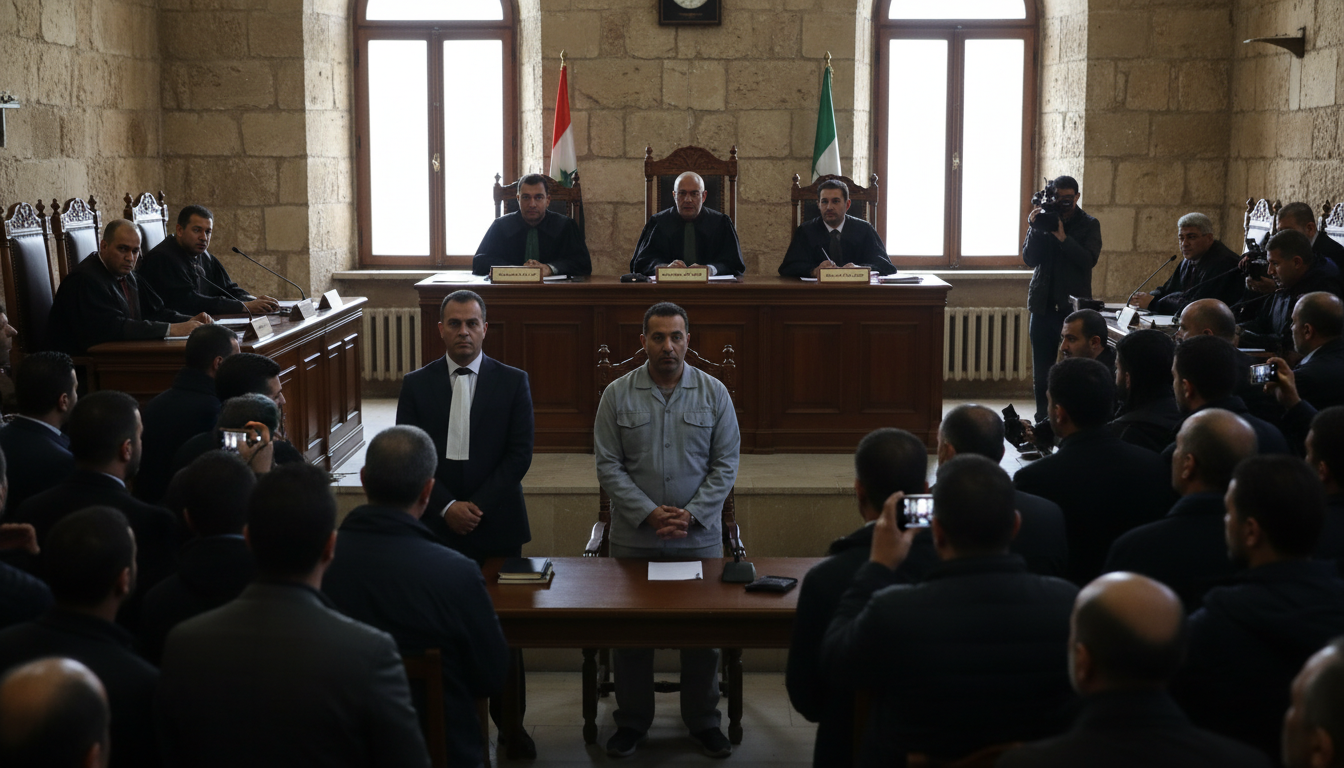
Syria trials to open in Damascus as new authority charges former security and military figures
Syria trials begin on April 26, 2026, in Damascus as the new authorities move to prosecute former security and military figures, including Atef Najib and Amjad Youssef, for wartime abuses.
The Syrian authorities have scheduled the first public hearings in a series of high-profile Syria trials on Sunday, April 26, 2026, the justice ministry said, marking a significant step in accountability for acts committed during the country’s conflict.
The proceedings will begin with the trial of Atef Najib, the former head of the Political Security branch in Daraa, and are expected to be followed by cases against Wasim al-Assad, several military pilots, and Amjad Youssef.
Trials Set to Open in Damascus Courtrooms
A source inside the justice ministry told news agencies that the Criminal Court in Damascus is preparing to hear public cases that a ministry official described as long-awaited by victims.
Court schedules released by officials identify the opening session and indicate additional hearings will follow, although prosecutors have not yet published full charge sheets for all defendants.
Accused Officials and Allegations
Atef Najib, a relative of the ousted president, is accused of overseeing a campaign of detentions and repression in Daraa, the southern governorate where anti-government protests erupted in 2011.
Wasim al-Assad is listed among relatives of the former regime earmarked for prosecution, while several military pilots are accused of carrying out aerial bombardments of towns and cities during the conflict.
Amjad Youssef, arrested by authorities late last week, faces allegations of leading a 2013 massacre in the Tadamun neighborhood of Damascus that reportedly left dozens dead.
Authorities say these cases will be tried publicly as part of an effort to address alleged crimes committed during the years of armed conflict.
Justice Ministry Frames Proceedings as Transitional Justice
Justice Minister Muzhir al-Wais posted on the social platform X that the Criminal Court in Damascus is “preparing for the moment victims have long awaited,” and described the hearings as part of a transitional justice pathway.
The statement framed the trials as an official response to wartime abuses and a step toward legal reckoning for figures associated with the former ruling order.
December 2024 Power Shift and Renewed Arrest Campaigns
The current administration assumed authority in December 2024 and has periodically announced arrests of former military and security officials implicated in wartime atrocities.
Since that transition, the government has said it detained numerous suspects across several provinces while some senior figures reportedly fled or sought refuge in neighboring countries.
Daraa’s Role and the Broader Human Toll
Daraa holds symbolic weight in Syria’s recent history as the governorate where 2011 protests ignited a nationwide uprising, and Atef Najib has been singled out by victims and activists as a key figure in early crackdowns.
The fate of tens of thousands of missing detainees and the alleged existence of mass burial sites remain central grievances for families and human rights advocates seeking answers and reparations.
Flight of Former Leaders and Fragmented Follow-Through
In early December 2024, the former president departed for Moscow amid a rapid territorial advance by opposition forces into Damascus, taking only a handful of close associates, according to statements at the time.
Many mid- and lower-ranking officials dispersed to their home towns or neighboring states, complicating efforts by investigators to locate suspects and recover evidence tied to alleged crimes.
The opening of these Syria trials will be closely observed across the country and by international audiences as a measure of the new administration’s approach to accountability and rule of law.
Observers say transparent procedures, access to legal counsel for defendants, and clear presentation of evidence will be key to the credibility of the process and to satisfying the demands of victims and families.
