
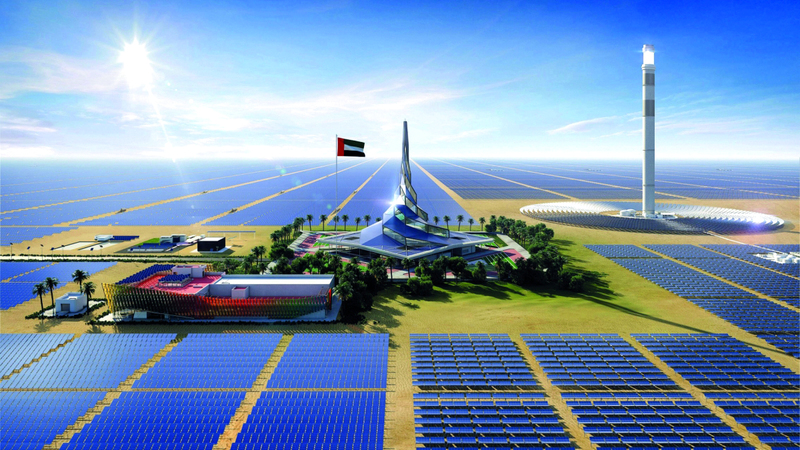
The UAE applies a proactive and integrated approach in supporting green investments, and enhancing the construction of a sustainable economy, by launching many prominent national initiatives and strategies, such as: “The Emirates Energy Strategy 2050”, and “The Strategic Initiative to achieve climate neutrality 2050”.
The UAE has proven its ability to become a model to support the financing of environmental initiatives, as it occupies the first rank in the region and the second globally in the size of the existing sustainability sukuk, which reflects its steadfast commitment to enhancing sustainability as an essential part of its green growth strategy.
UAE investments in solar energy and green hydrogen projects are one of the basic pillars of climate neutrality by 2050.
The UAE’s efforts and leadership in the field of renewable energy enjoyed wide international appreciation, as the state seeks to provide an attractive investment environment for green investments by providing incentives and facilities for investors, in addition to strengthening the partnership between the public and private sectors by launching many joint projects.
The UAE has issued many legislation that regulates and supports this trend, such as Federal Law No. 24 of 1999 on environmental protection and its development, as well as the launch of the “National Environmental Sustainability Framework”, which includes all national strategies and policies that manage environmental work in the country and enhance the quality of life.
The UAE Energy Strategy 2050, which was launched in 2017, aims to double the contribution of renewable energy three times by 2030, as national investments estimated between 150 and 200 billion dirhams are expected to pump to meet the increasing demand for energy.
In the context of strengthening its environmental obligations, the UAE recently launched the “Decree of Federal Law No. 11 of 2024” on reducing the effects of climate change, which will come into effect in May 2025.
The UAE keeps pace with global developments in the field of sustainability by updating the legislation regulating green investments, while the goals of the “Emirates Green Development Strategy” are to make the country a world leader in the green economy and a major center for exporting green products and technologies, which contributes to preserving a sustainable environment that supports long -term economic growth.
The Emirati strategy covers all aspects of the green economy, as the country records a remarkable growth in renewable energy investments, thanks to the availability of natural resources, such as solar energy and wind energy, and the state focuses on encouraging investments in sustainable transport, in addition to supporting the waste recycling sector.
The UAE has implemented a group of entrepreneurial projects, such as “Noor Abu Dhabi Station”, which is the largest solar energy station in the world, the “Mohammed bin Rashid Al Maktoum Solar Energy Complex”, which is the largest solar energy project in one location in the world, and “Masdar City” that was designed to be one of the most sustainable cities in the world, which depends on renewable energy and clean technology.
The UAE has cut advanced strides in building a sustainable transport sector by supporting clean mass transport solutions, and encouraging the spread of electric cars, and the Dubai Metro is one of the largest public transport projects in the region, and contributes to reducing traffic congestion and reducing carbon emissions, while the Ministry of Energy and Infrastructure continues its efforts in strengthening the sustainable transportation system through the development of infrastructure for electric cars, as it aims to install more than 500 shipping stations For electric vehicles by the end of 2025.
. Installing more than 500 charging stations for electric vehicles by the end of 2025.
Follow our latest local and sports news and the latest political and economic developments through Google News
