
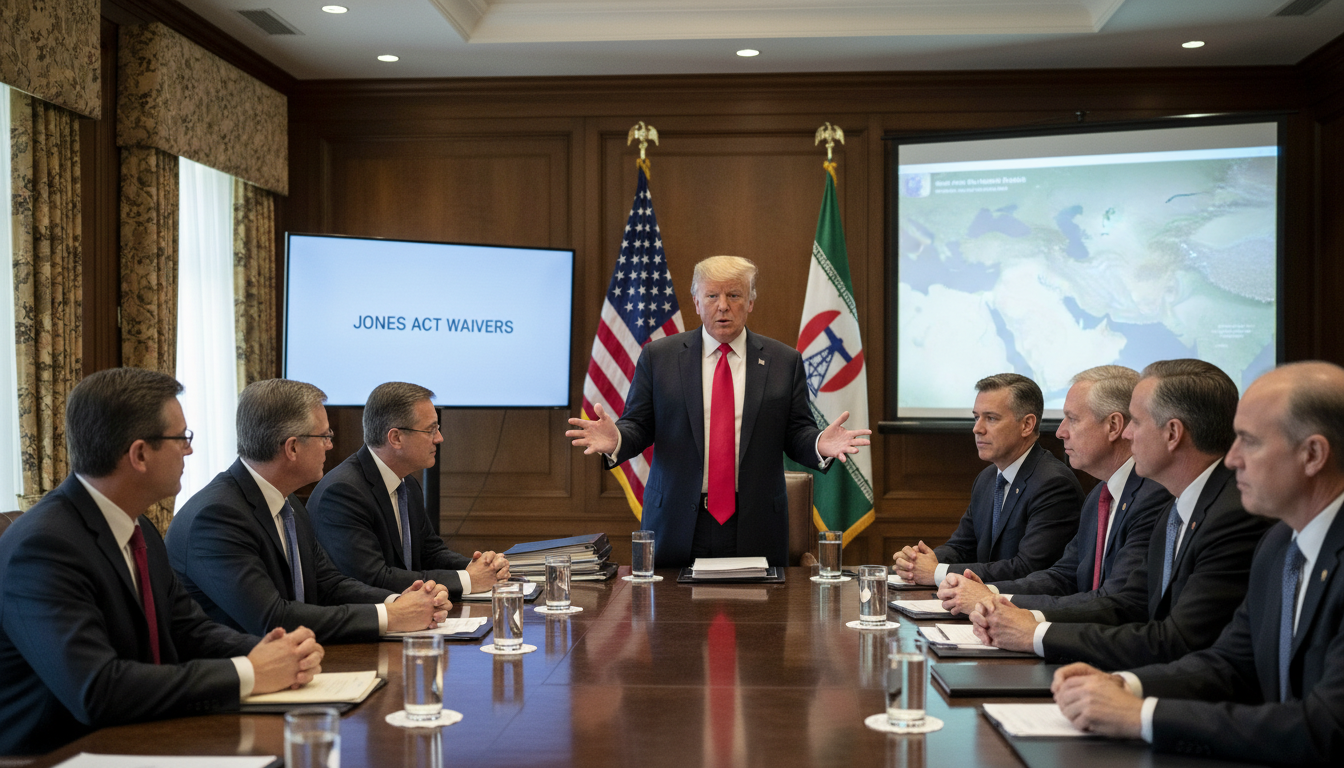
Trump meets oil executives to discuss sustained pressure on oil prices amid Iran tensions
Trump meets oil executives at the White House to discuss keeping pressure on oil prices amid Iran tensions and the implications of a new 90-day Jones Act waiver
President Donald Trump met with senior energy executives at the White House to discuss maintaining pressure on oil prices amid ongoing tensions with Iran, according to officials. The meeting, attended by top administration aides and industry leaders, included conversations about sanctions, shipping, and a recently extended 90-day Jones Act waiver. Industry representatives reportedly urged continuation of measures targeting Iran and sought broader exemptions to domestic shipping rules. The gathering signals close coordination between the administration and parts of the oil sector as geopolitical risks remain elevated.
White House convenes energy executives
The meeting brought together President Trump, senior White House officials and key figures from the oil and shipping sectors to review strategic options. Present from the White House were senior staff including the chief of staff, Treasury officials, and a special envoy, reflecting the issue’s cross-departmental significance. Industry attendees included major oil company executives and leaders from shipping and trading firms, according to U.S. officials. Participants discussed steps the administration could take to sustain market pressure on Iran if the situation requires prolonged action.
Discussion focused on oil prices and Iran conflict
A principal topic was the influence of the Iran conflict on global oil prices and how the United States might shape market dynamics. Officials and executives examined scenarios for continued sanctions and other measures intended to limit Iranian oil revenues. The group weighed the potential economic and logistical consequences of sustained pressure, including impacts on supply routes and trading patterns. Attendees emphasized the need to balance enforcement actions with market stability and energy security.
Industry calls for extended sanctions and Jones Act relief
Executives in the room expressed support for the U.S. pressure campaign on Iran and urged the administration to maintain it for as long as necessary. Several industry representatives also requested further exemptions under the Jones Act to ease domestic transport constraints, citing logistical bottlenecks. The Jones Act governs maritime commerce between U.S. ports and can affect the internal movement of oil and gas, a point industry leaders said complicates supply flexibility. Their appeal highlighted tensions between national shipping rules and the need for rapid commercial response during geopolitical disruptions.
Administration extends Jones Act waiver for 90 days
Last week the administration granted a 90-day extension of a Jones Act waiver to facilitate movement of oil, gas and other commodities within U.S. waterways. Officials said the temporary relief is designed to ease domestic transport ahead of potential supply disruptions stemming from international sanctions and conflict zones. The waiver can make it easier for foreign-built vessels to carry cargo between U.S. ports, a step the industry argued was necessary to maintain commercial flows. Administration aides indicated the extension was part of broader contingency planning discussed during the meeting.
Market and shipping implications highlighted by attendees
Shipping and trading firms in attendance warned that prolonged pressure on Iranian exports could shift trade routes and increase demand for alternative shipping capacity. Attendees noted that commercial constraints, including crew availability and port infrastructure, could limit rapid adjustments in supply chains. Traders and carriers sought clarity on potential regulatory relief to allow more flexible domestic shipments if international supplies tighten. The industry’s requests underscore how maritime rules and market responses are entwined with foreign policy decisions affecting oil prices.
Policy options and possible next steps from the White House
Officials at the meeting outlined a range of policy tools, from extended sanctions enforcement to targeted exemptions and logistical support for domestic transport. Administration participants discussed coordinating with allies and private sector partners to sustain pressure while attempting to mitigate market shocks. The White House indicated readiness to keep restrictions in place for months if needed, depending on developments in the region. Observers said the meeting reflects a strategy of close consultation with industry as the administration weighs longer-term measures.
The discussions at the White House underline the direct link between geopolitics and energy markets, with both policymakers and industry leaders preparing for scenarios that could keep oil prices under sustained strain. The interplay between sanctions policy, maritime regulation and commercial logistics will shape near-term market behavior, particularly if tensions around Iran persist. As officials and executives continue to weigh options, the outcome will affect shipping practices, domestic fuel movement and international trade flows in the months ahead.
