
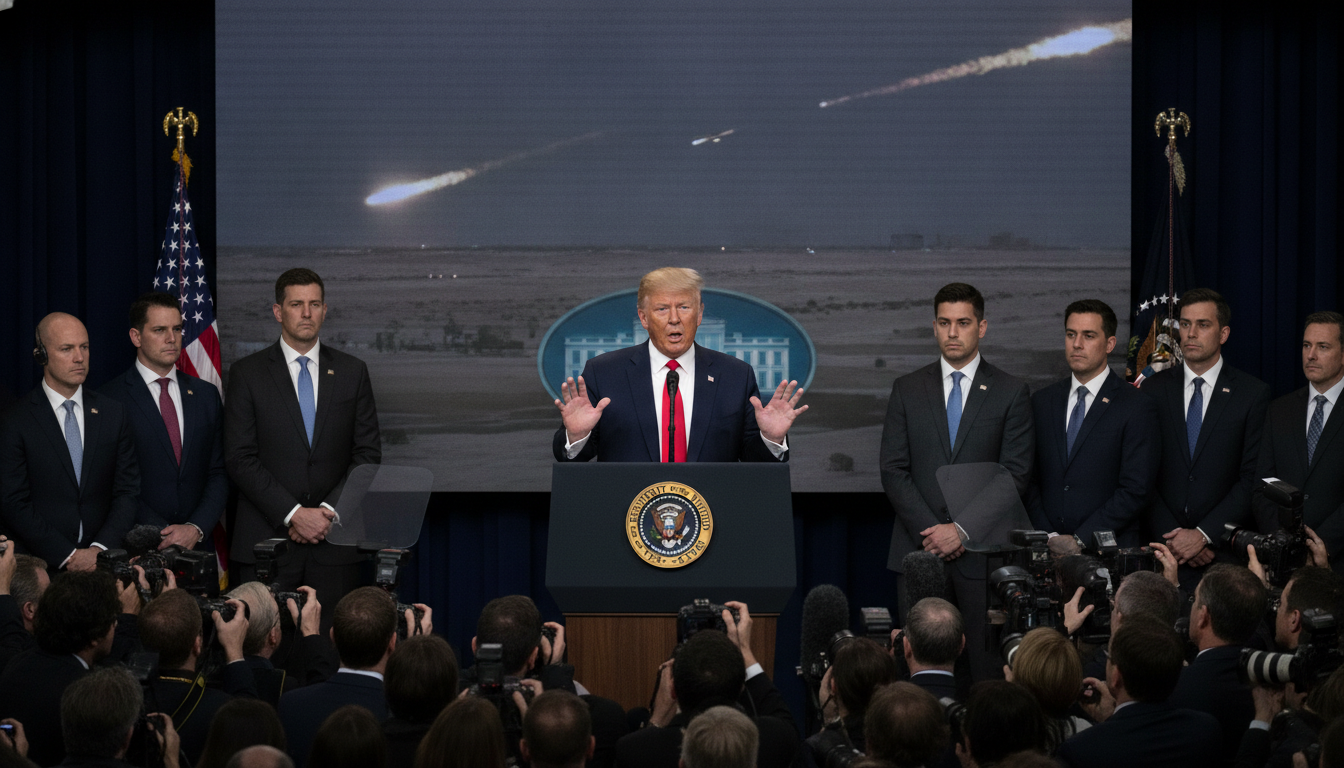
U.S.-Iran conflict escalates after Iranian missile strike on U.S. bases in Jordan
U.S.-Iran conflict intensifies after Iran launched missiles at American bases in Jordan; Washington responded with strikes on Revolutionary Guard targets, widening regional tensions and economic risk.
A sudden Iranian missile barrage on U.S. positions in Jordan over the weekend prompted an immediate American counterstrike that targeted multiple Islamic Revolutionary Guard Corps facilities inside Iran. The exchange, part of a conflict that began five months ago, has pulled Washington back into active combat despite presidential reluctance to resume a full-scale war. The developments underline how quickly the U.S.-Iran conflict has expanded beyond its initial theatres and complicated diplomatic efforts.
Iran fires missiles at U.S. bases in Jordan
The Iranian attack struck U.S.-affiliated facilities in Jordan, where missile defenses reportedly intercepted several incoming rounds with minimal damage. U.S. officials described the interception as effective, but they framed the strike as an unacceptable escalation that required a decisive military response. The incident renewed public attention on forward-deployed American forces in the region and their vulnerability to long-range Iranian systems.
U.S. launches a direct response against IRGC targets
U.S. Central Command reported a “powerful response” against dozens of Revolutionary Guard sites, including command centers, missile and drone production facilities, and coastal surveillance infrastructure. Senior U.S. officials signalled the strikes were intended to degrade Tehran’s ability to conduct further attacks on regional partners and maritime traffic. President Trump told reporters before the strikes that the United States would hit Iran hard, a stance that contrasted with his recent public reluctance to inflict broad civilian harm.
Allied actions and the widening battlefront
The confrontation has drawn regional partners into kinetic operations, with Saudi forces assisting in strikes on Iran-aligned proxy groups in Iraq and attacks on commercial shipping reported in adjacent waters. An American-flagged tanker was set ablaze in Egyptian waters after an apparent drone strike, further demonstrating the conflict’s spillover into commercial corridors. Analysts warn that expanding engagement by Gulf states and non-state proxies increases the risk of miscalculation and unintended escalation across multiple fronts.
Military deliberations and operational limits
Behind closed doors, U.S. military leaders weighed a larger bombing campaign that could have lasted days and would have required redeployment of air assets to the region. Joint Chiefs and Central Command officials reportedly cautioned that a renewed major combat operation would strain interceptor inventories and air-defense capabilities across U.S. Central Command’s area of responsibility. Commanders also debated the continued effectiveness of strikes around the Strait of Hormuz and whether sustained activity there was achieving strategic aims or simply depleting limited resources.
Strait of Hormuz remains a central objective
Reopening the Strait of Hormuz without Iranian interference is described inside the U.S. national security apparatus as a top priority, owing to the waterway’s outsized importance for global oil flows. The conflict’s disruption of shipping and the prospect of repeat attacks on tankers have driven oil prices upward and prompted insurers to reassess maritime risk in the Gulf. Washington’s strikes in the strait have been framed as efforts to restore free passage, but officials acknowledge that a durable solution will require guarantees against future Iranian interdiction.
Diplomatic avenues and Tehran’s leadership changes
Despite recent military action, U.S. officials and mediators from neighbouring states have continued to explore diplomatic channels to curb hostilities. Pakistan, Qatar and other intermediaries have been mentioned as possible facilitators for talks, but experts express scepticism about the likelihood of a rapid negotiated settlement. Iran’s political landscape has shifted since the conflict began, with new leadership in Tehran taking a harder line that analysts say reduces the window for compromise and complicates back-channel diplomacy.
The war’s early successes for U.S. and allied forces have been double-edged: initial strikes severely degraded portions of Iran’s ability to project power, but Tehran’s subsequent strategy has been to widen the battlefield and demonstrate that it can retaliate in unexpected places. Military and policy specialists caution that unless core issues such as control of the Strait of Hormuz, Iran’s missile capabilities and its regional proxy networks are addressed in any settlement, the cycle of strikes and pauses is likely to continue.
