
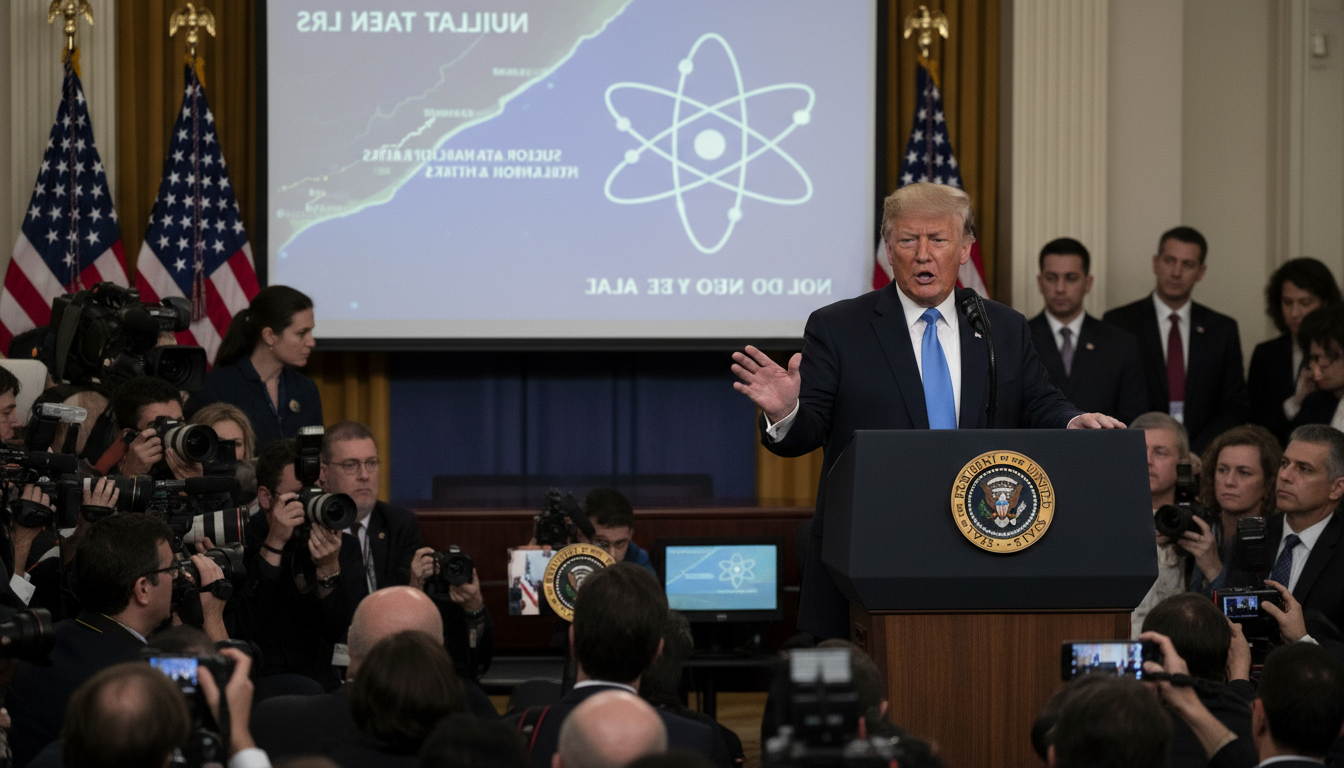
Trump Rejects Iranian Proposal to Reopen Strait of Hormuz, Cites Nuclear Omission
Trump rejects Iranian proposal to reopen the Strait of Hormuz, saying it omits Tehran’s nuclear program. Washington seeks a broader deal on nukes and missiles.
A U.S. official said President Donald Trump is dissatisfied with an Iranian proposal to reopen the Strait of Hormuz because it does not address Tehran’s nuclear program. The disclosure, first reported by the New York Times and confirmed in interviews with U.S. sources, came amid tense diplomatic exchanges over an offer that would see Iran allow passage through the strait in return for relief from a U.S. maritime blockade. White House advisers were told the president viewed the proposal as incomplete, and potentially politically costly to accept without firmer guarantees on nuclear activities.
White House reaction
A senior U.S. official told reporters the administration saw the Iranian proposal as narrowly focused and insufficient to remove broader threats posed by Tehran. The president’s concern, according to U.S. sources, is that accepting an agreement limited to the Strait of Hormuz could be read domestically and internationally as a concession without securing limits on Iran’s nuclear work.
Officials said the White House wants a comprehensive settlement that addresses nuclear enrichment, missile capabilities and Tehran’s regional activities. That stance reflects Washington’s effort to link maritime security to a wider set of demands before committing to any formal deal.
Terms of the Iranian proposal
According to the reporting, Iran’s proposal reportedly offered to reopen the Strait of Hormuz and de-escalate hostilities if the United States lifted a naval blockade that had restricted Iranian shipping. The proposal, framed as a quid pro quo to restore commercial passage and reduce the risk of further clashes, did not include provisions to halt Iran’s nuclear program.
Tehran’s negotiating position has consistently rejected demands to suspend enrichment or surrender stocks of highly enriched uranium, and those red lines remain central to the impasse. Iranian officials, as represented in the outline of the offer, have prioritized economic relief and normalisation of shipping lanes over immediate concessions on their nuclear activities.
Concerns over the nuclear omission
U.S. national security advisers expressed that the omission of the nuclear file made the proposal unacceptable to Washington’s broader strategy. Administration figures argue that a deal limited to the strait would leave a significant security risk unaddressed and could embolden Tehran to maintain or accelerate sensitive nuclear work.
The Associated Press reported that President Trump is pushing for a wider agreement that would encompass nuclear restraints, missile limitations and curbs on Iran’s regional influence. That demand underscores the administration’s view that maritime safety cannot be disentangled from the regime’s wider military and technological capabilities.
Political calculations in Washington
U.S. sources briefed on internal discussions warned that accepting a narrow deal could be perceived as a political retreat for the White House. Some advisers fear domestic critics and regional allies would interpret such a move as trading away long-term leverage for a short-term operational benefit.
For President Trump, the calculus includes both strategic and political costs: securing an immediate reopening of the strait would reduce tensions at sea, but it might complicate efforts to extract concessions on the nuclear and missile files later. Senior aides are weighing whether partial de-escalation could instead be used as leverage in follow-on negotiations.
Regional security and the Strait of Hormuz
The Strait of Hormuz is a critical chokepoint for global energy shipments, and any agreement to reopen it would have immediate economic and security implications. Gulf states and international shipping firms have watched negotiations closely, mindful that maritime access affects global oil markets and regional stability.
Regional partners have pushed for a solution that guarantees uninterrupted commerce while also preventing a return to overt hostilities. However, the absence of a unified international demand that ties maritime access to nuclear limits has complicated efforts to build a multilateral response that satisfies both Gulf security concerns and nonproliferation objectives.
Diplomatic impasse and next steps
Diplomatic efforts to end the confrontations have faltered as Tehran and Washington remain firm on their respective conditions for progress. Mediators and foreign capitals involved in back-channel outreach are reported to be urging renewed talks, but neither side has publicly signalled flexibility on core issues.
Analysts say a breakthrough would likely require sequencing measures that simultaneously guarantee commercial passage and create verifiable steps on nuclear restraints. Without such a package, officials warn that negotiations could stall further and tensions at sea may persist.
Looking ahead, U.S. diplomats and regional interlocutors are expected to continue shuttle diplomacy aimed at bridging gaps, while military postures in the Gulf remain on alert. The coming days will test whether practical arrangements on maritime security can be paired with substantive agreements on Iran’s nuclear and military capabilities to produce a durable settlement.
