
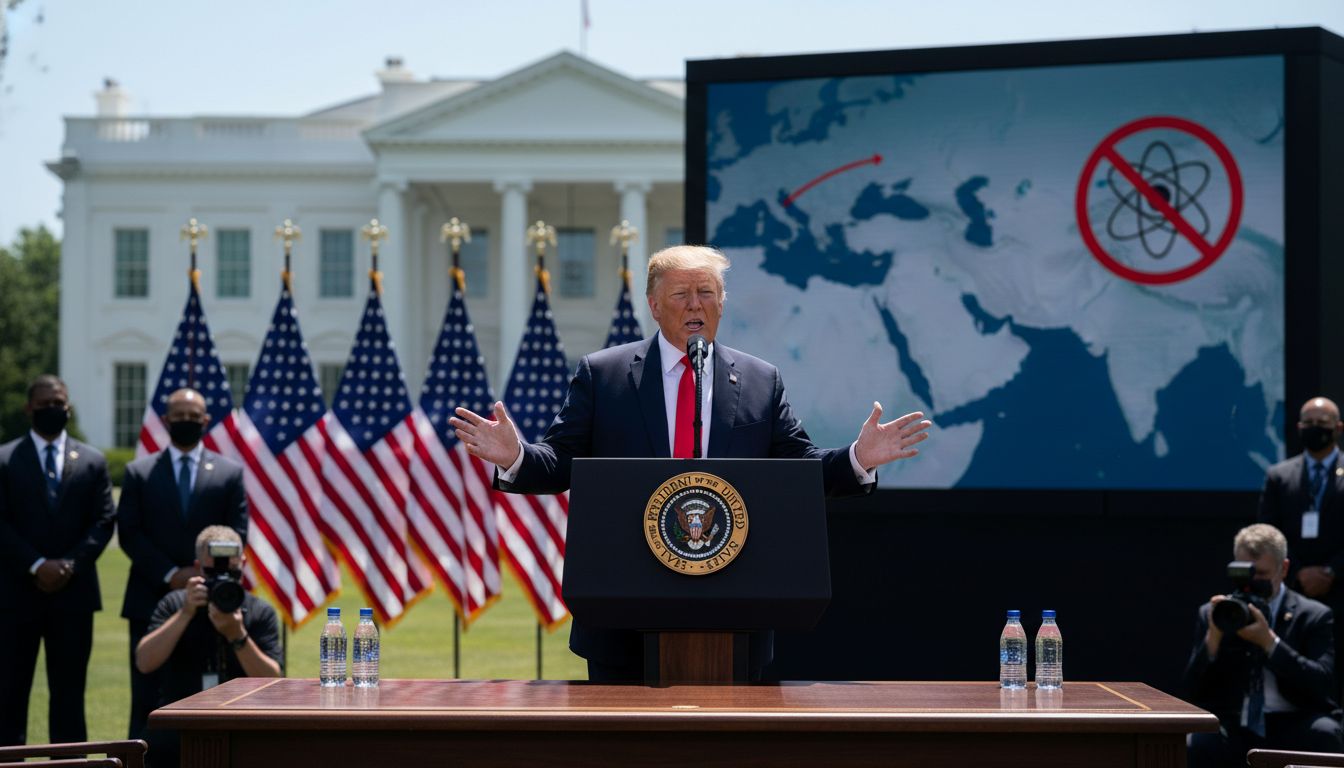
Trump Says ‘Iran Thing Will End Soon’ as Reports of Negotiation Progress Emerge
Trump on Iran: President says Tehran will not obtain a nuclear weapon as reports suggest progress toward an agreement.
Opening remarks at New York rally
President Donald Trump told supporters at a rally in New York that “the Iran thing will end soon,” asserting that the United States had halted Iran’s advances and that Tehran would “never” obtain a nuclear weapon.
His comments came amid reporting that there has been movement on outstanding issues related to talks between Washington and Tehran.
The remarks and the timing have reinforced focus on the future of U.S.-Iran diplomacy, with observers noting the contrast between political rhetoric and the discreet, technical work that typically accompanies nuclear negotiations.
Details of the rally statement
Speaking to a crowd, Trump framed the situation as a finished outcome in favour of U.S. policy, saying American efforts had stopped Iran’s trajectory toward a nuclear arsenal.
He used emphatic language to signal finality, repeating that Iran would not be allowed to develop nuclear weapons.
Campaign-style settings like the rally amplify concise, headline-ready lines; officials and diplomatic staff typically offer more qualified language in formal fora.
Reports of progress in U.S.-Iran talks
Trump’s comments followed media accounts that negotiators had made progress on several unresolved issues in talks between the United States and Iran.
Sources cited in those accounts described movement on technical and political dossiers necessary to advance a possible agreement, though details remained limited in public reporting.
Both sides have historically linked nuclear issues to wider regional and sanctions-related demands, meaning reported “progress” often triggers careful verification within capitals and among stakeholders.
How the claim fits with U.S. nuclear policy
The president’s declaration that Iran “will never” get a nuclear weapon echoes longstanding U.S. policy goals to prevent proliferation.
In practice, achieving that objective has relied on a mix of diplomacy, sanctions, and international safeguards overseen by organisations such as the International Atomic Energy Agency.
Analysts caution that declaratory statements must be matched by verifiable measures, including inspections, monitoring arrangements, and clear implementation timelines.
Regional and international stakes
Any credible progress toward a U.S.-Iran agreement would have significant implications for the Middle East, affecting Gulf security calculations and relations with regional partners.
Countries in the region and global powers are likely to scrutinise any deal for its verification mechanisms, sanctions relief provisions, and impacts on wider security dynamics.
Shifts in U.S.-Iran relations can also influence energy markets and diplomatic alignments, prompting statements and strategic reviews by neighbouring states and allies.
Possible diplomatic pathways ahead
If negotiators have indeed narrowed differences, the next steps would typically include formalising technical texts, arranging verification protocols, and securing political endorsements from respective capitals.
Domestic political dynamics in the United States and Iran can shape the pace and durability of any agreement, meaning leaders may seek to build internal consensus before finalising terms.
Observers note that even when agreements are reached at the negotiating table, implementation and enforcement are often the most challenging phases.
The president’s short, forceful message at the rally underscores how political communication and diplomatic negotiation operate on different registers, with each playing a role in shaping public expectations and foreign-policy outcomes.
Trump on Iran will remain a headline issue as officials and analysts follow whether reported progress translates into verifiable steps and formal commitments.
