
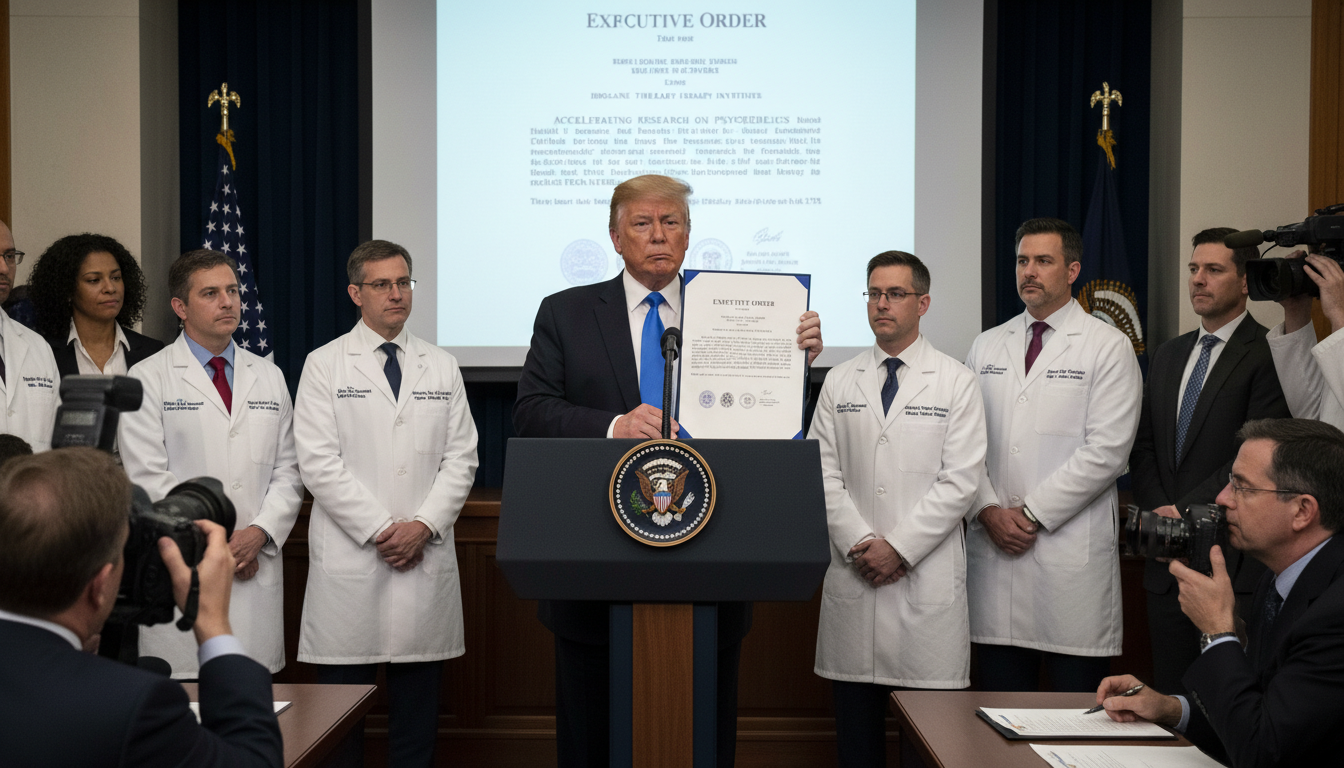
Trump signs executive order to accelerate review of psychedelics, highlighting ibogaine
Trump signed an order to fast-track review of psychedelic drugs, including ibogaine, and to channel federal funding to state clinical research programs.
President Donald Trump has signed an executive order directing federal agencies to speed up the review of several psychedelic drugs, with particular attention to ibogaine as a potential treatment for serious mental health conditions. The move, announced at an Oval Office event on Saturday, tasks the Department of Health and Human Services with prioritising research and awarding funds to states developing psychedelic treatment programmes. The order positions ibogaine and other psychedelics for an expedited regulatory pathway while prompting broader debate over safety, access and clinical oversight.
Details of the executive order and federal directives
The order instructs HHS to allocate at least $50 million to states that have enacted or are developing programmes to advance psychedelic therapies for serious illness. It also asks agencies to streamline review processes and consider psychedelics for priority review vouchers, a mechanism intended to accelerate approval for products aligned with national health goals. Officials framed the initiative as a way to provide patients with new therapeutic options while expanding scientifically rigorous study.
Oval Office event and public endorsements
The signing was attended by high-profile supporters, including podcaster Joe Rogan, who has publicly advocated for ibogaine and other psychedelics and said he had previously shared information about the drug with the president. Marcus Luttrell, a former Navy SEAL, also appeared at the ceremony and offered a personal endorsement, describing how ibogaine had a meaningful impact on his life. Organisers presented the event as a response to sustained advocacy from veterans’ groups and patient communities seeking alternatives for treatment-resistant conditions.
FDA actions and human trials for ibogaine
The executive order arrives as the Food and Drug Administration prepares parallel steps to loosen regulatory barriers for psychedelics. The agency plans to issue so-called “national priority” vouchers for three psychedelic therapies, which could accelerate approval timelines if trial data meet priorities set by the FDA. Separately, regulators are advancing the framework required to permit the first U.S. human trials of ibogaine after earlier research was paused due to cardiac safety concerns.
Safety considerations and medical risk
Clinical researchers caution that ibogaine carries known safety risks, most notably potential heart complications, which previously halted studies in several countries. Medical societies and regulators have emphasised the need for controlled clinical trials, strict cardiac monitoring protocols, and clear risk–benefit assessments before broader clinical use. Experts say any expansion of access must be paired with rigorous oversight to prevent harm and ensure that potential benefits are demonstrated in well-designed studies.
Bipartisan momentum and policy context
Expanded research into psychedelics has drawn rare bipartisan support in Washington, where lawmakers and some health officials have recognised the therapeutic promise for conditions such as depression and post-traumatic stress disorder. The order follows public commitments from Health Secretary Robert F. Kennedy Jr. and statements by FDA leadership indicating a willingness to prioritise certain psychedelic drug reviews. Observers note the political dynamics at play, including high-profile endorsements that helped shape public attention on the issue.
Veterans’ advocacy and community response
Veterans’ groups and grassroots advocates have long pushed for access to psychedelic treatments, arguing that substances like ibogaine may offer relief where conventional therapies have failed. Proponents point to anecdotal reports from individuals who say the drug reduced symptoms of addiction and trauma, while researchers call for controlled studies to quantify outcomes and identify mechanisms of effect. The federal push for funding and trial pathways is likely to accelerate state-level programmes and increase demand for clinical research partnerships.
Public health authorities, clinicians and patient advocates now face the task of translating the executive order into practical research plans, safety protocols and equitable access mechanisms. How agencies implement the funding directives and how the FDA applies priority review designations will largely determine the pace at which ibogaine and related therapies move from experimental stages to regulated clinical options. Policymakers must also reconcile differing views on medical use, criminal classification and the infrastructure needed to support safe, evidence-based treatments.
The executive order represents a significant federal step toward integrating psychedelic research into mainstream medical inquiry, but experts caution that expedited review does not replace careful clinical validation. Federal funding, regulatory attention and prominent endorsements have brought ibogaine and other psychedelics into sharper focus, setting the stage for an intense period of research, debate and policy development.
