
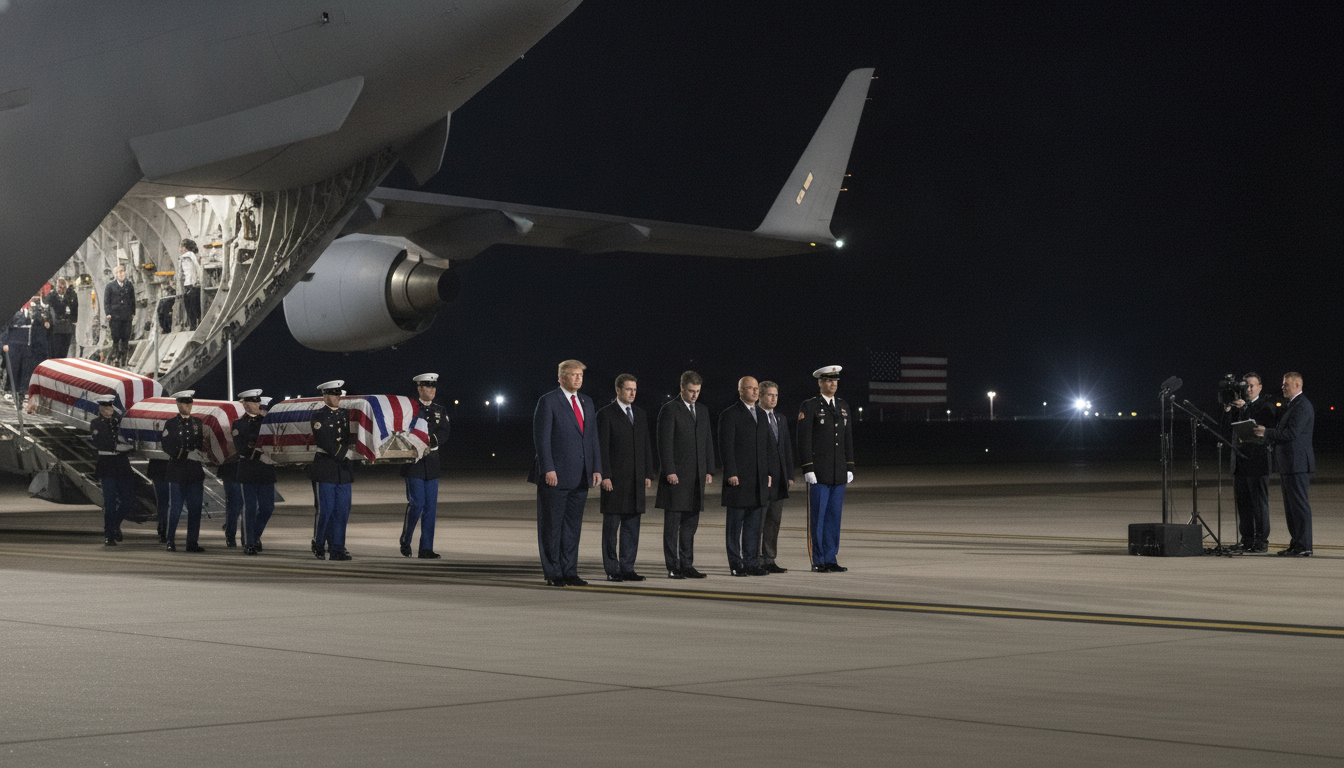
Trump at Dover dignified transfer as four U.S. soldiers killed in Iran are returned
Trump’s visit to Dover for the dignified transfer of four U.S. soldiers killed in the Iran conflict highlights domestic debate and continuing U.S. strikes.
Dover dignified transfer draws presidential visit
President Trump traveled to Dover Air Force Base to attend the dignified transfer of four U.S. soldiers killed during operations tied to the conflict with Iran. The Dover dignified transfer placed the fallen in flag-draped transfer cases on the tarmac, where senior officials and the president observed a brief moment of solemnity. Trump told reporters he believed the soldiers opposed an Iranian nuclear weapon and spoke publicly to honor them before departing the base.
Ceremony details and senior officials present
The president was flanked by senior defense officials as the C-17 transport arrived, and those present bowed their heads while the service members were carried from the aircraft. Defense Secretary Pete Hegseth and Gen. Dan Caine, the chairman of the Joint Chiefs of Staff, were among the military leaders on site. White House aides, including press secretary Karoline Leavitt and senior aide Natalie Harp, stood nearby as the transfer cases were placed into waiting vehicles.
President’s remarks and messaging on Iran
At Dover and in remarks earlier, Trump framed the deaths within the broader U.S. policy toward Iran, reiterating his position that Iran must not acquire a nuclear weapon. He defended the ongoing military actions and suggested American public opinion remained supportive of the campaign, citing an unspecified poll. That assertion contrasted with recent polling cited by other outlets showing broad public frustration with the conflict and low overall support for continued engagement.
Profiles of the four fallen soldiers
The four service members returned to the United States included Sgt. Michael Emmanuel Swinton, Pvt. Isabella Gonzales, First Lt. Tyler James Feehan, and Sgt. Angel S. Rampersad. Swinton, 30, was reported to have been killed while disposing of an Iranian drone in Iraq. Gonzales, 19, and Lt. Feehan, 25, were killed in a strike at Muwaffaq Salti Air Base in Jordan, where family members described them as dedicated and beloved by peers. Rampersad, 28, was remembered by relatives as a gentle presence and team member.
Military response and continuing strikes
U.S. Central Command confirmed that strikes against Iranian-linked targets continued, with operations reported to be ongoing for multiple consecutive days. The military said the objective of recent actions was to disrupt threats posed to commercial shipping in the Strait of Hormuz and to degrade capabilities used in attacks on coalition forces. The administration issued strong warnings that attacks on U.S. personnel would prompt retaliatory measures, framing those directives as part of a broader campaign of deterrence.
Family interactions and the president’s travel to Georgia
After the transfer, the president invited members of Lieutenant Feehan’s family to travel with him aboard Air Force One to his political rally in Georgia. Trump recounted the decision from the stage, describing the family’s reaction and praising the late officer’s character. At the rally the president celebrated the service of the fallen as the crowd responded, and the family remained visible in the audience as the event continued.
Public reaction and political ramifications
The visit and the president’s remarks occurred amid heightened public scrutiny of the Iran campaign and growing debate within political circles about the scope and costs of the conflict. Domestic polling cited by media outlets has shown a decline in public support for continued military engagement, while the administration has emphasized its efforts to limit casualties and impose costs on Iranian forces. Political observers noted the contrast between the solemnity of the transfer and the president’s subsequent campaign appearances as central to public discussion.
The Dover dignified transfer brought into sharp relief both the human cost of the conflict and the intersection of military ceremony, presidential messaging, and partisan politics, underscoring the complex national conversation over the United States’ role and objectives in the region.
