
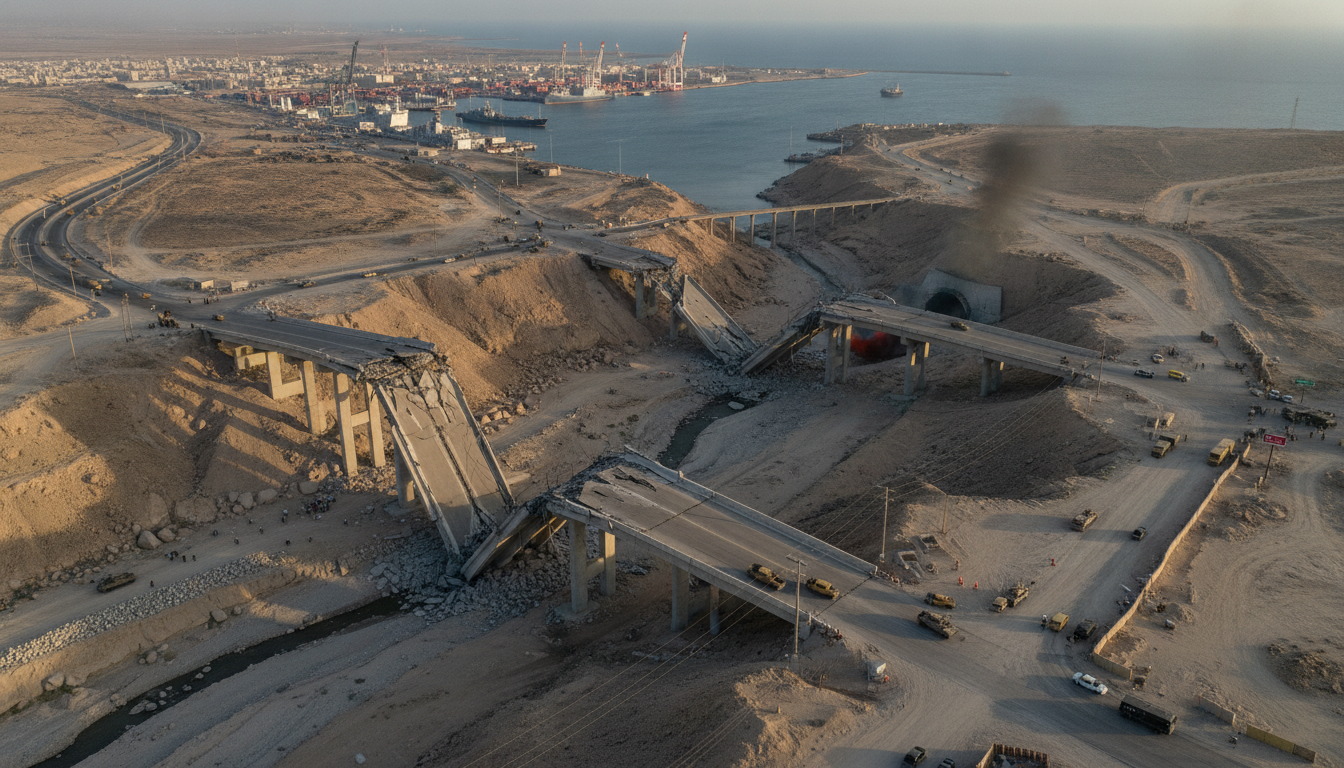
U.S. airstrikes in southern Iran damage bridges, tunnel and desalination plant
U.S. airstrikes in southern Iran damaged a tunnel, three bridges and a desalination plant, severing key transport links and unsettling communities from Bandar Abbas to Ahvaz overnight.
The strikes, carried out in the early hours, hit multiple locations across southern Iran and have left residents shaken and transport routes impaired. Bandar Abbas and the wider Hormozgan Province sustained damage to road links that officials say temporarily isolated parts of the region. Authorities urged people to avoid non-essential travel as repairs and assessments were underway.
Damage to roads, a tunnel and three bridges in Hormozgan
Iranian provincial officials reported significant structural damage around Bandar Abbas after the overnight strikes, saying a tunnel and three bridges were among the sites struck. Local authorities warned that some routes were unsafe and appealed to motorists to postpone travel until further inspections could be completed.
The destruction of those links has interrupted normal movement around the Strait of Hormuz, a vital maritime corridor, complicating logistics for both civilian traffic and commercial operations. Provincial statements described work to clear debris and reopen alternatives, but officials cautioned that full restoration would take time.
Rail service and alternative routes see partial restoration
By Saturday afternoon, state-run outlets and local officials reported that passenger train services from Bandar Abbas had resumed and that an eastern diversion route had been opened. These measures were presented as temporary fixes to restore mobility while major repairs continue on damaged infrastructure.
Authorities said emergency crews prioritized reopening rail and secondary roads to reconnect communities and ensure delivery of essential goods. Transport operators indicated services would remain subject to change as assessments progress and security conditions are monitored.
U.S. military outlines targets, denies mention of civilian sites
The U.S. military described its strikes as aimed at military and logistical capabilities, identifying surveillance nodes, logistics hubs, underground weapons stores and maritime assets among intended targets. The military statement did not specify any deliberate strikes on civilian infrastructure.
Iranian state outlets, however, reported damage to additional facilities including a desalination plant in the southern port area of Jask and multiple sites in other provinces. U.S. authorities had not immediately commented on those specific claims, and independent verification of all reported hits remained limited.
Repeated strikes and civilian fear in Ahvaz
Residents of Ahvaz, the capital of Khuzestan Province, said nightly explosions have become a familiar and frightening pattern, with many living near the southeastern outskirts where military sites are concentrated. Locals described blast waves that rattle homes and keep families on edge well into the night.
Several residents recounted harrowing nights when children were particularly terrified and families feared venturing outside, worried the most intense blows could reach residential areas. Even when strikes appear to target military zones, the shocks and noise have had a palpable psychological impact on civilians across the city.
Utilities and heat compound humanitarian concerns
The attacks come during a period of intense summer heat, with temperatures in some southern cities reaching extreme highs. Local residents reported daily power outages that can last hours and cut water supply when pumps fail, exacerbating the strain on already vulnerable populations.
Officials and aid workers warned that damage to infrastructure such as desalination facilities could have implications for water access in coastal areas. Combined with fuel and food price pressures, interruptions to power and water services raise the risk of broader humanitarian difficulties for those already facing economic hardship.
Economic effects and reduced commercial activity
Market operators and shopkeepers in affected cities said commerce is continuing but foot traffic has declined sharply as people conserve money and avoid travel. The economic fragility of the region, linked to broader national challenges, has been deepened by the disruptions to transport and basic services.
Local traders reported layoffs and rising prices for staples, making everyday life more difficult even where stores remain stocked. Analysts caution that prolonged interruptions to transport corridors and port activity could further pressure supply chains and business confidence in the south.
The strikes, while described by U.S. forces as limited to military and strategic targets, have produced ripple effects across southern Iran’s transport network, utilities and daily life. Authorities on both sides of the reporting gap say assessments and repairs are underway, yet residents remain anxious about the near-term prospects for safety, services and commerce.
