
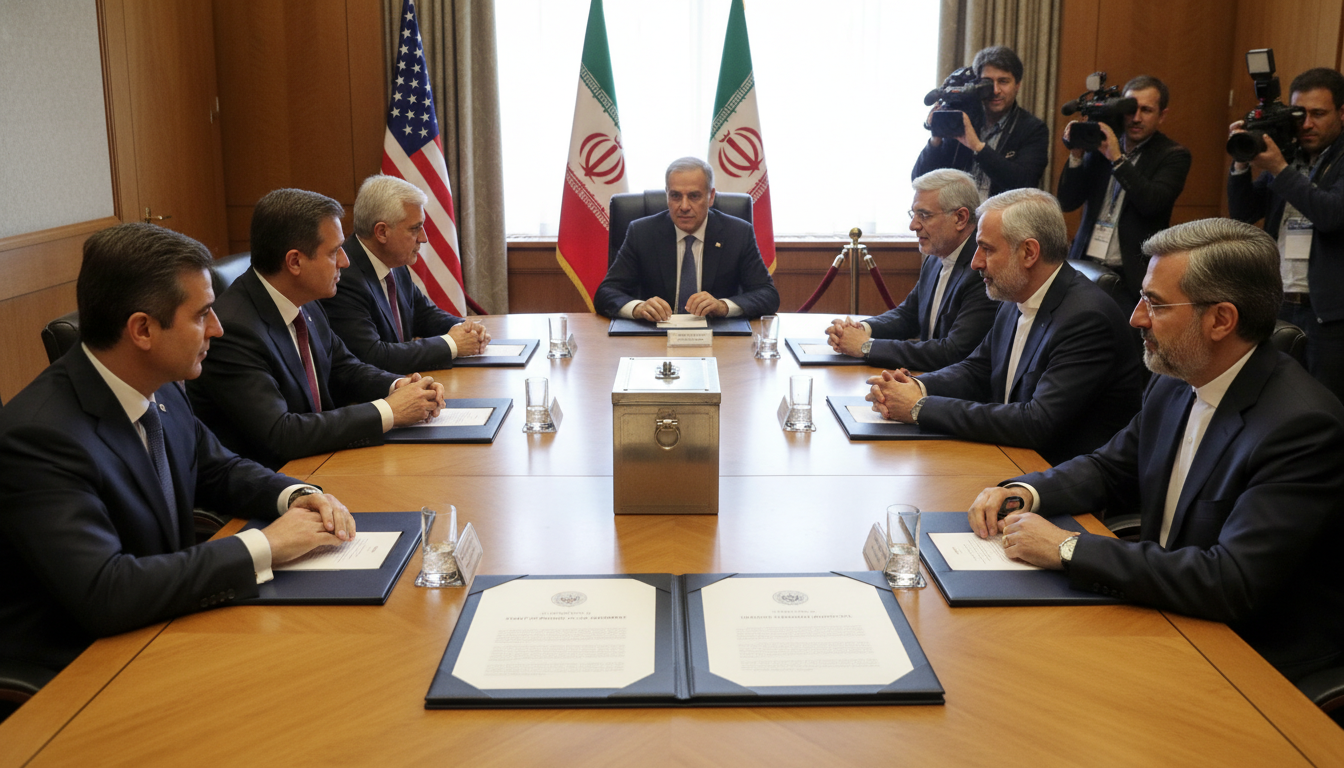
U.S.-Iran deal edges closer as negotiators discuss Strait of Hormuz reopening and uranium disposal
U.S.-Iran deal edges closer as negotiators weigh reopening the Strait of Hormuz and disposing of Iran’s highly enriched uranium, key terms remain unresolved.
The United States and Iran have reached an in-principle understanding on a framework that could wind down the wider Middle East hostilities by reopening the Strait of Hormuz and addressing Iran’s stockpile of highly enriched uranium. The U.S.-Iran deal, as described by senior officials on both sides, remains unfinished and subject to further negotiation, with key security, economic and verification details still to be settled. President Trump acknowledged the agreement was not yet fully negotiated, while unnamed U.S. and Iranian officials outlined competing drafts and timelines.
Outline of the draft memorandum
According to U.S. and Iranian participants briefed on the talks, the proposed memorandum would halt fighting across multiple fronts and re-establish commercial passage through the Strait of Hormuz without tolls. Iranian interlocutors told reporters the draft also contemplates lifting portions of the U.S. naval blockade and arranging the release of frozen Iranian funds. Both sides described the current understanding as provisional and subject to written, verifiable commitments before any measures are implemented.
Officials emphasized the deal is intended as an interim step that creates breathing room for more comprehensive negotiations on nuclear and regional issues. The arrangement under discussion would create a window to address technical nuclear matters while immediately reducing kinetic confrontations that have disrupted global markets and shipping lanes.
U.S. public statements and conditions
U.S. administration officials have publicly portrayed the deal as conditional and incomplete, stressing that any reopening of the Strait of Hormuz would not involve Iranian-imposed tolls or new fees. A senior U.S. official briefing reporters said Washington would not immediately unfreeze Iranian assets, but indicated an opening to begin that process if Iran surrendered its highly enriched uranium stockpile. “No dust, no dollars,” the official was quoted as saying, using the administration’s shorthand for nuclear materials.
President Trump posted on social media that the proposal was “not even fully negotiated,” while administration spokespeople sought to frame the emerging text as an interim agreement rather than a final settlement. U.S. representatives signaled readiness to accept a phased approach to nuclear constraints, acknowledging the technical complexity of dismantling enrichment capabilities on short notice.
Iran’s reported demands and negotiating posture
Iran has not issued an official, detailed public statement on the draft text, but Iranian foreign ministry officials have described talks as reaching a “final stage” in which a memorandum may be possible. Anonymous Iranian sources outlined a package that would stop active hostilities, reopen the Strait of Hormuz without tolls, lift the naval blockade and secure the release of roughly $25 billion in frozen assets.
Those Iranian sources said the memorandum would not immediately resolve the nuclear file but would commit Tehran to negotiate the disposition of its highly enriched uranium within a 30- to 60-day window. It remains unclear whether the Iranian proposal and the U.S. description refer to the same document or to differing drafts that still require reconciliation.
Nuclear inventory and technical options
A central outstanding issue is Iran’s inventory of highly enriched uranium and the mechanics for ensuring it cannot be converted quickly to a weapon. International monitors have reported Iran holds a significant quantity of uranium enriched to 60 percent, and negotiators are debating whether material should be transferred to a third party, diluted to lower enrichment levels, or otherwise secured under international supervision.
Possible technical solutions mirror past approaches, including shipping material abroad for storage or conversion—as occurred under earlier diplomatic arrangements—or chemically diluting the stockpile to concentrations unsuitable for a weapon. Washington has historically sought long moratoriums on enrichment; Tehran has proposed shorter timelines, and officials said enforcement mechanisms may be as important as the duration of any restriction.
Regional and domestic responses
The emerging deal has prompted sharp reactions from regional capitals and U.S. lawmakers. Israeli government officials expressed concern that an interim agreement could leave Iran’s long-term nuclear and missile capabilities insufficiently constrained, while some U.S. Republicans criticized the administration for engaging with Tehran without securing immediate, verifiable concessions. Hezbollah’s leadership framed any cease-fire terms as a political victory for Iran, and analysts warned of fractures among U.S. allies if core security concerns—particularly ballistic missiles—are not addressed.
Within Washington, senators and foreign policy commentators debated the prudence of a short-term cease-fire without robust verification, with some calling for congressional oversight before assets are released or sanctions eased. The mixed reaction underscores the political and strategic complexity that negotiators face as they try to convert verbal understandings into signed commitments.
The next phase of talks will focus on drafting precise language, setting timelines for uranium disposition, establishing verification protocols, and determining the sequencing of military de-escalation and economic measures. Both sides say documentation and enforceable mechanisms are priorities, but until those technical elements are agreed and a final memorandum is signed, the U.S.-Iran deal will remain a fragile, interim arrangement subject to rapid change.
