
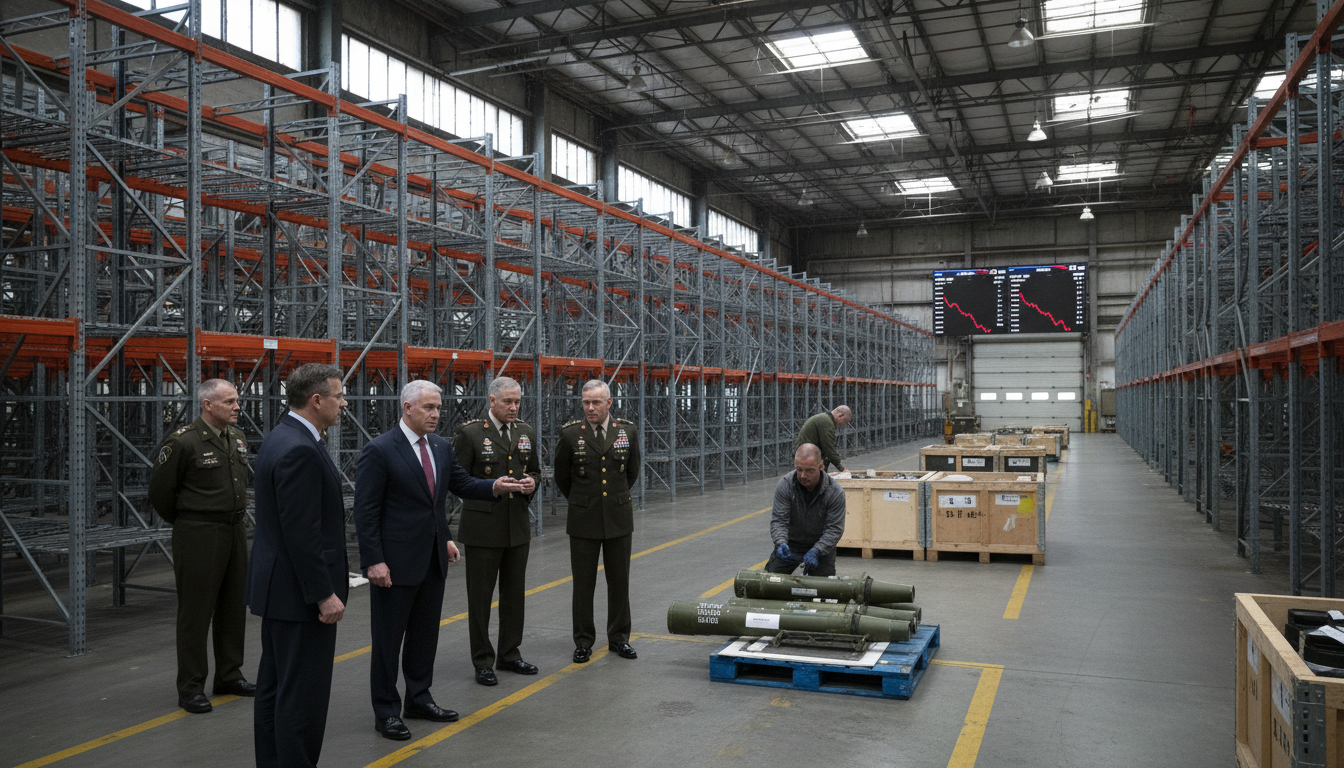
U.S. munitions stockpile severely drained after Iran war, forcing urgent production and funding decisions
Iran war has drained U.S. munitions stockpiles, depleting JASSM-ER missiles and Patriot interceptors, prompting rapid production and funding decisions.
The United States has expended large swathes of its long-range and air-defence munitions in the Iran conflict, leaving key inventories at historically low levels and creating urgent replenishment needs. Internal Pentagon estimates and congressional officials say the campaign has used roughly 1,100 JASSM-ER cruise missiles and more than 1,000 Tomahawks, along with over 1,200 Patriot interceptors. The depletion has compelled the Pentagon to shift weapons and forces from Asia and Europe and to press industry and lawmakers for accelerated production and funding.
High expenditure on cruise and interceptor missiles
The campaign relied heavily on precision long-range strikes, consuming hundreds of costly missiles designed for high-end warfare. JASSM-ER missiles, valued at roughly $1.1 million each, and Tomahawks, which cost several million dollars apiece, were used in significant numbers, according to the Pentagon estimates and anonymous congressional sources. The scale of use — far exceeding normal annual procurement rates — has reduced the inventories available for other potential contingencies.
These allocations have immediate strategic implications because both cruise missiles and interceptors play central roles in deterrence and strike planning. The U.S. had built many of these stocks with potential conflicts in Asia and Europe in mind; their rapid consumption to prosecute the Iran operation has altered planners’ assumptions about available options in other theaters.
Financial toll and cost estimates
Independent analyses place the conflict’s direct munitions bill in the tens of billions of dollars, with estimates clustered around $25 billion to $35 billion to date. Think tanks and former Pentagon officials compiling battlefield expenditure data say the daily fiscal toll approached about $1 billion during the intense phases of fighting. The Pentagon has not publicly released a consolidated cost figure for the entire period of operations before the cease-fire.
Beyond missile and bomb costs, the Pentagon also incurred replacement and recovery expenses for damaged aircraft and specialized equipment used in rescue and strike missions. Those losses add hundreds of millions of dollars to the tally and reinforce the broader resource challenge facing defence planners and budget makers.
Operational shifts: weapons and forces moved to Middle East
To sustain operations, U.S. Central Command drew weapons and units from U.S. forces in the Pacific and Europe, creating visible gaps in forward posture and air-defence coverage. Carrier groups, Marine Expeditionary Units and advanced missile-defence interceptors — including elements of THAAD and Patriot batteries — were redeployed to shield forces and bases in the Middle East. Senior commanders have acknowledged that such movements have consequences for readiness in other regions.
The transfers included interceptors from allied deployments in Asia and other sophisticated systems that had been earmarked to counter threats in the Indo-Pacific. Officials warn that sustaining two demanding theaters of operations with the same finite global inventory strains the force and complicates contingency planning against near-peer rivals.
Production pacts stalled by funding delays
The Pentagon announced multi-year agreements with major defense contractors earlier this year to expand production capacity for precision-guided munitions and interceptors, but officials say those plans have not yet translated into larger output. Contractors reportedly agreed to finance factory expansions in return for long-term orders, but the start of expanded production is constrained by the absence of formal congressional funding to underwrite increased purchases.
Lawmakers and defence leaders say that without rapid budgetary action, ramping up output to restore stocks to pre-conflict levels could take years at current production rates. Senior members of the Armed Services Committees have urged expedited appropriations to allow manufacturers to move from planning to construction and to hire additional workers.
Impact on Europe and Indo-Pacific readiness
NATO and Indo-Pacific commanders are feeling the effects of drawdowns, with some training exercises curtailed and surveillance and attack drone inventories thinned by reassignments. Pentagon information reviewed by defence analysts suggests that certain capabilities critical to deterring Russian aggression in Europe and North Korean or Chinese coercion in Asia are now reduced. Commanders warn that sustained shortages would limit the U.S. ability to surge forces or sustain protracted campaigns simultaneously across multiple regions.
Military leaders have emphasized that while current operations continue, the reallocation of assets increases risk in other theaters and may require allies to adjust their own force posture and procurement plans to compensate for temporary U.S. shortfalls.
Pentagon and White House responses
The White House has contested characterizations that U.S. forces are dangerously short of munitions, with senior spokespeople asserting that America maintains a powerful military and global stockpiles sufficient for defence. The Pentagon’s public statements have been more circumspect, declining to comment on specific theater requirements for operational security while acknowledging finite limits to supplies. Congressional leaders across parties are pressing for action to restore inventories and boost domestic production capacity.
Defense officials say replenishment will be a priority in upcoming budget deliberations and that resolving the gap will require concrete appropriations, accelerated industrial mobilization and continued collaboration with allied partners. The choices made in the next months will determine how quickly stockpiles can be rebuilt and how ready U.S. forces will be to respond to new crises.
Rebuilding munitions stocks will test the U.S. defence industrial base and political will, as officials balance near-term operational demands against longer-term strategic commitments in Europe and the Indo-Pacific.
