
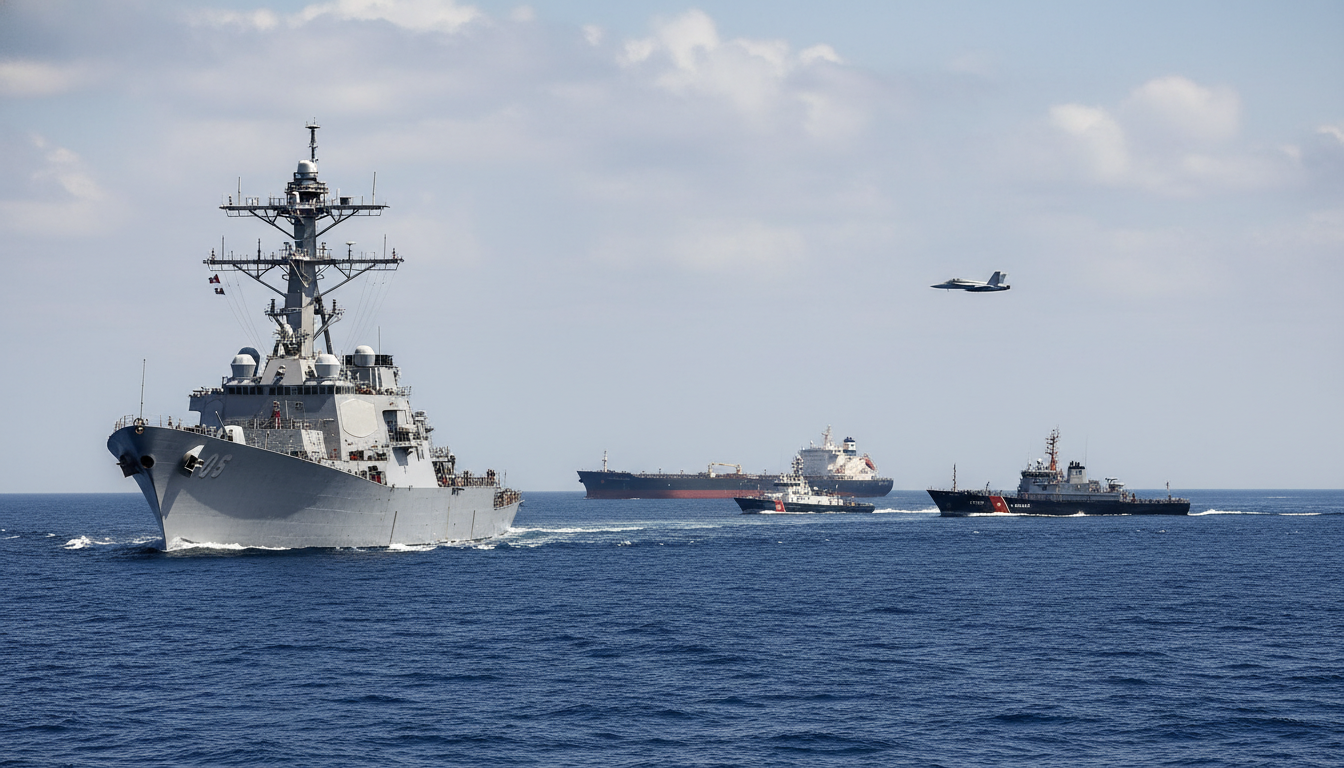
U.S. maritime blockade on Iran to continue, US defence minister says
U.S. maritime blockade on Iran will continue, US defence minister says — Washington prepared to seize more oil tankers and enforce a global naval embargo.
The United States has signalled that its maritime campaign against Iran will persist, with Washington prepared to expand seizures of Iranian oil tankers and sustain pressure at sea. U.S. defence minister Pete Hejgseth told reporters that Iran still has an opportunity to seek a constructive agreement, but that the United States is ready for the next phase of operations. He described the naval measures as global in scope and stressed that they will continue as long as necessary.
U.S. defence minister frames naval campaign as global effort
Pete Hejgseth characterized the operation as part of a broader international response rather than a unilateral action confined to regional waters. He said the United States is not acting under haste and is not under pressure to reach a diplomatic settlement at any cost. The defence minister added that Washington retains options and remains “with its finger on the trigger” while offering Tehran a pathway to a mutually acceptable deal.
Seizures and rerouting: 34 vessels diverted since operations began
Officials reported that 34 commercial vessels have been rerouted since the maritime measures were implemented, reflecting a growing pattern of operational disruption around Iranian ports. Hejgseth indicated that further seizures of Iranian oil tankers are anticipated as part of the enforcement strategy. The rerouting has affected commercial traffic and required navies and shipping companies to adjust routes and schedules accordingly.
Definition of the blockade: ‘Nothing enters or leaves Iran’
According to the defence minister, the blockade is being applied in a way that limits inbound and outbound flows tied to the Iranian economy and its oil exports. He described the effect bluntly, saying the aim is to deny Iran the ability to move certain goods and petroleum products by sea. While not all maritime traffic is targeted, the stated intent is to make it increasingly difficult for sanctioned commodities to transit Iranian ports.
Impact on shipping and energy markets
Shipping companies and market observers are monitoring insurance rates, freight costs and port operations as the blockade continues. Disruption to established routes can raise transportation expenses and create short-term volatility for regional fuel supplies and global oil flows. Traders and logistics firms are likely to factor in the operational risk when planning voyages through the wider Middle East and adjacent sea lanes.
Diplomatic window and pressure for a negotiated outcome
Despite the escalation at sea, Hejgseth emphasised that Tehran still faces a diplomatic choice and could pursue a “good and prudent” agreement, in his words. The United States framed the naval campaign as complementary to diplomacy, designed to strengthen negotiating leverage without closing the door to talks. Officials described enforcement steps as calibrated pressure intended to alter calculations in Tehran while preserving the possibility of a political settlement.
Enforcement posture and risk management
Washington signalled it will sustain the maritime posture while closely managing the risk of wider confrontation. The defence minister said deterrence and precise law enforcement are central to the approach, with seizure operations guided by legal authorities and intelligence. Military planners and partners will balance operational objectives against the need to avoid unintended escalation that could draw additional regional actors into conflict.
The continuation of the U.S. maritime blockade on Iran marks a significant phase in tensions over Tehran’s activities and the movement of oil by sea. With more tankers at risk of seizure and commercial routes already adjusted, regional governments and global firms are watching closely for further developments.
