
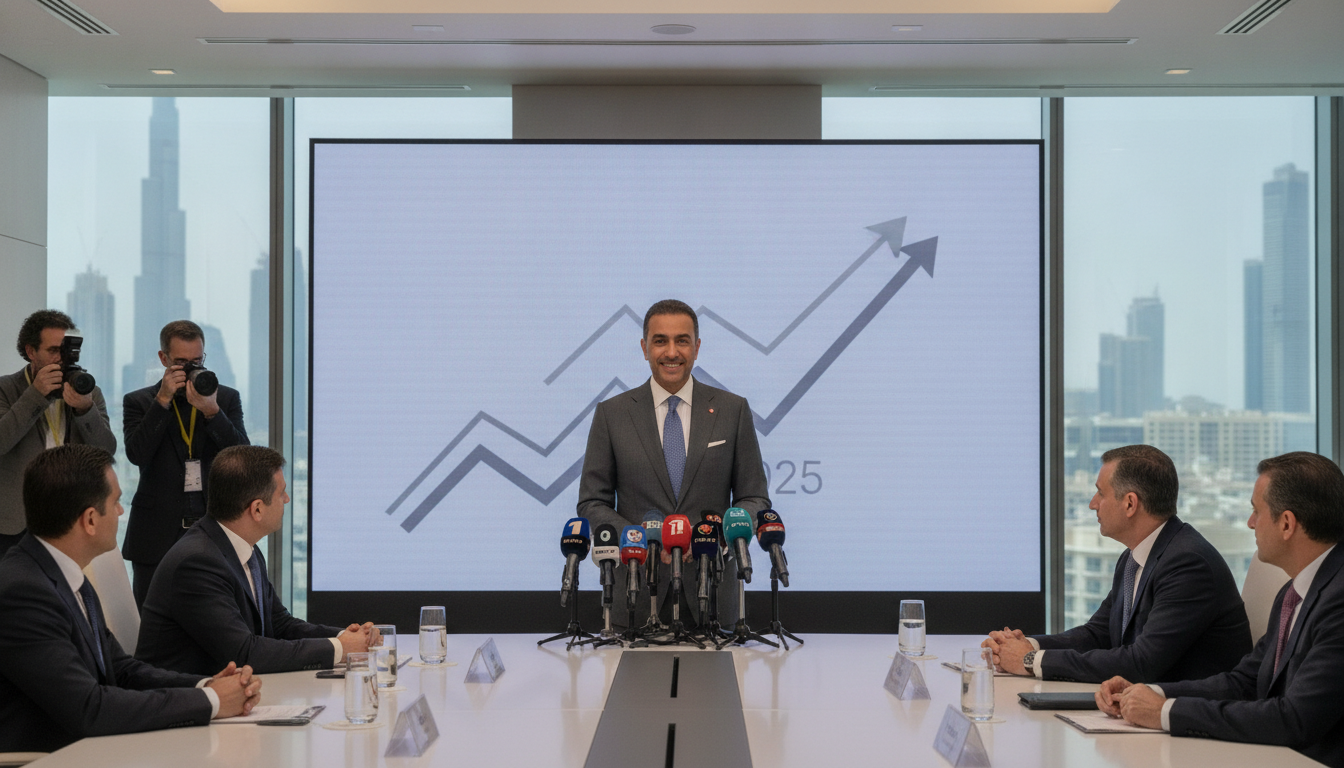
Ex-e& CEO Hatem Dowidar reacts after being named among highest-paid CEOs in the UAE 2025
Ex-e& chief Hatem Dowidar says public filings explain his placement on the list of highest-paid CEOs in the UAE 2025, and frames the reported AED 20.24m as consistent with global executive pay norms.
Hatem Dowidar, the former group chief executive of e&, addressed his inclusion among the highest-paid CEOs in the UAE 2025 after public governance reports placed him second on the list.
Speaking to the CNN economic platform, Dowidar said he was not surprised by the ranking because compensation figures for listed companies are disclosed publicly and accessible to anyone who seeks them.
He described the reported AED 20.24 million as within the range typical for senior executives in technology and telecommunications globally, and urged readers to weigh such figures against the responsibilities of the role.
Dowidar’s public response
Dowidar told the CNN economic platform that the pay figure, while large in isolation, should be seen in context of international executive remuneration.
He emphasized that pay for top executives of listed firms is published in corporate governance and integrated reports, making the numbers visible and verifiable.
The former CEO also suggested that, compared with peer markets, his reported compensation is middling and possibly below international averages for similar roles.
2025 ranking of top executive pay
A review published in May by Emarat Al Youm, based on companies’ 2025 governance and integrated reports filed on market websites, placed Emaar’s executive chairman Mohamed Alabbar at the top.
Alabbar’s combined salary, allowances, bonuses and business-related travel expenses were recorded at about AED 61.3 million for 2025, the survey found.
Dowidar ranked second with roughly AED 20.24 million, followed by Khalid Jassim bin Kalban of Dubai Investments at about AED 18.36 million and Jasem H. Thabet of TAQA at about AED 15.14 million.
Detailed placements and figures
The list continued with Emaar CEO Amit Jain recorded at approximately AED 14.28 million and Aldar’s CEO Talal Al Dheyabi at about AED 13.41 million.
du’s chief Fahad Al Hassawi appeared at roughly AED 13.05 million, while Yasser Nasser Zaghoul of NMDC was near AED 12.66 million.
Masood Mohammed Sharif, then CEO of e& UAE, was reported at about AED 12.07 million and Union Properties’ Amir Khan Sahib at roughly AED 9.24 million.
Scope and methodology of the ranking
The figures cited derive from disclosed total remuneration — salaries, allowances, short‑term cash incentives, long‑term incentive payouts and certain business expenses — as published in 2025 annual filings.
The survey specifically covered companies listed on UAE financial markets and used publicly available governance and integrated reports uploaded to the exchanges’ websites.
Because the dataset is confined to listed entities, it reflects disclosure practices rather than a complete cross‑section of all large employers in the UAE.
Listed companies versus the wider market
Analysts and corporate leaders note that lists limited to listed companies can under‑ or overstate relative pay when private and state‑owned firms are excluded.
Dowidar himself pointed out that including major unlisted firms could change rankings significantly, since many large private companies do not publish detailed executive pay data.
The difference in disclosure standards between listed and unlisted entities means any comparative table should be read as representative of the listed sector rather than the entirety of the UAE economy.
Transparency and governance implications
Public reporting of executive remuneration is designed to bolster investor oversight and corporate governance by showing how boards reward senior management.
Such disclosures allow shareholders and regulators to evaluate alignment between pay and performance, and to compare packages across companies operating in similar sectors.
The debate over executive pay levels — particularly in high‑growth sectors such as technology and telecommunications — continues as markets weigh competitiveness against stakeholder expectations.
The published list and Dowidar’s remarks have renewed attention on how executive pay is presented and interpreted in the UAE, prompting calls from some observers for broader comparisons that include private firms and clearer explanations of long‑term incentive structures.
As annual reports and governance disclosures remain the primary source for these figures, investors, media and the public will likely continue using them to assess executive compensation trends across Dubai and Abu Dhabi.
