
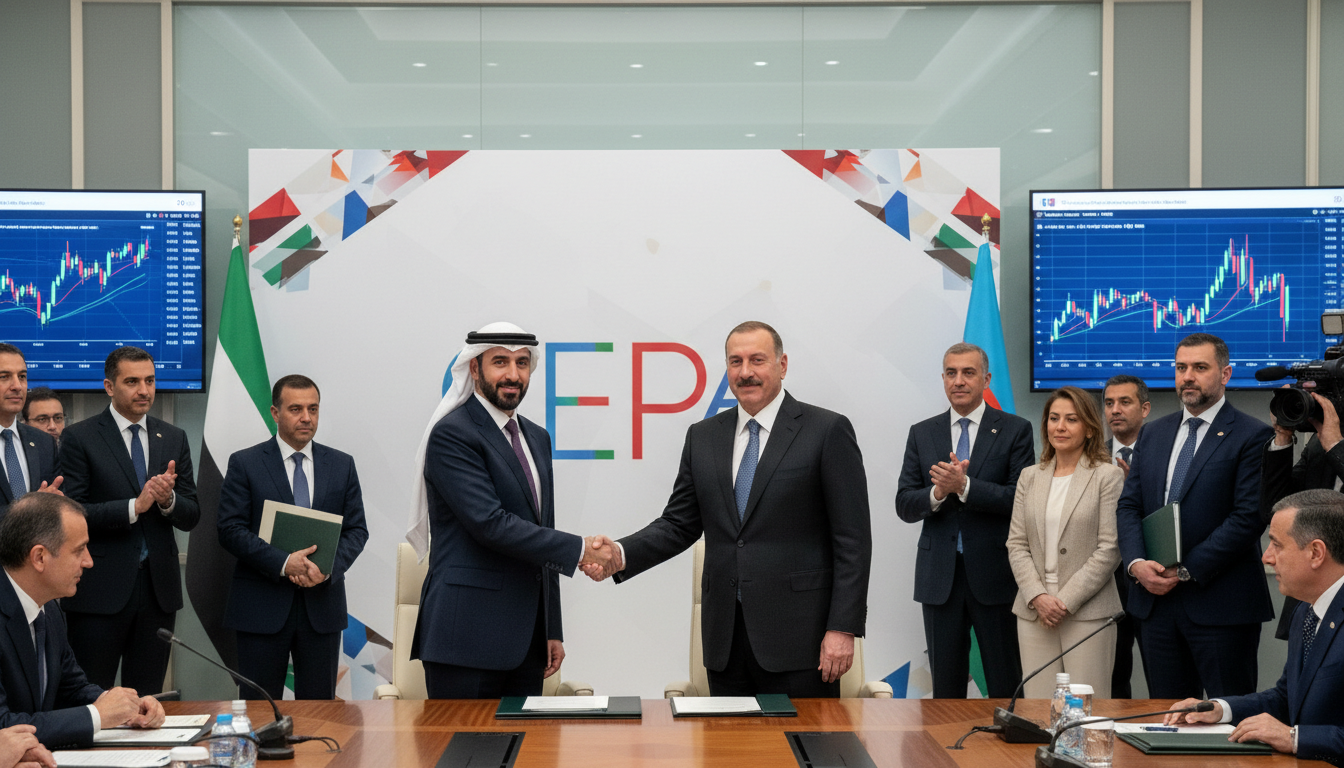
UAE-Azerbaijan CEPA Enters into Force, Unlocking Trade and Investment Opportunities
UAE-Azerbaijan CEPA enters into force, cutting tariffs and opening services to expand trade, investment and private-sector partnerships between both countries.
The UAE-Azerbaijan CEPA has officially entered into force, creating a new legal framework to accelerate trade, investment and private-sector cooperation between the two countries. Signed in July 2025, the agreement reduces or eliminates tariffs on a majority of goods and is the first Azerbaijani trade deal to include a dedicated services chapter. Officials say the pact will deepen market access, boost exports and widen opportunities for Emirati companies across finance, construction, logistics and renewables.
CEPA Enters Into Force and What It Covers
The agreement, concluded in July 2025, formally establishes preferential treatment for goods and services exchanged between the UAE and Azerbaijan. It removes or reduces duties on many product lines while introducing new rules for services, government procurement and investment protections. These provisions aim to streamline customs procedures, improve regulatory cooperation and create clearer conditions for long-term joint ventures.
Tariff Reductions and Services Market Access
By lifting tariffs on a large share of traded goods and opening services sectors, the CEPA extends concrete commercial benefits to exporters and service providers in both markets. For the first time Azerbaijan’s trading partners will have a services chapter tailored to finance, consulting and professional services, enabling firms to negotiate cross-border contracts with fewer restrictions. The reduction of non-tariff barriers and improved transparency are expected to lower costs and shorten delivery times for firms operating along the supply chain.
Opportunities for UAE Businesses and SMEs
The agreement creates fresh avenues for UAE-based investors, contractors and small and medium enterprises seeking entry into the Caucasus and wider Eurasian markets. Emirati firms in logistics, advanced manufacturing and renewable energy stand to benefit from enhanced access and predictable rules for cross-border projects. In addition, the CEPA’s investment provisions are designed to protect capital and facilitate dispute resolution, which should encourage more joint ventures and project-level financing from UAE-based funds.
Trade Growth and Investment Footprint to 2025
Bilateral economic ties have already strengthened in recent years, with non-oil trade rising sharply to more than $2.2 billion in 2025, up 31.4 percent across the prior two-year period. The UAE is Azerbaijan’s largest Arab trading partner, accounting for around 40 percent of its commerce with the MENA region, and remains the leading Arab investor with capital exceeding $1 billion. Policymakers anticipate the CEPA will accelerate this trend by widening market reach for exporters and supporting new cross-border services contracts.
Strategic Location and Logistics Linkages
Azerbaijan’s position on key North–South transit corridors gives the CEPA a strategic logistics dimension for Emirati trade flows to Eurasian and Central Asian markets. Enhanced regulatory alignment and tariff relief could make multi-modal routes through the Caucasus more competitive, particularly for time-sensitive goods and project materials. For the UAE, which pursues diversification of trade partners and supply routes, stronger links to Azerbaijan offer complementary pathways to European and Central Asian customers.
Implementation Roadmap and Institutional Steps
Officials have signalled a phased implementation approach combining tariff schedules, regulatory alignment and joint working groups to address sector-specific barriers. Ministries and trade bodies in both countries will establish technical committees to monitor compliance, facilitate certifications and support SMEs in meeting new market requirements. Stakeholders expect the initial months of implementation to focus on customs facilitation, professional services licencing and investment promotion activities.
The coming months will be critical for translating the CEPA’s legal commitments into concrete commercial outcomes, with trade promotion events, business delegations and financing packages playing an important role. As companies adapt, the success of the pact is likely to be measured by increases in bilateral services contracts, infrastructure partnerships and higher-value manufacturing tie-ups.
