
UAE-Indonesia digital payments: Central banks agree to deepen ties and link cross-border systems
UAE and Indonesia agree to deepen central bank cooperation to link payment systems and boost UAE-Indonesia digital payments, trade and investment flows.
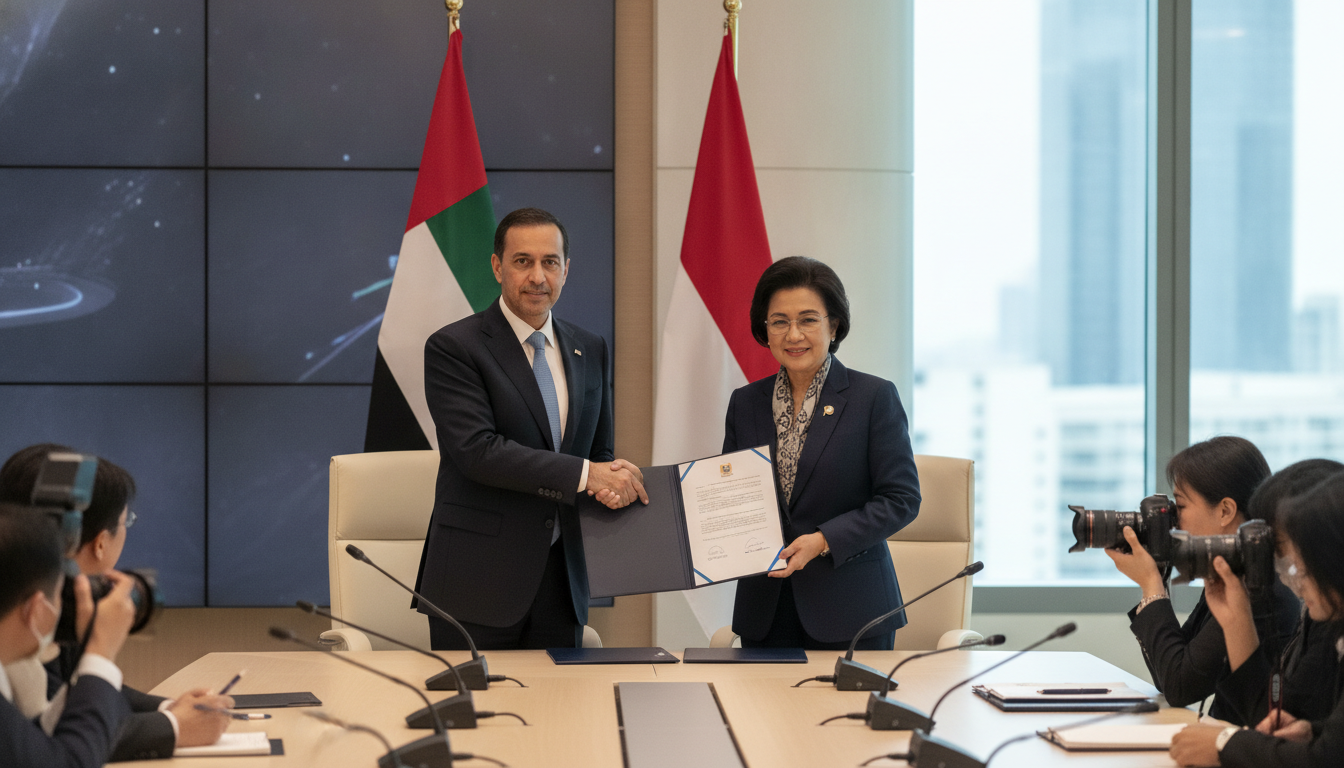
The Central Bank of the UAE hosted a high-level meeting with Indonesia’s ambassador to the UAE today, advancing plans to strengthen UAE-Indonesia digital payments and broader financial cooperation. Governor Khaled Mohamed Balama and Ambassador Yudha Nugraha, supported by senior officials from both sides, discussed practical steps to connect payment systems and facilitate faster, lower-cost cross-border transactions. The talks focused on digital payment solutions, regulatory coordination and knowledge exchange to support rising trade and investment between the two countries.
Central bank meeting in Abu Dhabi
The meeting took place at the Central Bank’s headquarters in Abu Dhabi and included assistant governors and senior banking officials. Discussions centred on practical cooperation that can be implemented in the near term to enhance financial links between the UAE and Indonesia. Both sides signalled a shared interest in using technology to improve transparency, reduce costs and speed up settlement times for bilateral transactions.
Plans to link cross-border payment systems
Officials explored mechanisms to link domestic payment rails so transfers between UAE and Indonesian banks can be executed more efficiently. Proposals under consideration include technical interoperability, message standards alignment and pilot corridors for specific transaction types. Emphasis was placed on solutions that preserve security and compliance while delivering materially lower costs for businesses and remittance flows.
Emphasis on digital payment infrastructure and innovation
The UAE delegation highlighted the country’s advanced digital payment infrastructure and ongoing innovation in regulatory frameworks. The Central Bank stressed its commitment to developing secure, scalable digital payment platforms that facilitate trade and investment. Indonesia’s envoy praised the UAE’s progress and discussed ways to accelerate joint innovation initiatives, including pilot programs and information-sharing on digital payment best practices.
Use of local currencies to simplify settlement
A key area of agreement was the potential to increase the use of local currencies for bilateral settlements to reduce reliance on third‑country currencies. Both parties noted that greater local currency usage could lower transaction costs and currency conversion risks for traders and investors. Officials discussed frameworks for currency swap arrangements, bilateral liquidity arrangements and technical arrangements for direct local-currency clearing.
Trade and investment implications for both economies
Linking payment systems and expanding digital finance cooperation is expected to support the growing commercial ties between the UAE and Indonesia. Faster, cheaper cross-border payments can boost small and medium-sized enterprises, ease trade financing and encourage greater two-way investment. Delegates said the initiatives would complement broader economic cooperation and contribute to diversification goals in both countries.
Next steps and implementation roadmap
Authorities agreed to continue dialogue and establish working groups to translate policy intent into executable pilots and timelines. These groups will examine regulatory harmonisation, anti-money‑laundering safeguards and the technical standards needed for interoperability. Both sides committed to exchanging expertise and accelerating projects that can demonstrate early benefits to businesses and consumers.
The meeting also coincides with the 50th anniversary of diplomatic relations between the UAE and Indonesia, which officials described as an opportunity to deepen institutional ties. Authorities voiced optimism that expanded central bank cooperation on digital payments will strengthen economic links and support long-term strategic partnership objectives.
Officials said they will report back on concrete pilot plans and anticipated timelines in coming months, with an emphasis on projects that can demonstrate measurable improvements in speed, cost and transparency for cross-border transactions. The two countries aim to leverage these efforts to widen commercial exchange and investment flows while maintaining robust regulatory and compliance standards.
