
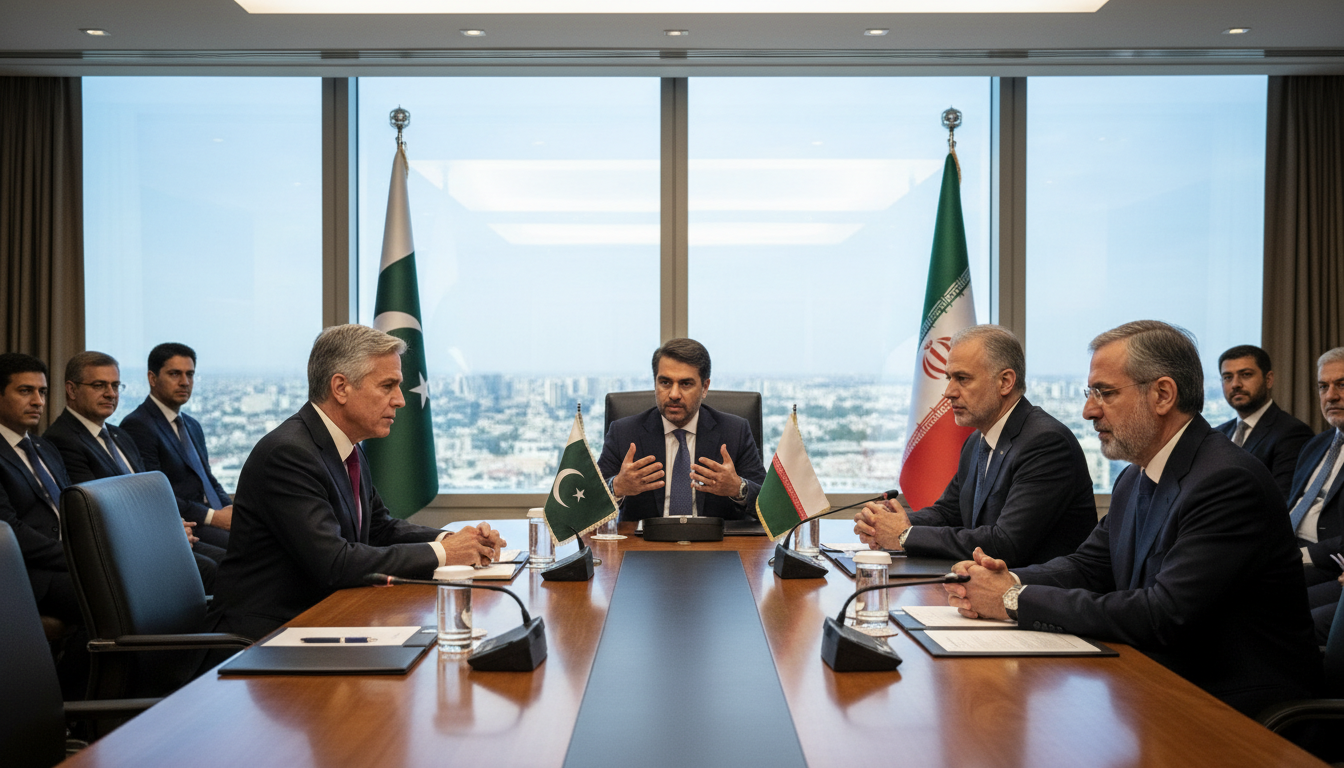
U.S.-Iran peace talks in Pakistan may proceed this week amid blockade and maritime seizure
U.S.-Iran peace talks in Pakistan may proceed this week as Washington and Tehran exchange mixed signals while a U.S. naval blockade and the seizure of an Iranian cargo ship raise the stakes for negotiators.
Both Washington and Tehran signalled on Monday that delegations could return to Islamabad for another round of U.S.-Iran peace talks in Pakistan this week, even as each side issued warnings and public doubts about the prospects for a durable deal. U.S. officials said Vice President JD Vance was expected to travel to Pakistan on Tuesday, and Iranian sources indicated Parliament Speaker Mohammad Bagher Ghalibaf would attend if Mr. Vance went. The developments come as a two-week cease-fire approaches its Wednesday expiration.
U.S. and Iran Signal Attendance at Pakistan Talks
Two U.S. officials briefed on planning said Vice President Vance would depart Washington for Islamabad on Tuesday, underscoring Washington’s intent to pursue diplomacy despite recent confrontations. Tehran did not issue a formal public commitment, but two senior Iranian officials told reporters that Mr. Ghalibaf would lead Tehran’s delegation if the U.S. vice president participated.
Officials on both sides tempered optimism with caution, noting that past rounds have produced limited progress and that trust remains shallow. Iranian spokesmen publicly described lingering doubts about U.S. intentions, and Iranian leadership emphasized they would not accept negotiations conducted under coercion or with preconditions.
Seizure of Iranian Cargo Ship Triggers Retaliation Threats
Tensions escalated on Sunday after U.S. forces seized an Iranian cargo vessel near the Strait of Hormuz, a move Tehran’s armed forces denounced as “piracy” and vowed to retaliate against. A semiofficial Iranian news outlet quoted military authorities warning of a response in the near term, raising the risk that maritime incidents could derail diplomatic efforts.
The seizure added to a volley of public statements from leaders on both sides. President Trump posted on social media about the prospect of a prosperous future for Iran under new leadership, while Iran’s President Masoud Pezeshkian appealed for restraint and warned that war would harm both countries and the wider region. Those competing messages reflected the fraught mix of pressure and openness that has defined the negotiations.
U.S. Naval Blockade Slows Strait of Hormuz Traffic
United States Central Command reported that U.S. naval forces have intercepted and turned back dozens of vessels en route to or leaving Iranian ports as an American blockade entered its second week. CENTCOM officials said 27 ships were redirected, and maritime tracking firms reported only three commercial transits through the Strait of Hormuz on Monday, illustrating a deep slowdown in one of the world’s busiest oil chokepoints.
The sharp reduction in traffic has immediate economic consequences for global energy markets and regional trade, and it increases the incentive for both Tehran and Washington to manage escalation. Shipping firms and insurers are already recalibrating risk assessments, a dynamic that could pressure decision-makers to restore safer conditions for maritime transit.
Hard-liners and Public Pressure Shape Tehran’s Stance
Analysts say Iran’s negotiating position is heavily influenced by internal political dynamics, particularly the influence of hard-line factions that have been emboldened by surviving recent U.S. and Israeli pressure. Demonstrations across Iran featuring armed supporters and anti-surrender slogans have amplified fears in Tehran that any perceived concession would be portrayed as capitulation.
Hamidreza Azizi, an expert on Iranian security affairs, noted that Iran’s leadership must balance the demands of ideological core supporters against pragmatic concerns about sanctions and conflict. That domestic calculus helps explain why Iranian officials publicly express skepticism about U.S. commitment while stopping short of closing the door on talks.
Negotiation Risks, Timing and Regional Concerns
Tehran’s negotiators also face acute security concerns about their personal safety while travelling and negotiating abroad. A former Iranian government strategist warned that negotiators fearful of being targeted in transit might be reluctant to engage, a factor that complicates scheduling and undermines the kind of face-to-face interactions diplomats often need to clinch deals.
Iranian foreign ministry spokespeople have said they see little sign of serious U.S. commitment to a lasting agreement, and other Iranian figures have insisted they will not accept time-limited or pressure-driven talks. At the same time, some regional observers argue that both sides face incentives to continue diplomacy given the economic and political costs of a broader conflict.
The impending cease-fire deadline and the naval standoff create a narrow window for progress, and that makes the timing of any Islamabad meeting especially sensitive. Delegations will need clear mandates, secure travel arrangements and a realistic agenda to avoid a repeat of past rounds that produced limited results.
Despite the uncertainty, both capitals appear to be weighing the risks of escalation against the benefits of diplomacy, with Islamabad positioned as a neutral venue that could allow negotiators to explore limited, verifiable steps. The coming days will test whether cautious engagement can outpace the pressures pushing the parties toward confrontation.
The outcome of any renewed talks will shape not only U.S.-Iran relations but also the security and economic stability of the wider Gulf region, where shipping lanes, energy markets and allied strategic calculations are tightly interconnected.
