
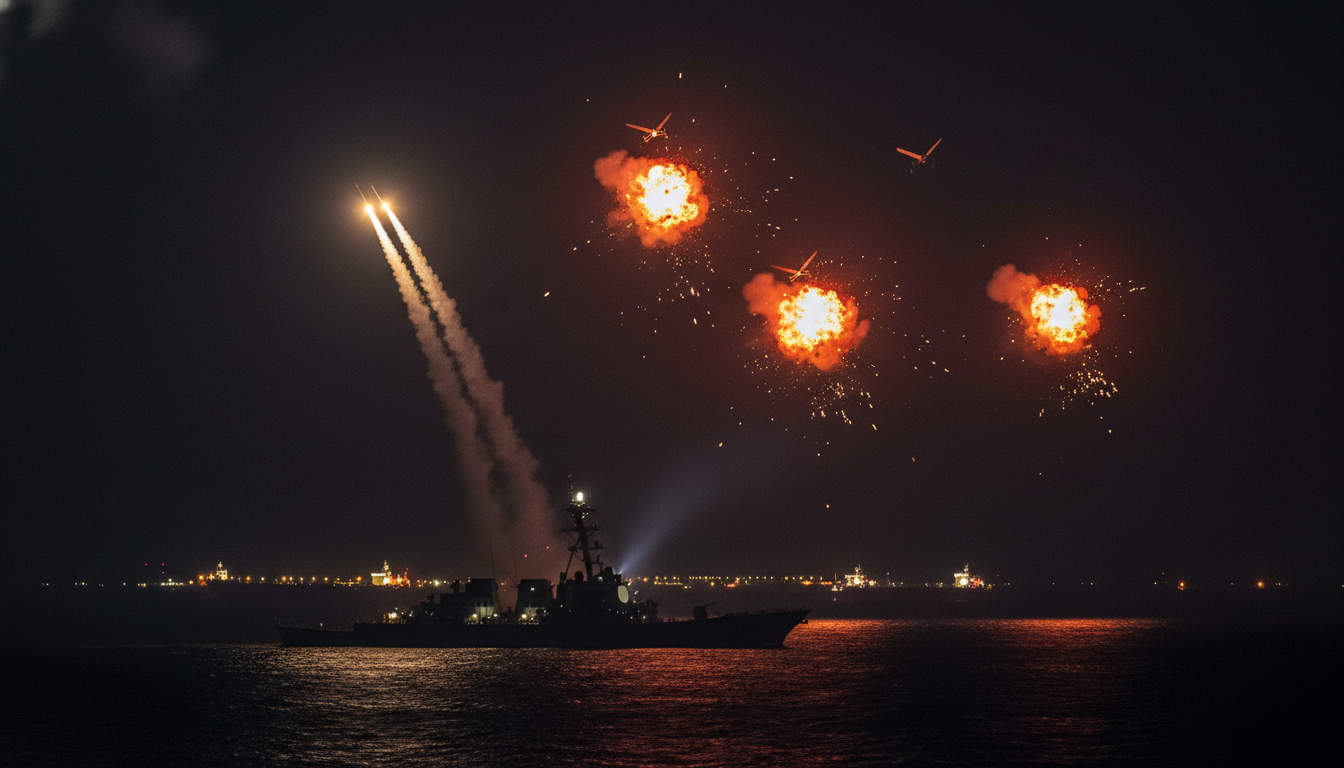
U.S. shoots down four Iran-launched attack drones over Strait of Hormuz
U.S. forces shot down four Iran-launched attack drones over the Strait of Hormuz and struck a drone control site in Bandar Abbas in self-defence strikes.
For the second time in three days, U.S. military aircraft and ships engaged Iranian forces after a series of threatening actions near the Strait of Hormuz. The United States intercepted four one‑way attack drones that it said were launched toward U.S. forces and commercial traffic transiting the vital waterway. Military officials then carried out an airstrike on a ground control site near Bandar Abbas to prevent a fifth drone from being launched.
U.S. intercepts four attack drones
U.S. commanders reported that multiple unmanned attack aircraft crossed into areas where American ships and aircraft were operating and posed an imminent threat. Defensive systems were employed to neutralize four drones before they could reach U.S. positions or vessels in the strait. Officials described the engagements as self‑defence actions taken to protect personnel and maintain freedom of navigation in the corridor.
Pentagon spokespeople said the intercepts followed routine monitoring and threat assessments by regional assets, which detected the launches in real time. The incidents occurred amid heightened naval operations enforcing restrictions on commercial shipping to and from Iranian ports. U.S. Central Command characterized the defensive strikes as proportionate responses to direct threats.
Strike targets drone control at Bandar Abbas
After the drone interceptions, U.S. aircraft struck a ground‑control station in the Bandar Abbas area that commanders said was preparing to direct another unmanned attack. Officials said the strike was intended to disrupt command-and-control links and prevent further immediate launches. The operation targeted systems that would have allowed Iran to coordinate additional one‑way attack drones.
A senior U.S. official, speaking on customary anonymity to discuss operational details, confirmed the decision to act preemptively once the control node was identified. Capt. Tim Hawkins, a U.S. Central Command spokesman, reiterated that such actions were carried out in self‑defence to protect American forces operating in the region. Military planners emphasized the limited, targeted nature of the strike.
Previous strikes hit missile sites and mine‑laying boats
Earlier in the week, U.S. forces conducted strikes on Iranian missile launch sites and engaged small craft that were attempting to emplace sea mines in the strait. Warplanes sank two speedboats attributed to Iran’s Islamic Revolutionary Guard Corps after analysts detected their mine‑laying activity. Commanders said the measures were taken to neutralize immediate hazards to commercial and military navigation.
U.S. officials described a pattern of coordinated Iranian maritime and air activity, including active surface‑to‑air missile sites and increased naval movements near the Strait of Hormuz. That activity prompted a tightening of defensive postures by carrier‑based and land‑based aircraft supporting the blockade. The strikes on missile sites, officials said, aimed to preserve freedom of movement for coalition forces enforcing restrictions.
Blockade intensifies risk to commercial shipping
The Strait of Hormuz, a choke point for global energy shipments, has seen a sharp decline in commercial traffic as Iran has effectively limited access to and from its ports. U.S. military leaders warned that mine‑laying attempts and aggressive maneuvers by small craft have increased the risk to merchant vessels transiting the corridor. Shipping firms and insurers have been monitoring the area closely as naval confrontations escalate.
Commercial captains reported reduced traffic and altered routing in recent days, and naval escorts have remained on heightened alert to protect remaining merchant movements. The U.S. characterized its actions as necessary to keep lines of commerce open, though officials acknowledged the blockade remains a major impediment to normal shipping patterns. Regional economic and energy markets are sensitive to any prolonged restriction of the strait.
Assessments of Iranian intent and diplomatic signals
U.S. analysts suggested some of the Iranian activity may have been a probe to see whether diplomatic overtures would change operational behavior. Officials said elements of the Revolutionary Guard may have tested limits in reaction to reports of a proposed agreement that Washington has signalled could end the broader conflict and reopen the strait. Those assessments are informing both military posture and diplomatic messaging in capitals engaged in mediation efforts.
Diplomats and intelligence officials in the region are watching closely for further demonstrations that could indicate either escalation or restraint. Military leaders stress that defensive strikes are limited in scope but warn that a sustained pattern of attacks against vessels or forces would lead to broader responses. Both sides face international pressure to avoid actions that could trigger a wider confrontation.
U.S. commanders said their forces will continue to protect maritime traffic and defend personnel while engaging with partners to monitor threats in the Gulf and Arabian Sea. The recent engagements underscore how quickly maritime incidents can escalate in a narrow, strategically critical waterway. Continued vigilance and calibrated responses appear likely as the situation evolves.
