
World Cup in United States Sparks Unlikely Bonds and Cultural Exchanges
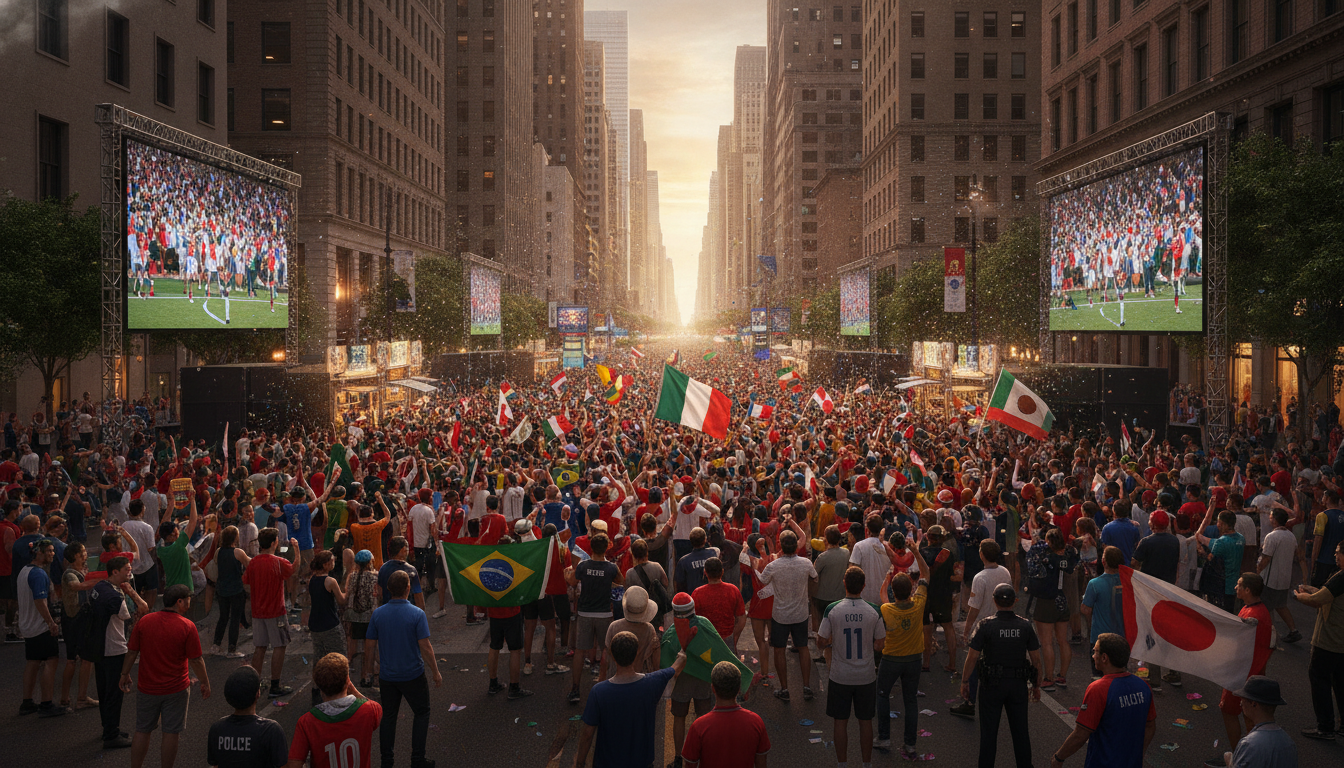
World Cup in the United States brought cities to life as fans from around the globe converged, creating moments of cultural exchange from Kansas to Times Square and sparking both celebration and tension.
The World Cup staged across U.S. cities produced a string of vivid local stories, from an El Paso family cheering for Iran to a Midwestern town adopting Algeria’s squad. Fans and residents alike described spontaneous friendships, run-ins with relatives abroad, and civic displays of welcome that transformed ordinary streets into international gathering places. Alongside the festivities, matches involving politically fraught teams produced protests and disputed symbols that underscored the tournament’s complex social footprint.
Unexpected Loyalties at Stadiums
Douglas Campion, who traveled from El Paso to Los Angeles for a Belgium–Iran match, found himself cheering passionately for Iran despite the United States’ political tensions with that country. His reaction illustrated how the World Cup can reframe loyalties, turning national rivalries into personal moments of sporting solidarity. Fans described similar surprises elsewhere, where allegiance shifted from geopolitics to the thrill of the game.
Supporters of many teams mingled in fan zones and on streets, and that proximity often produced friendships and new perspectives. For some Americans, the tournament prompted curiosity and empathy toward nations they knew little about, turning stadiums into temporary bridges across cultural and political divides.
Local Governments and Businesses Embrace Visitors
In Lawrence, Kansas, local officials and businesses leaned into hospitality after the Algerian team’s arrival, leaving visible reminders on lampposts and storefronts. The mayor suggested an annual reunion with the visitors, and local venues sold out of Algerian merchandise as community enthusiasm translated into sustained local attention. Small businesses, like a downtown diner that displayed a donated Algerian flag, said those gestures motivated families abroad to travel specifically to see how warmly they had been received.
Boston also felt the impact of devoted visiting supporters, prompting civic leaders to publicly thank fans from Scotland after a week of boisterous public gatherings. Citywide responses ranged from full-page newspaper acknowledgments to municipal cooperation with fan events, signaling how host cities shaped the tournament’s social narrative.
Diaspora Communities Gather and Reconnect
The tournament became a rare unifying event for diaspora communities, offering chances for families and long-separated acquaintances to reunite and celebrate common heritage. Jordanian Americans, many of whom could not secure visas to attend matches in person, organized local viewing parties that drew immigrants and second-generation fans together. Those gatherings provided cultural reaffirmation for groups whose national teams had previously rarely qualified for global tournaments.
In Houston, a chance seating arrangement at a Cape Verde–Saudi Arabia match led two men to discover they were cousins, a moment that highlighted the tournament’s role in reconnecting dispersed families. For many attendees, these personal reunions were as meaningful as any on-field victory.
Tensions and Protests at Iran Matches
Matches involving Iran carried an additional emotional charge, producing protests and heated confrontations in and around venues. Supporters opposing the Iranian government repeatedly staged demonstrations, while debates over which flag to display intensified divisions among diaspora communities. Some members of these communities chose to boycott or publicly support Iran’s opponents as a form of political expression, turning stadium stands into arenas for both sport and dissent.
Security concerns and vocal disagreements were present at multiple sites, and organizers had to navigate the delicate balance between enabling fan expression and maintaining public safety. These incidents underscored that international sport can both unite and amplify unresolved political grievances.
Cultural Exchange Beyond the Pitch
The tournament’s reach extended well beyond stadiums into everyday American life, where visitors sampled distinctly U.S. experiences. Fans flocked to late-night chain diners, big-box retailers and regional curiosities; many made pilgrimages to a sprawling Texas travel stop and shared astonishment at the size of American retail spaces. At a Fort Worth rodeo, a crowd joined visiting Norwegians in an improvised “Viking row” chant, demonstrating how local events absorbed World Cup energy.
High-profile players also became cultural ambassadors, with several embracing American customs and souvenirs that became viral talking points. Those moments of cultural playfulness helped humanize international figures and deepened visitors’ impressions of their host communities.
Legacy: Cities, Memories and Civic Pride
As the tournament concluded with a final match in New Jersey, local organizers and residents began assessing what would remain from the monthlong influx of supporters. Merchants counted sales and unsold jerseys, while civic leaders weighed proposals for future cultural exchanges inspired by the event. For towns like Lawrence, the relationship with visiting teams and fans has prompted talk of sustained cultural programming and annual reunions.
Community members described the World Cup as a rare opportunity to showcase hospitality and to experience global cultures on their home streets. Many vowed to preserve the displays and stories that had been stitched into the urban landscape.
The World Cup in the United States delivered more than goals and results; it produced a patchwork of local experiences that revealed how sport can catalyze both warmth and contention, leaving behind new connections and questions for host cities to carry forward.
