
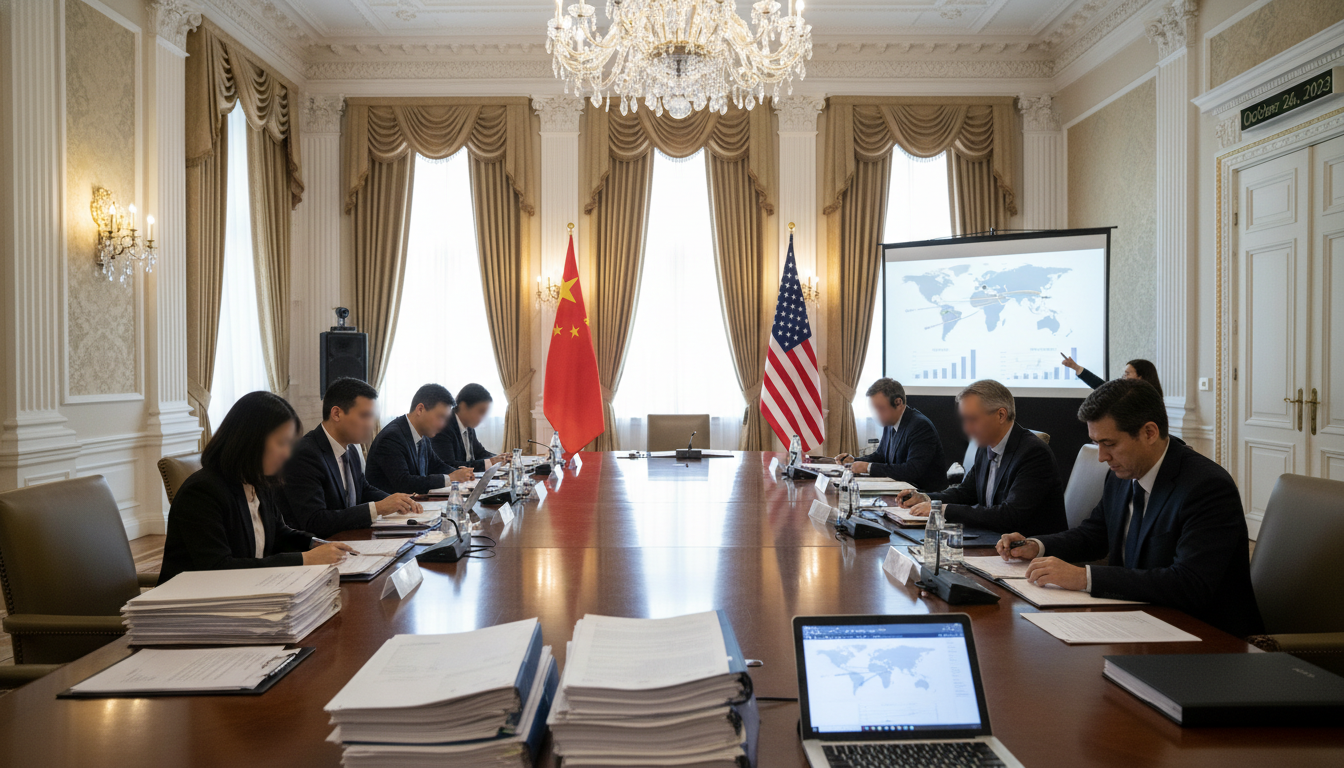
Xi-Trump summit opens in China as leaders confront Taiwan, tariffs and the war on Iran
Xi-Trump summit in China pits territorial and trade disputes against global security concerns as both sides seek a reset while keeping red lines intact
The Xi-Trump summit opened in Beijing as President Xi Jinping and President Donald Trump meet for a three-day visit amid escalating regional tensions and global economic uncertainty. The Xi-Trump summit places Taiwan, US arms sales and tariff policy at the centre of talks, while the ongoing war on Iran looms over strategic and energy security discussions. Both leaders face domestic and international pressure to produce a measurable outcome without conceding vital national interests.
Summit venue and strategic backdrop
President Trump arrived in China for a three-day state visit that marks a high-profile engagement between the two capitals during a period of heightened regional conflict. The meeting takes place against the backdrop of the war on Iran, disruptions to shipping through the Strait of Hormuz and a broader competition over technology, trade and spheres of influence. Chinese officials have signalled a desire for predictability in US policy, while Washington frames the visit as an opportunity to address bilateral frictions.
Taiwan emerges as top security priority
Taiwan is at the top of Beijing’s list of core interests and a central item on the Xi-Trump summit agenda. Beijing regards the island as an inalienable part of its territory, while Taipei functions as a self-governing democracy with international support that includes US security cooperation under the Taiwan Relations Act. Chinese diplomats have identified Taiwan as a red line and warned it will be raised forcefully during high-level discussions.
US arms sales and the $14 billion package
A stalled multibillion-dollar US arms package to Taiwan figures prominently in bilateral talks, with a reported $14 billion sale awaiting final presidential approval. Washington’s sale of defensive equipment to Taipei has been a longstanding source of friction with Beijing, which views such transfers as interference in its internal affairs. Analysts warn that any US backtracking or delays would reverberate through Taiwanese domestic politics and could complicate Taipei’s defence planning.
Trade, tariffs and the search for predictability
Economic ties and tariff policy are core elements of the Xi-Trump summit as Beijing seeks clarity on future US trade measures. The two sides have experienced episodic trade confrontations marked by reciprocal tariffs and export controls; Chinese officials say they want stable rules through the remainder of the US presidential term to enable domestic economic planning. Beijing is expected to discuss expanded purchases of US agricultural products and civil aircraft, while resisting major concessions on strategic sectors such as rare earths.
China’s diplomatic posture on Iran and shipping routes
The war on Iran casts a long shadow over the summit, with disruptions to the Strait of Hormuz directly affecting global energy markets and Chinese imports. Beijing has urged negotiations and a comprehensive ceasefire, and Chinese leaders have engaged multiple international interlocutors in an effort to play a mediating role. While China maintains a strategic partnership with Tehran and is a major buyer of Iranian oil, officials indicate any direct involvement would be limited to diplomatic mediation consistent with non‑intervention principles.
Negotiating levers and red lines on both sides
Chinese authorities aim to adjust a strategic framework they view as increasingly disadvantageous, seeking to slow the pace of measures they deem hostile and to restore a predictable bilateral routine. Experts say Beijing will press for scaling back certain US measures while offering targeted economic cooperation, but it is unlikely to surrender core leverage such as control over rare earth supplies without substantial political concessions. Conversely, Washington faces domestic constraints and legal processes that make abrupt policy reversals on issues like arms sales difficult to execute.
The summit is therefore expected to produce calibrated steps rather than sweeping breakthroughs, with both capitals trading assurances and limited commitments designed to stabilise relations. Observers note that short-term economic purchases or administrative arrangements could serve as confidence-building gestures, yet fundamental strategic competition over influence, technology and security in the Indo-Pacific will remain unresolved.
The outcome of the Xi-Trump summit will be closely watched in capitals across Asia, Europe and the Gulf, where businesses and governments assess the likely trajectory of tariffs, supply chains and regional security. Any movement on arms sales, tariff levels or cooperative mechanisms will shape the geopolitical and economic environment for months to come.
