
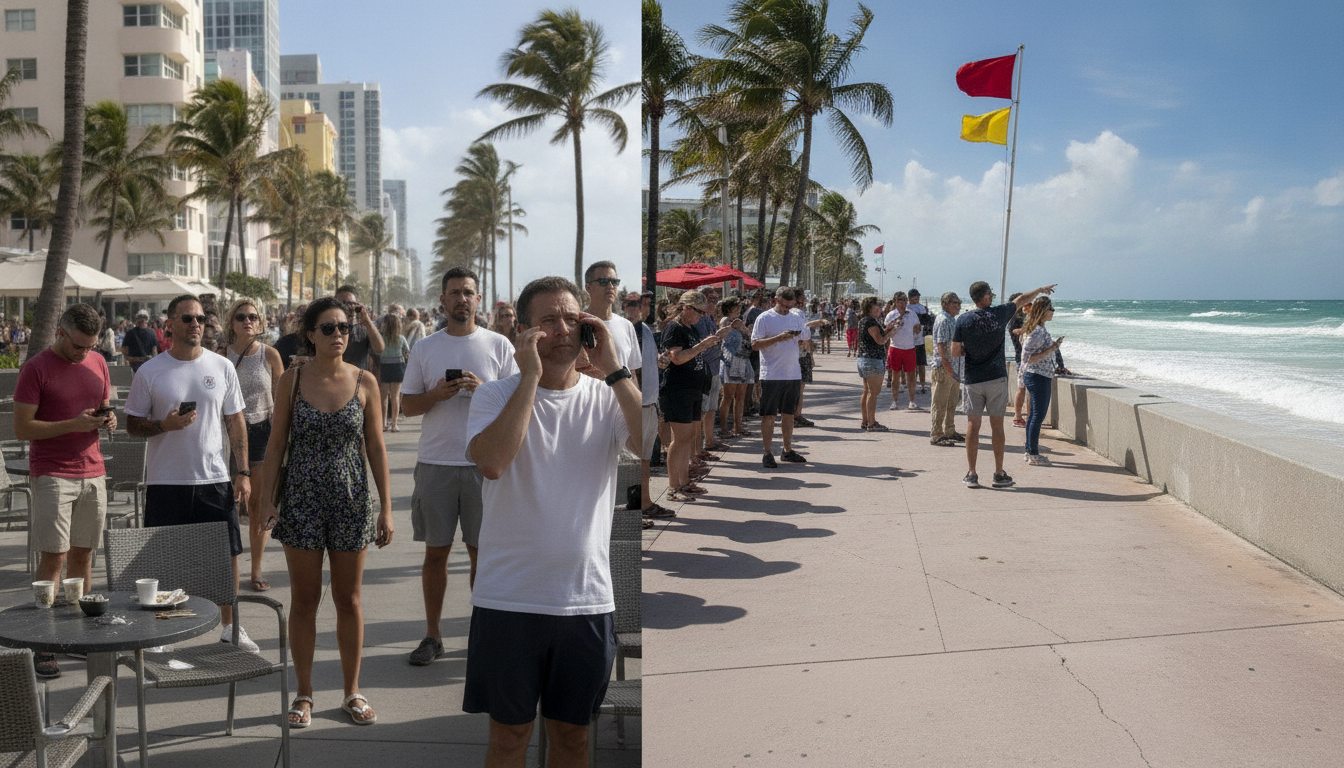
Gulf of Mexico earthquake of magnitude 6.1 jolts region; light shaking felt in Florida and Mexico
A 6.1-magnitude Gulf of Mexico earthquake struck on June 8, 2026, northwest of Cuba, the United States Geological Survey reported, producing light shaking across parts of the Caribbean and southern United States. The quake was centered roughly 65 miles northwest of Mantua, Cuba, and was felt in locations as distant as South Florida and Cancun.
Epicenter and initial readings
The United States Geological Survey placed the epicenter in the central Gulf of Mexico at approximately 2 p.m. Eastern on Monday, June 8, 2026. Preliminary data gave the event a magnitude of 6.1, a value that seismologists said could be adjusted as additional readings and analyses are completed.
Seismologists produced an initial shake-severity map showing areas with light to moderate shaking based on the Modified Mercalli Intensity scale. Officials noted the map and magnitude are subject to revision after further review of regional seismic stations and population-density overlays.
Reports from Cuba, Florida and Mexico
Cuban authorities and residents near the western provinces reported perceptible shaking but no immediate widespread structural damage in the first hours after the quake. In South Florida, emergency services logged multiple calls from residents reporting tremors, and local officials assessed buildings for visible damage.
Miami-Dade County said Metrorail trains briefly halted and some buildings were evacuated as a precaution, but there were no significant injuries or major structural failures reported. Tourism and infrastructure authorities in Cancun also recorded light shaking, with no reports of serious harm to visitors or public facilities.
Seismologists describe event as unusual for region
Experts emphasized that earthquakes of this strength are rare in the Gulf of Mexico because the area lies within a tectonic plate rather than along a plate boundary. Jochen Braunmiller, an assistant professor at the University of South Florida, said that regional quakes of this magnitude are uncommon, and that while some colleagues reported feeling the event hundreds of miles away, not all instruments or observers registered strong motion.
USGS historical records indicate this earthquake ranks among the stronger events documented in the Gulf over the past century. Scientists are treating the occurrence as noteworthy for its intensity and for the distances over which light shaking was felt.
Aftershocks and monitoring efforts
Seismologists began monitoring the region closely for aftershocks and for any adjustments to the estimated magnitude and shaking footprint. The USGS routinely updates its earthquake products — including magnitude, depth and shake maps — as additional seismic data are processed and as reported felt observations are collected.
Researchers said aftershock sequences in intraplate settings can be more limited than those near plate boundaries, but they cautioned that multiple smaller events are possible in the days following a significant quake. Emergency-management agencies advised residents to stay alert for official advisories and to report any felt activity through the established USGS or local reporting channels.
Infrastructure checks and official responses
Local authorities across affected areas implemented standard precautionary measures, including inspections of key buildings and infrastructure. Transportation agencies temporarily restricted some services to allow safety checks, and utility companies surveyed networks for leaks, outages or damage that could pose immediate hazards.
Officials stressed that the absence of major damage in initial assessments does not eliminate the need for ongoing inspections, particularly for older structures and critical facilities. Emergency departments and municipal offices remained on heightened alert to respond to any emerging needs.
Safety guidance for residents and visitors
Authorities urged residents and visitors in the region to follow established earthquake-safety protocols, such as dropping to the ground, taking cover under sturdy furniture if available, and holding on until shaking stops. After the immediate shaking, people were advised to check for injuries, inspect their environments for hazards like gas leaks or electrical issues, and avoid entering damaged buildings.
Emergency-management agencies recommended that households review their preparedness plans, ensure access to emergency contact numbers, and keep basic supplies on hand. Travelers were encouraged to follow guidance from local authorities and hotel or tour operators regarding any inspections or temporary service disruptions.
Seismologists and emergency officials said they will continue to analyze seismic data and share updates as new information becomes available, and they reiterated the importance of following official channels for accurate, timely guidance.
