
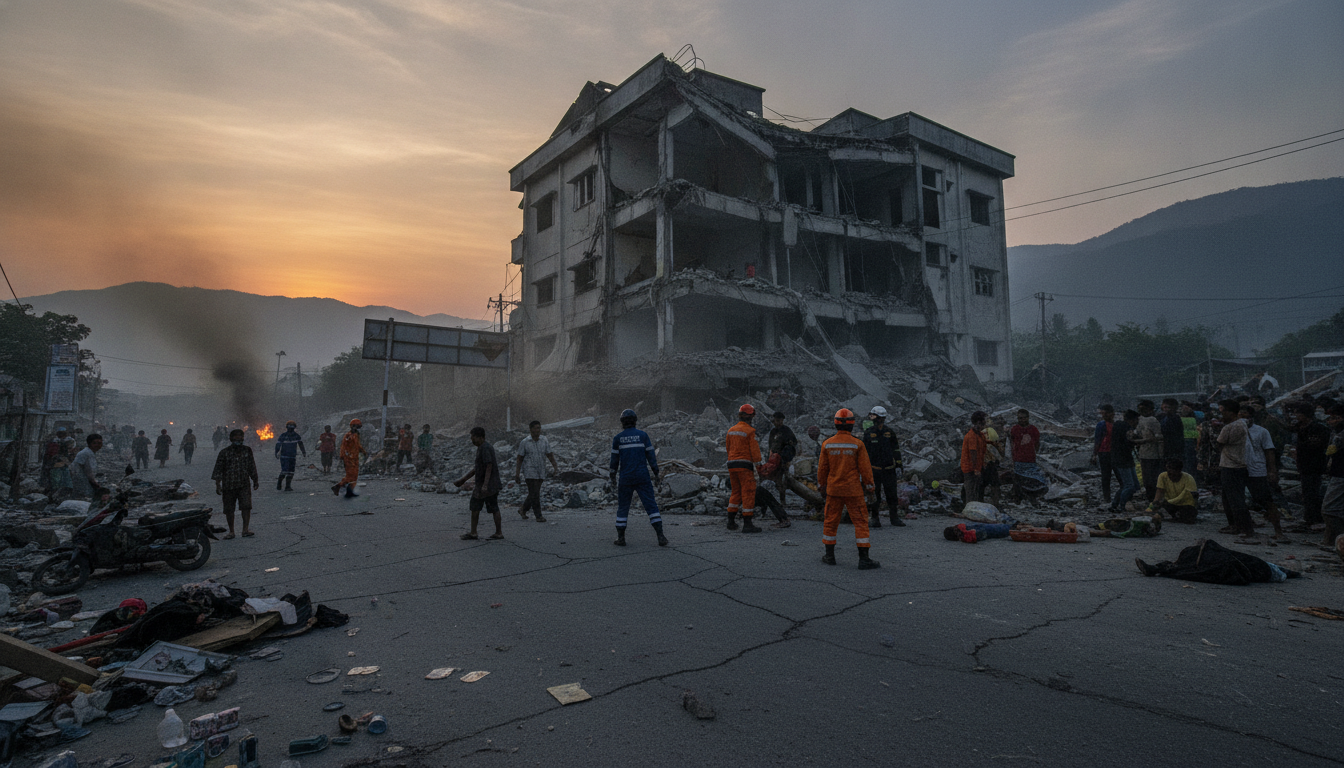
6.7-Magnitude Sulawesi Earthquake Near Palu Kills One, Injures Dozens
6.7-magnitude Sulawesi earthquake near Palu on June 16, 2026 killed one and injured dozens, damaging homes and sparking 71 aftershocks, officials reported.
Strong quake shakes Palu region
A 6.7-magnitude Sulawesi earthquake struck inland on June 16, 2026, south-east of the city of Palu, authorities said, killing at least one person and injuring dozens. The tremor prompted immediate flight to open areas, precautionary hospital evacuations and reports of structural damage across parts of Central Sulawesi.
The quake’s shock was felt widely and revived deep concerns in communities still haunted by the 2018 disaster that devastated the same coastal corridor. Local and national agencies mobilised search, medical and engineering teams to assess immediate needs and secure damaged buildings.
Epicentre, depth and seismic readings
The initial epicentre was located roughly 43 kilometres south-east of Palu, with the United States Geological Survey reporting a shallow focal depth of about 10 kilometres. Seismologists said the combination of a moderate distance and shallow depth amplified ground shaking in nearby towns and settlements.
Authorities described the event as a crustal earthquake typical of the region’s complex tectonics, which lie along the collision zone between the Australian and Eurasian plates. The shallow depth increased surface shaking, elevating the risk of damage to poorly anchored structures.
Aftershocks and ongoing seismic activity
Indonesia’s Meteorology, Climatology and Geophysics Agency (BMKG) recorded at least 71 aftershocks following the main tremor, fueling anxiety among residents who rushed into parks and open fields. Officials warned the public to expect more tremors in the coming hours and days as the fault system adjusted.
Emergency coordinators issued guidance to remain in open spaces away from buildings and to avoid coastal areas until tsunami risk was assessed and cleared. Local authorities kept critical facilities on alert and suspended some non-essential services to concentrate on emergency response.
Human toll and medical response
At least one death was confirmed and dozens more were reported injured, ranging from minor cuts to more serious trauma, according to local health officials. Several hospitals in Palu moved patients to safer parts of their campuses or to temporary shelters as a precautionary step while structural inspections were carried out.
Medical teams established triage points to prioritise the most seriously injured, and regional health authorities dispatched additional staff and supplies to overwhelmed facilities. Community centres and schools were opened as temporary shelters for families who could not return to damaged homes.
Damage to homes and infrastructure
Preliminary reports indicated damage to residential buildings, utility lines and local roads, with some neighborhoods reporting collapsed walls and cracked foundations. Power outages and interruptions to water supplies were reported in parts of the affected area, complicating relief operations and communications.
Engineers and municipal crews began rapid assessments of bridges, roads and public buildings to determine immediate repair needs and safety risks. Local governments urged residents to avoid entering buildings that showed visible signs of structural distress until experts could inspect them.
Community memory of 2018 catastrophe
The region’s sharp reaction reflected traumatic memories of the 2018 Palu earthquake and tsunami, when a 7.5-magnitude quake triggered waves reportedly up to six metres high and killed thousands in one of Indonesia’s deadliest recent disasters. Survivors said the ground shaking and rising tide of aftershocks reopened old fears and underscored the vulnerability of coastal communities.
Disaster experts said the 2018 event remains a pivotal lesson in the need for improved early warning, land-use planning and resilient infrastructure. Local leaders renewed calls for greater investment in preparedness and rebuilding efforts that account for both seismic risk and ocean-driven hazards.
Authorities continue inspections and relief coordination, and residents remain on alert as teams work to stabilise the situation and restore essential services.
Humanitarian agencies and government officials are coordinating to provide shelter, medical care and engineering assessments while urging the public to follow safety directives and official updates. The full scale of damage and the final casualty toll are expected to be clearer once teams complete door-to-door checks and infrastructure surveys.
