
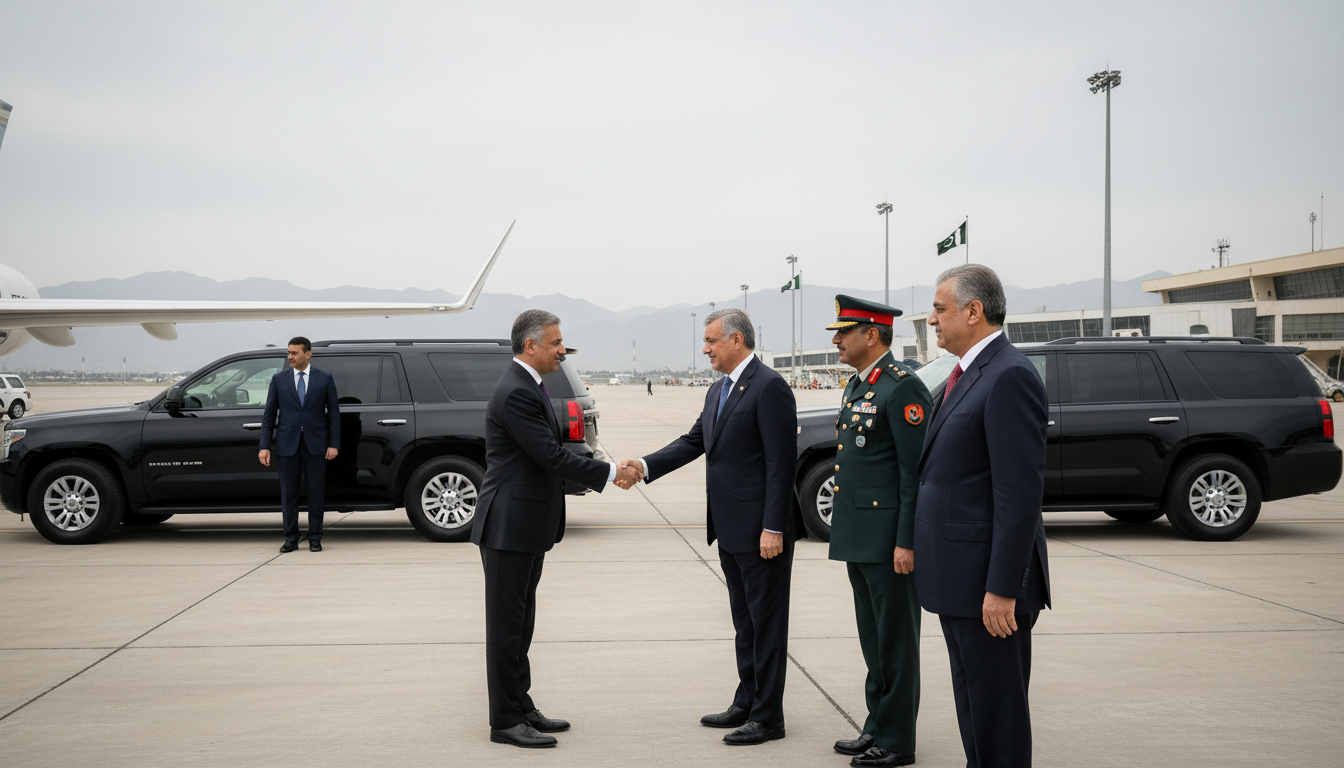
Pakistan races to salvage US-Iran talks as Vice‑President Vance arrives in Islamabad
Pakistan seeks to clinch US-Iran talks as US delegation lands, pressing Tehran to rejoin negotiations before the ceasefire deadline.
Pakistan is intensifying mediation efforts to bring Iran back to the negotiating table for the US-Iran talks as a high-level American delegation arrives in Islamabad. Vice‑President JD Vance, joined by senior White House envoys, is due in the Pakistani capital as mediators push to secure Tehran’s participation before a temporary truce lapses. Diplomatic momentum has been undercut by recent US military actions at sea and firm public red lines from Washington, complicating Pakistan’s bid to restart direct diplomacy.
Pakistan accelerates shuttle diplomacy ahead of US delegation arrival
Pakistan’s foreign ministry and security officials have been working round the clock to persuade Iran to send negotiators to Islamabad for a second round of talks. The US delegation led by Vice‑President JD Vance was scheduled to arrive in Islamabad on April 22, 2026, with personnel and equipment flown into Pakistan over the preceding 72 hours. Pakistani sources say mediators are aiming to have Iran agree to attend before the two‑week ceasefire window expires.
The urgency in Islamabad reflects the limited time frame available for diplomacy, and Pakistani officials are framing their role as a guarantor of a neutral venue. Islamabad has both security contacts and diplomatic ties with Washington and Tehran, a rare combination that Pakistani mediators argue is essential to salvage the talks. Officials also stress the importance of crafting language that allows both sides to claim success if an agreement is reached.
Tehran publicly rebuffs new talks while weighing tactical options
Iran’s government has repeatedly stated it will not enter negotiations while it perceives direct coercion or threats from Washington. Tehran’s top parliamentary and judicial figures have publicly rejected engagement under pressure and warned of battlefield responses if hostilities continue. Iranian officials have also indicated a readiness to reveal new military measures if diplomacy stalls, underscoring a posture of deterrence.
Despite public firmness, analysts observe that Tehran has shown pragmatic flexibility in past rounds and may condition attendance on concrete signals, such as a halt or easing of the maritime blockade. Iran’s negotiating team, which participated in the first round of talks on April 11, 2026, has not confirmed travel for a follow‑up session, leaving mediators uncertain about whether a delegation will appear in Islamabad.
US naval actions at sea heighten tensions and complicate mediation
In recent days, US naval forces intercepted and boarded at least two vessels alleged to be linked to Iranian oil shipments, including an Iranian‑flagged cargo ship seized on April 19, 2026. Washington says the boardings are tied to enforcement of sanctions and a blockade intended to restrict Iran’s oil exports, while Tehran has branded the seizures unlawful and warned of consequences. The maritime incidents have become a focal point for Iran’s objections and are cited by Tehran as evidence that dialogue cannot proceed under coercive conditions.
Maritime experts and regional analysts say the release of seized crews or a clear easing of blockade measures could serve as bargaining chips to coax Iran back to the table. Pakistani mediators are reportedly exploring confidence‑building steps that would allow both sides to de‑escalate publicly while preserving room for concessions during talks.
The IRGC’s influence shapes Tehran’s negotiating posture
Domestic dynamics in Iran are influencing foreign policy choices, with the Islamic Revolutionary Guard Corps exerting significant pressure for a tougher stance. The IRGC’s control over some maritime operations and its ability to act independently of civilian diplomats have complicated Tehran’s messaging and created internal friction. Analysts say the IRGC is demanding guarantees that any diplomatic engagement will not erase Iran’s strategic leverage, notably its ability to influence oil flows through the Strait of Hormuz.
Observers also note that, should a negotiated settlement be reached, Tehran’s political establishment is likely to present the outcome as a sovereign decision that addresses security and economic priorities. That dynamic could permit the IRGC to accept a deal once terms are considered consistent with national interests.
Washington’s red lines and public messaging strain trust
US President Donald Trump and senior US officials have publicly set stern demands, including curbs on Iranian uranium enrichment and the relinquishment of existing stockpiles. Washington has linked the future of the Hormuz blockade to Iran’s readiness to negotiate, and some public statements by US leaders have overstated or preempted details of potential agreements. Those remarks have aggravated mistrust in Tehran and, according to diplomats, complicated quiet back‑channel work by mediators.
Pakistani officials say framing and sequencing will be crucial: they aim to present any progress in a way that allows both capitals to claim successes without appearances of capitulation. Islamabad’s mediators are reportedly pressing for carefully calibrated steps that reduce immediate tensions while preserving negotiating space on sensitive issues.
Ceasefire clock and stakes if talks fail
The current truce was extended by 24 hours and is due to end on Wednesday evening Washington time, which translates to the early hours of Thursday, April 23, 2026, in the Middle East. Mediators insist that failure to secure Iran’s attendance in the planned second round would raise the likelihood of renewed hostilities and a rapid deterioration in regional security. Analysts warn that a return to intense conflict would inflict heavy damage across the Gulf and complicate global energy markets.
Pakistan’s role as intermediary now carries significant diplomatic and security risk, but also the potential to prevent further escalation. Islamabad is pressing both sides to show restraint and to accept incremental confidence measures that could reopen formal negotiations in a credible way.
If talks proceed in Islamabad, mediators say they will focus on sequencing practical steps that reduce immediate military friction while preserving space to tackle the core issues of enrichment and regional security in subsequent sessions. The coming 48 hours are likely to determine whether diplomacy can outpace the momentum of conflict or whether the region will slide back toward broader confrontation.
