
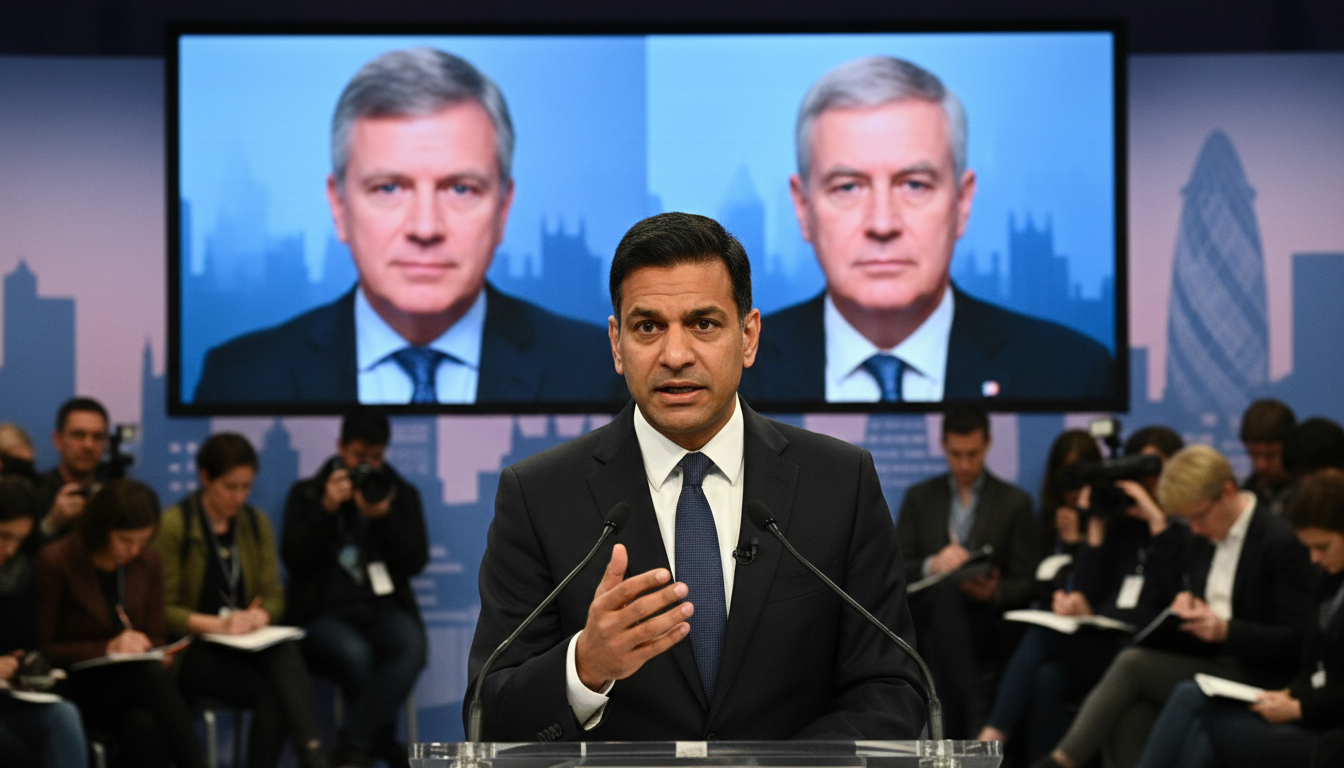
Sadiq Khan says replacing Keir Starmer this year would be wrong amid Mandelson controversy
Sadiq Khan says replacing Keir Starmer this year would be wrong, defending the Labour leader amid criticism over Peter Mandelson’s late‑2024 US appointment.
Khan urges stability over leadership change
London Mayor Sadiq Khan told Bloomberg that it would be a mistake to replace Keir Starmer this year, arguing political continuity matters amid global turbulence. He framed his remarks around the wider geopolitical environment and the need to project stability to investors, students and businesses.
Khan, who has served as mayor since 2016, said the United Kingdom’s appeal to foreign investors and students depends on predictable governance. His comments were aimed at calming growing speculation inside Labour about whether the leader should step down.
Context of the Mandelson controversy
The immediate pressure on Keir Starmer stems from his handling of Peter Mandelson’s appointment as the UK’s ambassador to the United States late in 2024. Critics have questioned the vetting process and whether proper security checks were carried out before the nomination proceeded.
The appointment has become a flashpoint, with media scrutiny and political opponents seeking answers about how an experienced political figure was advanced to a high-profile diplomatic role. Labour insiders and external commentators have called for clarity on the chain of decisions that led to the appointment.
Oliver Robbins’ testimony to the Commons committee
Oliver Robbins, a senior Foreign Office official who was subsequently removed from his post, gave evidence to a House of Commons committee on April 21, 2026. In that testimony Robbins said he felt pressured by government figures to progress the Mandelson appointment and denied that he had cancelled the security vetting process.
Robbins’ statement has complicated the narrative, as it suggests there were internal pushes to expedite approval despite concerns. His evidence prompted further questions from MPs about who authorised the timeline and what information was shared with ministers.
Prime Minister’s office rejects pressure claims
Downing Street has rejected the suggestion that it pressured Robbins to speed up the appointment. The Prime Minister’s office has publicly denied exerting undue influence over the official vetting process, calling into question a key element of Robbins’ testimony.
At Prime Minister’s Questions on April 22, 2026, Keir Starmer said there had been no improper pressure applied in relation to the Mandelson matter. He asserted that procedures were followed and urged MPs to rely on verified facts rather than speculation.
Khan cites geopolitical risks as reason to avoid change
Khan told the Zero podcast that replacing Starmer during a period of heightened geopolitical tension would be “foolish.” He specifically referenced conflicts and crises in Ukraine, Iran, Lebanon and across the Middle East as reasons leadership continuity matters for the UK.
The mayor argued that sudden political shifts could undermine confidence among international businesses and foreign students who choose the UK for its perceived stability. He urged Labour to focus on resolving the questions around the appointment rather than engaging in leadership turmoil.
Implications for Labour and UK diplomacy
The Mandelson appointment controversy poses both short-term political and longer-term diplomatic challenges for Labour. Opposition parties are using the episode to press for accountability, while some within Labour are weighing the potential electoral and reputational costs.
Diplomatically, the dispute risks distracting from the substantive work of the UK’s foreign service and could complicate relations with allies if unresolved questions linger. Party officials face a balancing act between addressing procedural concerns and preventing factional splits that could harm broader party unity.
Reactions from stakeholders and next steps
Business groups and university representatives have not publicly called for leadership change, but political commentators say the situation will be monitored closely. MPs on relevant committees may pursue further inquiries or request additional documents to clarify the timeline of events.
Labour’s internal processes for reviewing ministerial appointments and security vetting are likely to come under fresh scrutiny, with calls for transparency about who authorised each step. The party has signalled it will cooperate with parliamentary scrutiny while defending its overall record on governance.
The coming days will test Labour’s ability to manage the fallout while keeping attention on policy priorities, and the party’s response will shape perceptions ahead of upcoming electoral and diplomatic milestones.
