
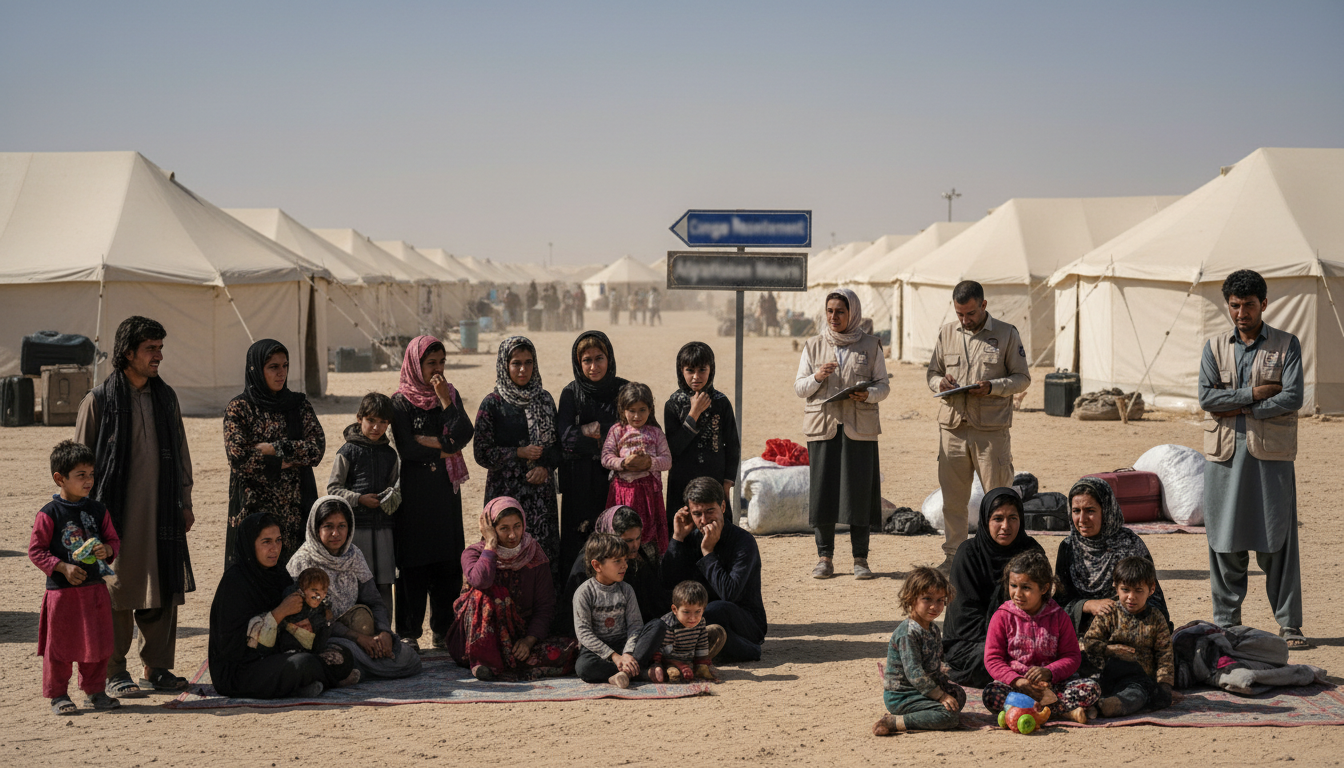
Afghan refugees in Qatar face stark choice as talks surface to move some to Democratic Republic of Congo
Afghan refugees in Qatar at Camp As Sayliyah face pressure to return to Taliban-ruled Afghanistan or accept relocation to the Democratic Republic of Congo, a move that has drawn sharp concern.
Afghan refugees in Qatar have been told they may soon have to choose between repatriation to Afghanistan and resettlement in a third country, with U.S. officials reported to be negotiating the transfer of up to 1,100 camp residents to the Democratic Republic of Congo. Residents, many of whom worked with U.S. forces, say they have been repeatedly urged to leave and offered incentives to return, while camp authorities maintain no final decision has been made. The uncertainty has left families and former interpreters weighing dangerous options and raising urgent questions about safety, consent and the viability of relocation to a country already facing severe humanitarian challenges.
Camp residents describe pressure and incentives
Many residents at Camp As Sayliyah say officials have offered free airfare and stipends to encourage voluntary return to Afghanistan, a step several described as coercive given the alternatives. Over 200 people have reportedly accepted such offers in recent months, while others remain fearful of the consequences of repatriation under Taliban rule. Those still at the camp include former U.S. interpreters, special forces members and relatives of American service members who argue they face elevated risk if returned to Afghanistan.
Camp officials, however, have repeatedly told residents that no third-country resettlement plan has been finalized and that discussions to identify voluntary relocation opportunities are ongoing. A message circulated on a camp WhatsApp group emphasized that no country had been officially confirmed for resettlement. Residents said the mixed signals have deepened anxiety and prompted calls for clearer, legally binding assurances.
Proposed relocation to Congo raises security and humanitarian fears
Discussions about relocating some residents to the Democratic Republic of Congo have alarmed aid workers and lawmakers who point to the country’s ongoing displacement crisis and active conflict in eastern regions. Critics argue that sending vulnerable Afghans to a setting plagued by insecurity and limited infrastructure would hardly amount to a safe or voluntary solution. Opponents say the reality on the ground in Congo — including internally displaced populations and armed clashes — undermines claims that such a transfer would protect those at risk.
For many camp residents, the notion of moving to a country they have never heard of, where language, services and livelihoods are unfamiliar, compounds the sense of being traded from one perilous situation to another. Some residents told reporters they would rather risk returning to Afghanistan than be resettled in a crisis-affected African state, while others said they would prefer Congo to the immediate threats they associate with Taliban governance.
U.S. policy changes and the suspension of relocation pathways
Officials running the camp have implemented a series of measures in recent months that critics say restrict routes to the United States for former Afghan allies. A suspension of a special visa program and announcements about the camp’s closure have narrowed prospects for many who had hoped to relocate to the U.S. and reunite with relatives. Those who had been undergoing vetting, language and cultural orientation courses now find their paths to resettlement in limbo.
Some residents had progressed through preliminary screening and training for possible U.S. relocation before the suspension of the program, leaving their status unclear and their expectations unrealized. Aid groups and former officials say the policy shifts increase urgency to find humane, durable solutions that respect the preferences and security needs of those affected.
Lawmakers and aid groups call the options coercive
U.S. and international advocates have characterized the binary presented to the camp’s residents — return to Afghanistan or relocate to Congo — as coercive rather than voluntary. Members of Congress responsible for oversight of Afghanistan policy have criticized the plan and underscored that relocation to a conflict-affected country cannot be equated with a protective solution. Advocacy organizations also stress that any resettlement must meet international legal standards for voluntariness and informed consent.
Humanitarian workers briefed on the situation warn that moving people to a country facing profound internal displacement and instability would place additional burdens on already traumatized families. They emphasize the need for transparent criteria, independent monitoring and guaranteed access to services and safety in any third-country arrangement.
Women, children and interpreters are particularly vulnerable
More than half of the camp population under discussion are reportedly women and children, many of whom would face severe restrictions on education, movement and employment if returned to Afghanistan. Young women and girls in particular would confront limits on schooling and travel under the current Taliban directives, raising acute concerns about forced repatriation. Former military interpreters and special forces members likewise face threats of reprisals, detention and other human rights abuses if sent back.
Residents who spoke on condition of anonymity cited fear of arrest and retaliation as key reasons they oppose return. The camp population’s varied profiles — including those with U.S. ties and others who lack clear resettlement pathways — complicate efforts to devise a single policy solution.
Final paragraph
As talks continue behind closed doors, camp residents, advocates and lawmakers are calling for urgent clarity and protections that prioritize safety and choice for those who aided international forces. Any decision will be judged not only on logistical feasibility but on whether it upholds the rights and security of people already displaced and at risk.
