
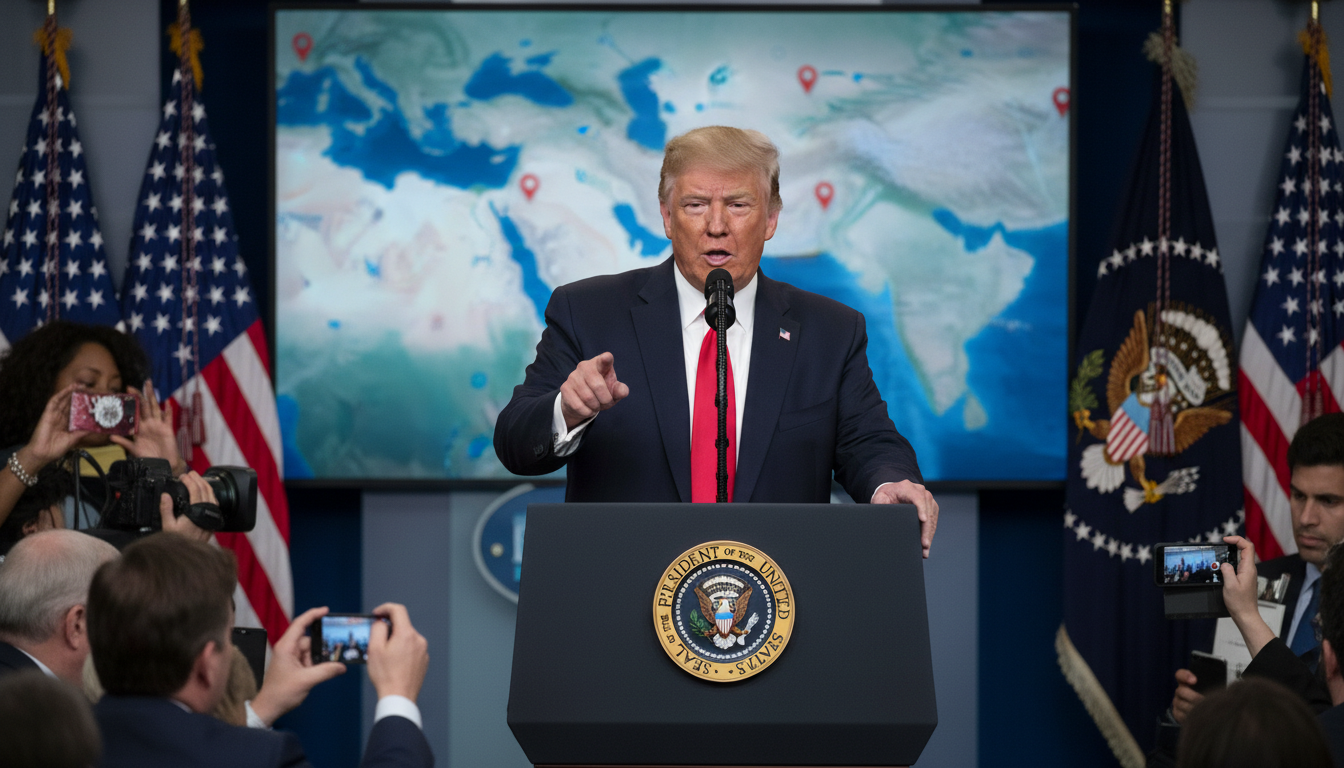
Trump Says Iran Rearmed During Truce; US Hit About 75% of Targets
Trump says Iran rearmed during the two-week truce; US struck about 75% of targets and plans to remove remaining naval assets.
President Donald Trump said on Wednesday that Iran may have rearmed its forces during a two-week truce, asserting that Washington had hit roughly 75% of its intended targets and that some Iranian naval vessels remaining after the pause would be destroyed. He reiterated that the United States seeks a negotiated settlement but expressed uncertainty about who holds effective leadership in Tehran. The president also claimed that economic measures and a de facto embargo had significantly curtailed Iran’s trade and foreign dealings.
Trump’s assessment of Iranian rearmament
President Trump told listeners that the ceasefire period had given Iran time to re-equip portions of its military, a development he characterized as a setback for U.S. objectives. He specified that some small naval craft remained under Iranian control after the truce and would be targeted for destruction. The administration framed the actions as part of a calibrated campaign to degrade Iran’s capabilities while keeping diplomatic channels open.
Extent of strikes and military claims
The White House assessment, cited by the president, said U.S. forces struck approximately 75% of designated targets in Iran. Officials described the campaign as focused on military and logistical infrastructure, aiming to limit Tehran’s ability to project force across the region. While the administration touted the percentage as evidence of operational success, independent verification of the full impact and target list was not provided in the president’s remarks.
Naval assets singled out for follow-up strikes
Trump indicated that a number of Iranian naval vessels, including small boats used by the Iranian navy, remained in service after the truce and would be destroyed. The administration’s emphasis on maritime targets reflects concern about Iran’s naval patrols and asymmetric tactics in the Gulf and surrounding waters. Removal of those vessels, according to officials cited by the president, is intended to reduce the risk of future confrontations at sea.
Diplomatic posture and uncertainty over Iran’s leadership
Despite the military pressure, the president said Washington is seeking a deal with Tehran but faces uncertainty about who is responsible for decision-making inside Iran. That comment underscores competing U.S. priorities of applying pressure while leaving room for negotiation. The statement also highlights internal opacity in Tehran and the challenges it poses for American diplomacy and verification of any agreement.
Economic pressure and restrictions on trade
The president asserted that the sanctions and restrictions imposed as part of the U.S. campaign had deprived Iran of normal trading relationships and economic activity. He framed the tightening of financial and commercial levers as a complementary tool to military pressure, designed to erode Tehran’s capacity to sustain prolonged hostilities. Economic isolation was presented as a means to push Iran toward negotiation rather than as a standalone solution.
Regional and international implications
Analysts say claims of rearmament during a temporary truce, if accurate, would complicate efforts to stabilize the region and raise questions for U.S. partners tracking Iranian movements. Neighboring states and maritime stakeholders will likely increase surveillance and contingency planning if further strikes or enforcement actions are announced. The dual approach of strikes and diplomacy could test alliances and require clear signaling to avoid unintended escalation.
The president’s remarks come as officials push to balance military options with diplomatic outreach, and they signal that the administration intends to continue pressure on multiple fronts. How Tehran responds to renewed targeting of naval assets and the public assertion that it rearmed during the truce will shape the near-term security environment.
International observers and regional governments will watch for additional details, including the timing and scope of any follow-up operations against naval vessels and whether new rounds of sanctions or negotiations emerge. The U.S. emphasis on both kinetic operations and economic measures points to a sustained, multifaceted strategy aimed at constraining Iran’s capabilities while keeping open the possibility of a negotiated outcome.
The situation remains fluid, with the president’s statements adding to a broader set of claims and counterclaims about recent hostilities and their aftermath.
