
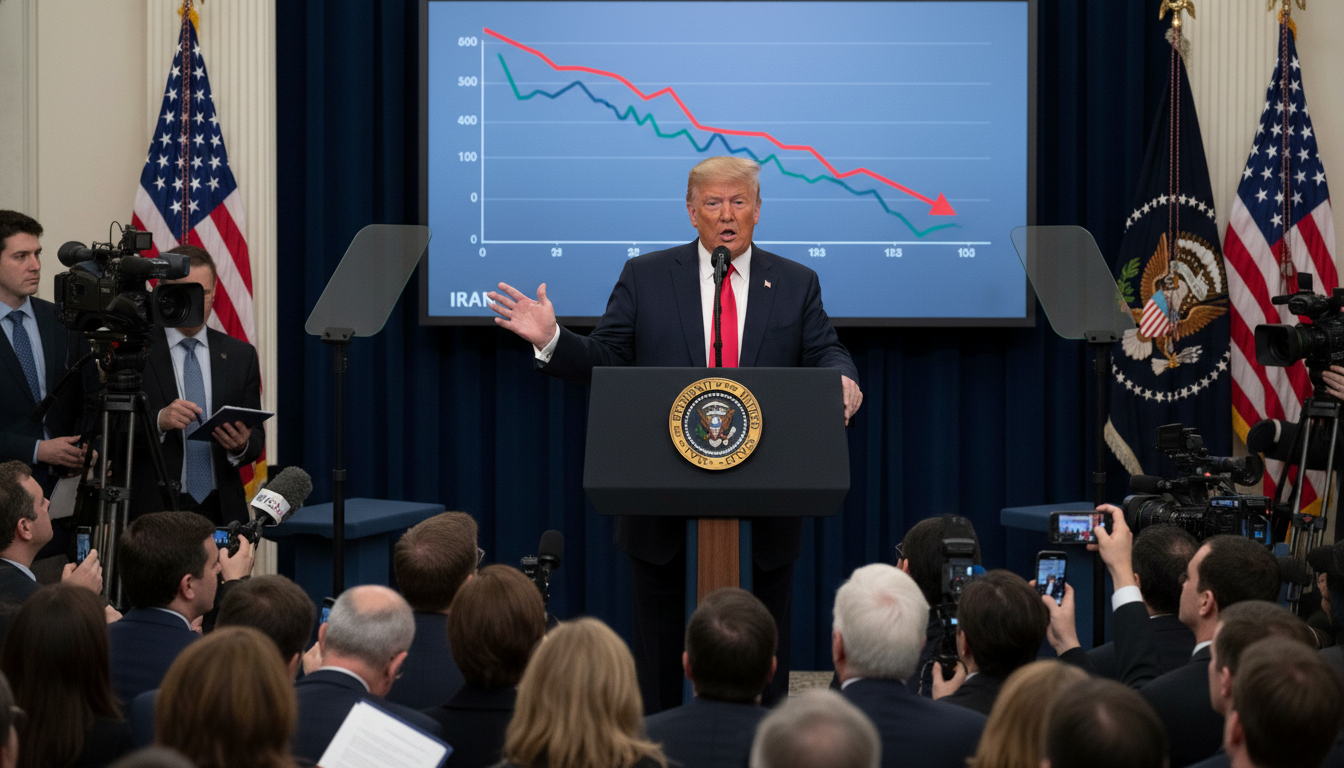
Trump warns Iran that time is not on its side as US maintains tight pressure
Trump warns Iran: former US president says sanctions and strikes have weakened Tehran, vows no deal until it suits US and allies
President Donald Trump warned that time is not on Iran’s side as he reiterated that the United States will maintain firm pressure and reject any agreement that is not advantageous to Washington and its partners. Trump warns Iran that US sanctions are “tight and strong” and that he is in no rush to negotiate, he said in a post on his Truth Social platform. The remarks come as Washington signals a continued hardline posture while insisting any future deal must benefit the United States, its allies, and global security. His comments underscore a posture of leverage ahead of any potential diplomatic engagement.
Trump’s message on Truth Social
President Trump used his Truth Social account to deliver a blunt message aimed at Tehran, presenting a timeline and strategic claim about the balance of power. He said he was among the least pressured presidents in history and that he had “all the time in the world,” adding that Iran does not. The post framed recent U.S. actions as having degraded Iranian military capabilities and tightening economic constraints. Trump framed the U.S. position as patient but uncompromising, signalling that Washington will only consider a deal when the terms are clearly favorable.
Claims on Iranian forces and sanctions
In his post, Trump asserted that Iran’s navy had been neutralised, its air force damaged, and its air-defence systems degraded, while its leadership had been weakened by targeted actions. He described the U.S.-led squeeze on Iran as “tight and strong,” a reference to sanctions and military pressure that he said would produce worsening conditions for Tehran over time. Those characterisations were presented as factual in his message, though they were conveyed as his assessment rather than independently verified developments. The emphasis on military attrition and economic isolation aims to underscore why, in his view, Iran should face increasing diplomatic and material costs.
U.S. conditions for negotiations
Trump made clear that the United States would not enter into any agreement with Iran unless it met criteria he described as “suitable and beneficial” to the U.S., its allies, and the wider international community. He framed negotiations as conditional, insisting that the timing and substance of any deal must preserve U.S. strategic interests. That stance signals a continuation of a transactional approach to diplomacy, where sanctions relief or concessions would be tied to verifiable Iranian changes. The formulation also reinforces solidarity with allied partners who have voiced concern over regional security and nuclear proliferation.
Regional implications for the Gulf and allies
The Trump remarks are likely to reverberate across the Gulf region, where states have varied relationships with Tehran but share concerns about destabilisation and the prospect of nuclear escalation. Gulf capitals typically balance between deterrence and diplomatic engagement, and renewed U.S. pressure can alter local calculations on security cooperation and energy markets. Allies in Europe and Asia will also monitor Washington’s approach closely, especially if conditions for talks harden or if military actions increase. For regional stakeholders, the key questions will be whether increased pressure produces concessions or heightens the risk of miscalculation.
Domestic and political context in the United States
The statements come against a backdrop of persistent domestic political debate in the United States over the best strategy for dealing with Iran. Trump’s insistence that he is not rushed and is under minimal pressure speaks to a rhetorical posture aimed at portraying strength and control. Political rivals and former officials may dispute his timeline and assessments, but his message is likely aimed at reinforcing a negotiating posture and rallying supporters who favour a hardline stance. How U.S. institutions and current policymakers respond could determine whether the rhetoric translates into sustained policy changes or temporary public positioning.
Potential diplomatic reactions and next steps
Following the public message, diplomats and regional leaders will be expected to gauge whether the hardline tone presages new actions or serves primarily as leverage in off‑the‑record talks. Tehran’s official response will be a key indicator of whether the rhetoric provokes escalation or prompts renewed calls for dialogue. International organisations and third‑party mediators may seek to de-escalate tensions to preserve avenues for negotiation and to monitor humanitarian and economic impacts on civilians. For now, the United States has framed its policy in terms of conditional engagement linked to demonstrable Iranian concessions.
President Trump’s comments reaffirm a strategy built on sustained economic and military pressure, while signalling that Washington will not resume talks on terms it deems disadvantageous. The near-term outlook will depend on how Tehran, regional partners, and international actors respond to the sharpened rhetoric and whether diplomatic channels remain open for a negotiated outcome.
