
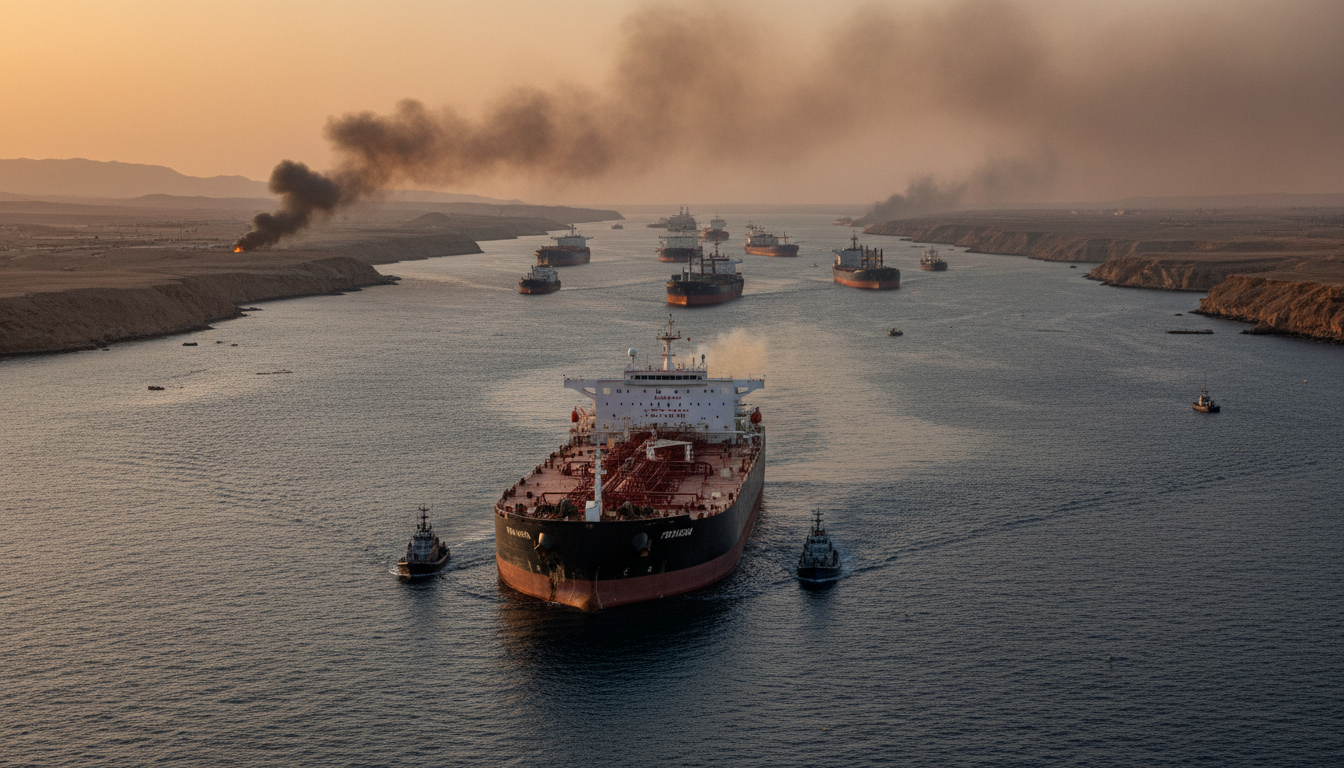
Iran Attacks and U.S. Blockade Choke Shipping Through the Strait of Hormuz
Attacks on commercial vessels and a U.S. naval blockade have sharply reduced traffic through the Strait of Hormuz, pushing oil flows lower and adding pressure to global fuel markets. The Strait of Hormuz is now a frontline in the conflict, with ship movements used as a barometer of wider economic disruption. Analysts say the pattern of attacks and restricted passage is likely to keep shipping cautious and energy costs elevated.
Shipping Levels Plunge
S&P Global Market Intelligence reported that ship transits through the Strait of Hormuz fell to as few as one vessel on a recent day, reflecting severe disruption to a waterway that normally carries a significant share of global oil and gas shipments. Before the outbreak of open hostilities on February 28, daily transits numbered in the hundreds; averages since the fighting began have dropped sharply.
Maritime trackers show a period when about eight ships a day attempted passage before renewed attacks curtailed traffic again. Shipping firms and insurers are increasingly treating the route as high risk, prompting rerouting and delays that ripple through global supply chains.
Recent Attacks and Targets
Iranian forces attacked two cargo vessels identified by Iranian media as the MSC Francesca and the Epaminondas, according to ship tracking and industry statements. Technomar Shipping, manager of the Epaminondas, reported the vessel was approached and fired upon by a manned gunboat but that its crew were safe and there was no immediate pollution.
These incidents followed a brief window in which some vessels began to transit after statements by both sides that the waterway was open. That apparent opening was reversed when Iran announced it would crack down on ships entering the strait, citing the continuation of a U.S. blockade, and the attacks resumed.
Iran’s Control and Enforcement Tactics
Data from Lloyd’s List Intelligence indicates more vessels with links to Iran have been moving through the strait than ships without such links, suggesting Tehran is selectively permitting or directing certain transits. Iranian authorities have required some ships to follow coastal routes close to Iran rather than the central lanes used before the conflict.
Analysts note Iran’s ability to dictate movements gives it leverage despite U.S. strikes on Iranian targets and attempts to block exports. Observers warn the requirement to seek Iranian permission and to use constrained routes undermines the principle of freedom of navigation in the waterway.
Impact on Global Energy Markets
The International Energy Agency estimates the closure and disruption of the strait have removed roughly 10 percent of global oil supply from normal distribution channels. That shortfall has contributed directly to rising prices for gasoline, diesel and cooking and heating fuels in multiple markets.
Tankers remain the economical option for much of the world’s crude movement, and while some crude has been shifted to pipelines and alternative routes, those flows have not compensated for the maritime shortfall. Businesses and consumers face higher costs and greater uncertainty as long as shipping through the strait remains constrained.
U.S. Blockade and Naval Posture
The United States established a blockade on April 13 intended to prevent Iranian oil exports and limit revenue for Tehran’s war effort. U.S. Central Command has reported turning back dozens of vessels and seized at least one tanker attempting to breach the blockade, while disputing some independent analysts’ counts of successful transits.
Despite the blockade, Central Command has not broadly deployed warships to escort commercial traffic through the strait, relying instead on a visible presence that has included AH-64 Apache attack helicopters. U.S. officials say the helicopters and other assets provide deterrence while advocating for the free flow of commerce.
Industry Reaction and Shipping Decisions
Shipping operators and insurers are increasingly hesitant to attempt passage without clear guarantees of safety, and tracking firms recorded dozens of vessels aborting transit attempts after reports of attacks. Windward analysts observed a brief surge of vessels positioning to transit before attacks prompted many to turn back.
Executives at major carriers and port operators say unpredictability and the absence of reliable warnings before attacks are key factors in decisions to reroute or delay sailings. Hapag-Lloyd and other large companies have signaled heightened caution, noting that sporadic violence and unclear navigation rules make operations through the strait commercially untenable for many lines.
Final paragraph
As long as attacks continue and the blockade remains in place, shipping through the Strait of Hormuz is likely to stay suppressed, prolonging pressure on global energy supplies and raising costs for consumers and businesses worldwide.
