
Hiking in Dubai: How Hatta, the Hajar Mountains and Mleiha Open Unexpected Trails for Day Trips
Hiking in Dubai: a practical guide to Hatta, the Hajar Mountains and Mleiha — trail distances, best season, essential safety tips, gear and travel logistics.
Hiking in Dubai has moved from niche pastime to a clearly marked and steadily expanding set of outdoor options within easy reach of the city. Trails clustered around Hatta, the Hajar Mountains and the archaeological deserts near Sharjah now offer everything from short lakeside walks to full-day mountain routes, making hiking in Dubai a viable day-trip activity for residents and visitors. The infrastructure improvements and signage in the Hatta region in particular have made it simpler for beginners to access marked routes, while more remote tracks in Ras Al Khaimah and Al Ain continue to attract experienced hikers.
Local authorities and tour operators emphasize that the best window for this activity runs from October through April, when mountain and desert temperatures are mild and early-morning starts are practical. Distances from central Dubai to the main hiking hubs vary, but most are within a 1–2 hour drive, allowing for round-trip day excursions. This article lays out the trails, seasons, safety practices, gear recommendations and practical logistics so readers can plan hiking trips near Dubai with confidence.
Hatta Emerges as Dubai’s Hiking Hub
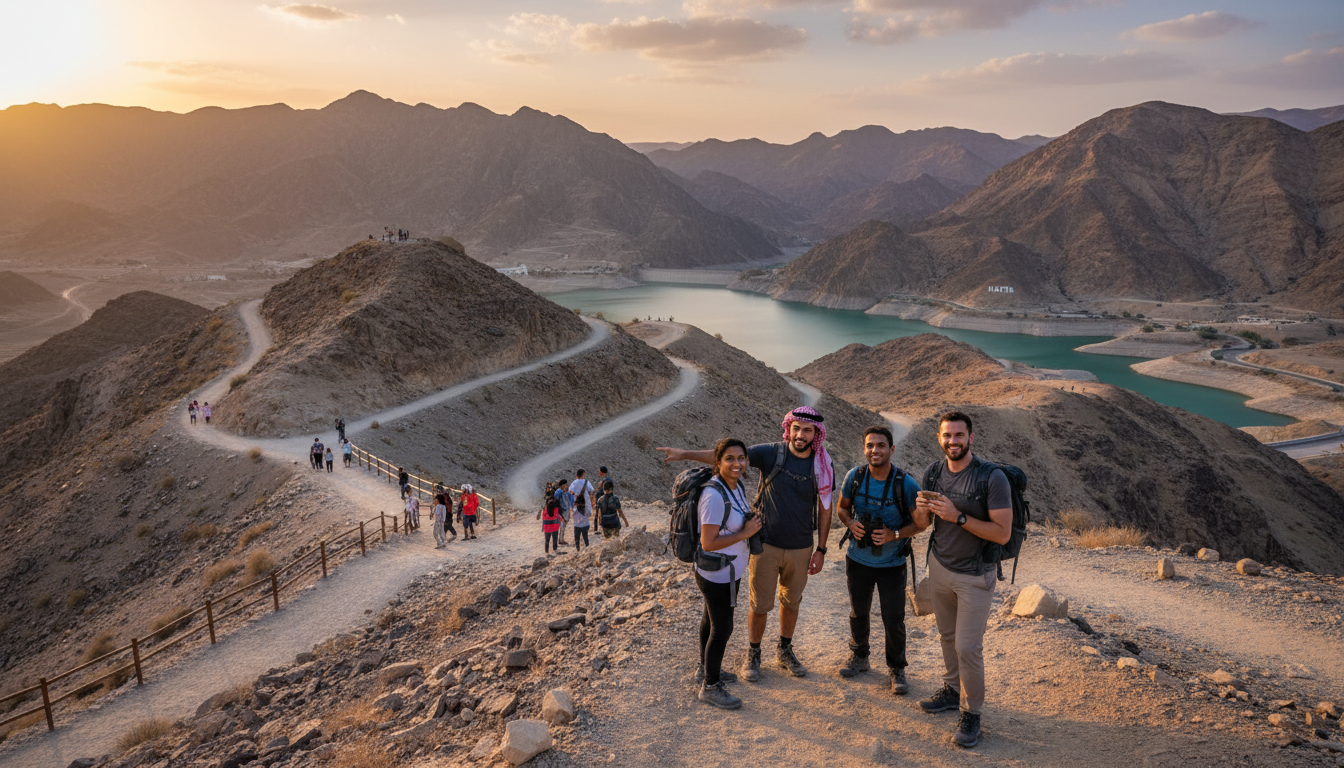
Hatta has become the focal point for marked and maintained hiking routes within reach of Dubai, with a network of trails serving different skill levels and interests. The area around Hatta Dam and the Wadi Hub features clearly color-coded paths that wind around water, through palm groves and across low mountain ridges suitable for families and newcomers. For hikers seeking more effort, the Hatta Mountain Safari Trail and adjacent routes climb into rougher terrain, offering panoramic views and a sense of remoteness that belies the short drive from the city.
Public investment and private services in Hatta have improved access, parking and basic amenities, which reduces the logistical barriers that once discouraged day visitors. Signage and maintenance make it possible to follow mapped loops without a guide on easier routes, while the availability of local guides and tour operators helps beginners tackle longer or more technical hikes. As a result, Hatta now functions as both an introduction to mountain hiking for first-timers and a launch point for extended exploration of the Hajar range.
Trail Difficulty and Distances Around Dubai
Trail offerings near Dubai span a clear spectrum of difficulty, from short, flat circuits to steep, rocky ascents that demand scrambling and endurance. Beginner-friendly options include lakeside loops and short wadi paths that typically measure 2–4 kilometers and take one to two hours at an easy pace. Moderate routes commonly run 6–10 kilometers, include sustained elevation gains and uneven footing, and require several hours and a reasonable level of fitness to complete safely.
For experienced hikers seeking a challenge, longer mountain routes such as approaches toward the Jebel Jais summit can reach 12–16 kilometers with significant vertical gain and technical sections that demand careful route-finding and secure footwear. Wadi traverses and pool-focused routes may involve boulder-hopping and water crossings; these features increase both the physical demands and the scenic payoff. When planning any hike, match the route length and terrain with the party’s fitness and experience to reduce risk and ensure an enjoyable outing.
Desert Routes and Archaeological Walks at Mleiha
Desert hiking near Dubai presents different conditions and rewards compared with mountain trekking, and the Mleiha archaeological area is the region’s primary destination for cultural desert walks. Routes through dune fields, fossil-bearing outcrops and ancient burial sites are shorter by distance but require distinct preparation, including greater water reserves and reliable navigation tools. The archaeological context of Mleiha adds interpretive value to the walk, turning a physical outing into a layered experience of landscape and history.
Unlike shaded mountain wadis, desert routes expose hikers to prolonged sun and reflective sand surfaces, increasing the risk of heat-related problems even in milder months. Proper timing, conservative route choices and respect for protected areas are essential when hiking in and around archaeological sites. Guided walks that include interpretive comments and vehicle support are widely available and advisable for those who want context without the responsibility of navigation and safety planning.
When to Hike: Seasonality and Daily Timing
The clear seasonal window for hiking in Dubai runs from October through April, when temperatures in mountain and desert areas generally fall between comfortable early-morning lows and moderate daytime highs. Peak months for day trips and weekend excursions are November through March, which deliver consistently favorable conditions and the highest visitor numbers on popular trails. Outside this window, summer heat and humidity create dangerous conditions; temperatures can climb rapidly and remain high throughout the day, making outdoor exertion unsafe.
Daily timing is equally important: start hikes well before mid-morning during the recommended season to take advantage of cooler temperatures and reduce exposure to midday sun. Early starts also improve the chances of finishing longer routes before weather can change and allow for safer returns on exposed ridgelines. On rare occasions of winter rainfall, wadis can experience flash flows, so checking forecasts and recent trail reports is a prudent step before setting out.
Safety Protocols and Practical Preparation
Basic safety measures transform a routine hike near Dubai into a low-risk outdoor activity, and these protocols are especially important for newcomers and family groups. Carry sufficient water—at minimum two liters for short routes and three or more liters for desert hikes—and factor additional reserves for hot days or longer itineraries. Sun protection, including a wide-brimmed hat, high-SPF sunscreen and sunglasses, is non-negotiable given the intense solar radiation in both desert and mountain environments.
Navigation and communication form the second pillar of safety. Download offline maps and waypoints to a smartphone and carry a backup battery, and inform a trusted contact of your intended route and expected return time. Footwear that offers ankle support and a grippy sole reduces the risk of slips on loose rock and shale, while a modest first-aid kit, blister supplies and energy-rich snacks keep minor issues from escalating. For remote or technically demanding routes, consider hiring a local guide or joining an organized group to benefit from local knowledge and on-trail leadership.
Getting to Hatta: Distances, Roads and Logistics
Hatta sits roughly 130 kilometers from central Dubai, and the drive typically takes around 1.5 hours under normal traffic conditions via the E44 corridor. The route is straightforward and well-signed, with fuel and service stations available en route, making self-drive day trips convenient for most travelers. Parking and basic facilities at the Hatta Wadi Hub and adjacent trailheads accommodate day visitors, and the presence of clearly marked trail entry points simplifies logistics for parties arriving without guided support.
Timing travel to avoid peak traffic periods—especially Friday mornings and late afternoons—reduces transit time and stress, and allows for longer on-trail periods during daylight. Those relying on tour operators will find many day-trip packages include transport from central Dubai, which removes the responsibility of route planning and driving. When combining hikes with other regional activities, such as cycling or cultural visits in the Hatta area, plan for additional time to move between sites and to accommodate parking and permit requirements where applicable.
Guided Tours, Costs and Local Services
A growing number of tour operators and local clubs offer guided hiking packages that include transport, route leadership, safety oversight and often refreshments, making these a practical option for visitors and first-time hikers. Guided day trips to Hatta are the most common product, while operators also run longer excursions to Jebel Jais, Showka and Mleiha that include vehicle transfers. Pricing varies by operator and itinerary complexity, but day trips to Hatta typically fall into a mid-range cost bracket that reflects transport, guide fees and occasional light provisioning.
Guided groups deliver value beyond convenience: leaders are familiar with seasonal trail conditions, water sources, safe route choices and local emergency procedures, which reduces the planning burden on participants. Hiker-led clubs and social groups also provide a way to discover less-traveled tracks alongside experienced community members. For those who prefer independent travel, local outdoor retailers and rental services supply necessary gear, while visitor centers in Hatta and other hubs can provide current trail information and advisories.
Environmental Considerations and Responsible Use
The landscapes around Dubai are ecologically fragile in places, and responsible hiking practices minimize human impact while preserving the scenery for future visitors. Stay on marked trails where they exist to avoid disturbing vegetation and archaeological features, and carry out all waste, including food wrappers and single-use plastics. In desert and mountain areas alike, avoid disturbing rock formations, fossil sites and cultural artefacts; these features are both scientifically valuable and often protected under local regulations.
Respect for wildlife, including the avoidance of close approaches or feeding, reduces stress on native species and helps maintain natural behavior patterns. When hiking in wadi systems, be mindful that these corridors can channel water rapidly during storms; do not camp or linger in low-lying sections when heavy rain is forecast upstream. Educating oneself about the ecological and cultural sensitivity of hiking areas enhances both safety and the quality of the experience.
Practical Gear Checklist and Shopping Options
Hikers should equip themselves with a basic, situation-appropriate kit that prioritizes hydration, sun protection and reliable footwear. A lightweight hydration pack that holds two to three liters, breathable clothing, a wide-brimmed hat and high-SPF sunscreen form the minimum essentials for most day hikes in the region. For mountain routes, add sturdy trail shoes or boots with ankle support, a compact first-aid kit, a whistle and a charged spare battery for navigation devices.
Dubai’s major shopping centers and specialized outdoor retailers supply a full range of hiking gear, from entry-level trail shoes to technical layers and navigation tools. For occasional hikers, rental services and guided tours often provide shared equipment to reduce upfront costs. Wherever purchases are made, prioritize fit and durability for footwear and the sun-protection characteristics of clothing, since these items have the most direct impact on comfort and safety during regional hikes.
Planning Multi-Stop Day Trips and Combining Activities
Many visitors choose to pair a hike with other outdoor offerings—such as kayaking at Hatta Dam, mountain biking, or visits to cultural sites—to maximize a day-trip itinerary. Combining activities requires realistic time management: allow extra buffer for trailhead navigation, restroom breaks and unplanned route slowdowns. If driving between multiple hubs in a single day, account for road distances and potential delays, and consider leaving less ambitious hiking routes for the return leg to ensure safe daylight arrival.
For travelers aiming to explore more than one region, structuring a short overnight stay in or near Hatta can reduce rushed schedules and broaden the range of feasible hikes. Accommodation near trailheads and local activity centers has expanded in recent years, supporting multi-activity stays that combine hiking with cultural exploration and outdoor sports. When planning, confirm parking availability, opening hours for visitor facilities and any permit requirements that may apply to archaeological or protected areas.
Who Should Consider Hiking Near Dubai
Hiking near Dubai suits a wide range of people: families seeking gentle lakeside walks, recreational hikers wanting moderate single-day routes, and experienced mountaineers looking for challenging ascents and technical terrain. Newcomers should begin with marked easy trails and consider joining group outings or guided tours to build confidence and local knowledge. Experienced hikers can access rugged, less-traveled sections of the Hajar Mountains and the higher peaks in neighboring emirates, but should do so with appropriate preparation and local route information.
Those with limited time can still experience a meaningful outdoor outing by selecting short, scenic routes that emphasize scenery over distance. Photographers, birdwatchers and cultural tourists will find specific trails that highlight water features, raptor activity and archaeological points of interest respectively. In all cases, matching expectations and fitness to the chosen route delivers the best combination of safety and enjoyment.
As hiking infrastructure expands and awareness of mountain and desert routes grows, the area within roughly 90 to 160 kilometers of Dubai is increasingly recognized for varied and accessible outdoor options. Whether seeking a brief morning walk by the Hatta Dam, a full-day mountain route in the Hajar range, or an interpretive desert walk at Mleiha, planning with seasonality, safety and responsible practices in mind will make the experience rewarding for residents and visitors alike.
