
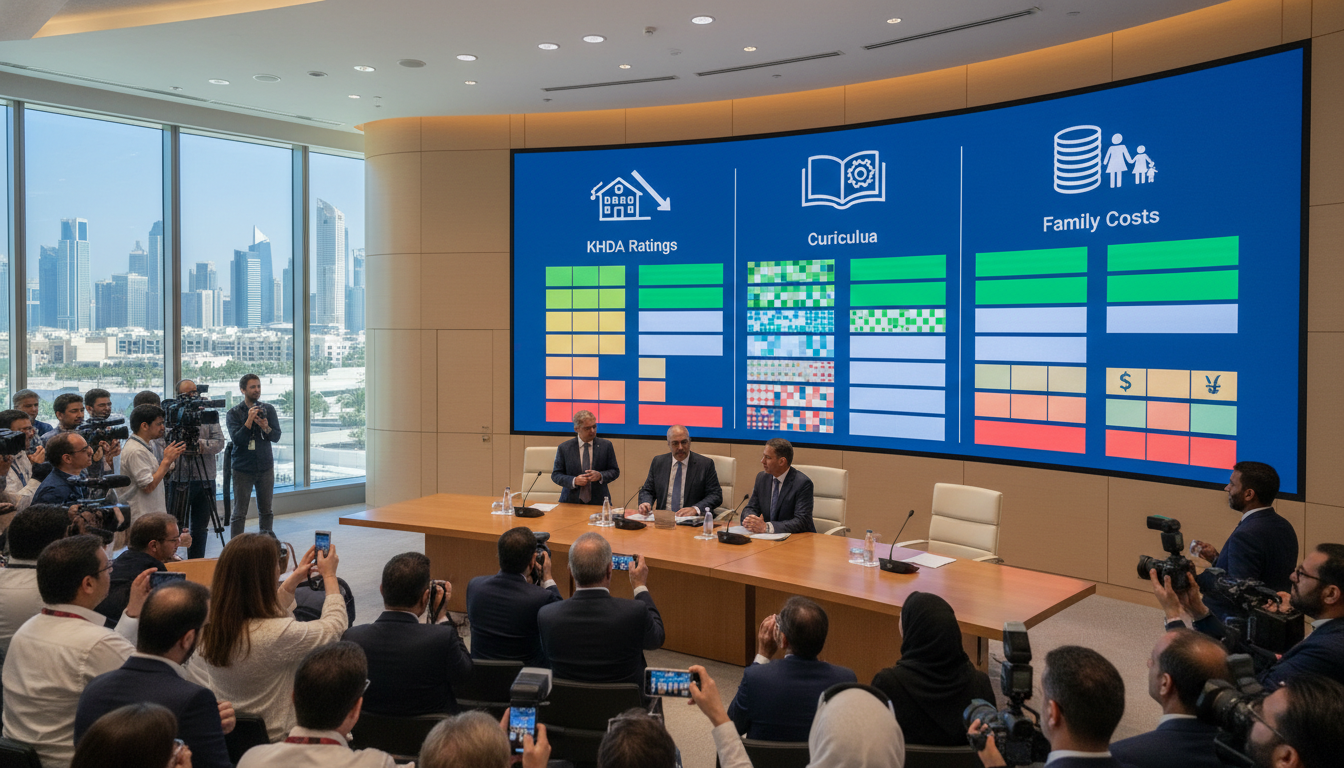
Dubai school districts mapped: KHDA ratings, curricula, fees and where families are moving
Practical guide to Dubai school districts: compare KHDA ratings, curricula, fees and commutes to choose the right neighbourhood for your family.
Dubai school districts are increasingly a deciding factor for families weighing housing, commute and long-term education plans in the city. This guide maps the main residential areas by the quality of local schools, KHDA inspection outcomes, available curricula and typical fee bands. It is designed to help parents balance academic reputation with rent and travel time when choosing where to live.
Jumeirah and Umm Suqeim lead in Outstanding KHDA ratings
The coastal strip that includes Jumeirah and Umm Suqeim has the highest concentration of top-rated schools in Dubai, making it a magnet for families prioritising academic excellence. Several well-known institutions in this area hold Outstanding KHDA ratings, reinforcing the district’s reputation as the city’s premier school hub. The neighbourhoods combine beachside living with short commutes to central business districts, a factor many parents cite as decisive.
Dubai College in Al Sufouh and the pair of Dubai English Speaking School and College are frequently highlighted as academically selective and consistently strong performers. Safa Community School and JESS Jumeirah also contribute to the Outstanding cluster, representing primarily British-curriculum options. For families seeking British system continuity, Jumeirah and Umm Suqeim offer a clear concentration of high-performing campuses.
Housing costs in these areas reflect the school premium, with villa rents beginning in the mid five-figure range and reaching significantly higher for properties closer to the beach. The trade-off for elevated rental prices is a compact commute to DIFC, Downtown and Dubai Marina that often falls below 15 minutes outside the busiest hours. Parents buying or renting here generally accept higher housing expenses for reduced travel and immediate access to top schools.
Al Barsha: Curriculum diversity meets metro convenience
Al Barsha combines a wide mix of curricula with easy public transport access, making it attractive to dual-career households and those seeking choice. The district hosts multiple curriculum pathways including British, American, Indian and International Baccalaureate programmes. Two schools in the area carry Outstanding KHDA ratings, while several others provide strong alternatives across fee tiers.
King’s School Al Barsha and Nord Anglia International School stand out among the local offerings and typically command mid‑to‑upper fee bands. Other established options such as American, Indian and faith-based schools broaden the district’s appeal to families with different educational expectations. The presence of Mall of the Emirates metro station and robust road links also shortens daily school runs for many residents.
Rent levels in Al Barsha are generally more moderate than the beachside suburbs, so families often find they can secure larger apartments at lower cost while keeping access to premium schools. That affordability combined with a range of curricula explains why Al Barsha remains a popular choice for international families seeking both quality and convenience. School buses and short driving distances further reduce the friction of attending a preferred campus.
Arabian Ranches: Suburban family living anchored by JESS
Arabian Ranches is one of Dubai’s established villa communities and is centered around family life and community amenities. Its educational anchor is Jumeirah English Speaking School, a non-profit British school with an Outstanding rating and an IB Diploma pathway at Sixth Form. The Ranches’ school mix includes other well-regarded primary options and nearby IB schools that serve a broad age range.
Families moving to Arabian Ranches tend to prioritise larger homes, community parks and schools within short driving distance rather than proximity to the waterfront. Villa rents in the Ranches typically sit below equivalent beachside neighbourhoods, offering households more living space for the same budget. The balance between housing affordability and an Outstanding school presence is a key reason many long-term residents choose this suburb.
Complementary schools such as Ranches Primary and Fairgreen in adjacent sustainable developments provide alternatives for families seeking different curricular focuses. The combination of a strong non-profit flagship school and nearby private options means parents can often find continuity from early years through to Sixth Form without long daily commutes. For those weighing total household cost, the Ranches can present a competitive overall package.
Dubai Hills Estate: Rapid growth with rising school standards
Dubai Hills Estate is among the fastest-expanding family districts in the city, and its development plan includes extensive green spaces and retail amenities. Local campuses currently include several GEMS schools and other established providers, with inspection outcomes that range from Good to Very Good. The overall trend across Dubai Hills points to rising standards as newer campuses mature and expand.
Dubai Hills benefits from strategic placement along major routes, providing reasonable access to Downtown, southern business districts and other school clusters. While the immediate school portfolio has fewer Outstanding ratings today, several institutions are broadly regarded as improving and are expected to climb KHDA bands in future cycles. Families who prioritise new housing, community facilities and growing school options often settle here.
Rents for townhouses and villas can be higher than outer suburban districts but remain competitive when compared with premium beachside neighbourhoods. The master-plan environment attracts parents who favour an integrated living model—parks, cycling tracks and nearby mall infrastructure—while still seeking solid school choices. For those willing to accept an evolving school landscape, Dubai Hills offers a forward-looking compromise.
JVC, Mirdif and Dubai Silicon Oasis: The affordability tier
Jumeirah Village Circle, Mirdif and Dubai Silicon Oasis represent the more budget-friendly end of Dubai’s residential spectrum while keeping access to quality schools. These areas trade proximity to the coast for lower rents and a variety of mid-range schooling options, making them popular with families prioritising cost control. Each cluster offers distinct advantages in housing style and school access.
JVC is known for apartment living and relatively low two-bedroom rents, while adjacent zones like Sports City host high-rated primary options that feed into nearby secondary schools. Mirdif provides villa options and a mixture of British and Indian curriculum schools, suitable for families seeking traditional suburban layouts. Dubai Silicon Oasis combines planned residential blocks with established school campuses that deliver consistent academic performance.
The affordability tier does not mean educational compromise; standout schools such as Victory Heights Primary and local GEMS campuses achieve strong inspection outcomes. Families often pair lower housing costs with school bus services or a short drive to reach preferred campuses. For many parents, the overall cost-of-living advantage outweighs longer commutes or fewer ultra‑premium school choices.
Costs, commutes and how to measure the full package
When choosing between Dubai school districts, parents should compare the complete household cost rather than isolating rent or tuition. Total expense calculations ought to include school fees, expected extras such as uniforms and trips, and the true cost of daily transport including fuel, parking and potential school bus subscriptions. A more expensive home may offset other recurring costs if it substantially shortens commute times.
Commute length is a critical but sometimes overlooked variable; a morning drive under 20 minutes can meaningfully reduce family stress and childcare needs. Peak-hour variability matters: short off‑peak runs can become much longer during school hours if road congestion is heavy. Many parents therefore test morning travel times during term time rather than relying on estimates or staged visits.
School bus costs typically fall into an annual band that should be factored into net savings when comparing neighbourhoods. Additionally, a school’s location relative to parents’ workplaces can be decisive; proximity to major employment hubs such as DIFC or Dubai Marina reduces double‑trip inefficiencies. A pragmatic budget assessment includes these elements and models several realistic daily scenarios.
KHDA inspections, the E33 strategy and what to watch for
KHDA inspection reports remain the principal independent measure of school quality in Dubai and should be read beyond headline ratings to understand strengths and weaknesses. Inspection summaries show performance across teaching, leadership, student outcomes and safety, allowing parents to assess whether a school’s strengths align with their child’s needs. It is important to review the most recent report and any follow-up updates.
The city’s E33 strategy aims to increase private school capacity over the coming decade, with a target to open a substantial number of additional schools by 2033. That expansion will alter the map of school supply and may improve local access in emerging districts. Families signing long leases or buying property should factor in planned developments that may deliver new campus options or change neighborhood dynamics.
When evaluating a school on your shortlist, request recent inspection outcomes and ask about planned curriculum changes, facility upgrades and student‑teacher ratios. Visiting a school on a normal teaching day offers more realistic insight than an open day alone, which can be curated. Finally, consider longevity and leadership stability; schools with consistent management teams tend to follow steadier improvement trajectories.
A practical checklist for parents choosing a neighbourhood
Begin by selecting the curriculum pathway that best suits your child’s long-term academic goals, whether that is British, IB, American or a national syllabus. Once you have a curriculum shortlist, map the nearby schools, their KHDA ratings and the fee ranges they charge to identify feasible living areas. This focused approach narrows options quickly and avoids scattered campus visits.
Next, measure commute times at typical morning peak hours from potential homes to the schools on your list, and consider whether car travel or school buses will be necessary. Factor in total annual childcare and transport costs and compare them to rental or mortgage savings in cheaper districts. A neighbourhood that saves on rent but doubles transport costs can be a false economy.
Inspect the latest KHDA reports, request campus policies on homework and extracurriculars, and speak to current parents for day‑to‑day impressions. Verify admissions timelines and sibling policies, since these operational details often determine whether a chosen school is a realistic option. Finally, account for future supply changes in your chosen district and how a new nearby school could affect property values and commute options.
Long-term planning also involves evaluating secondary and Sixth Form provision, not just elementary continuity. Ensure that a child’s pathway through key stages is coherent, recognising that selective entry points or scholarship routes may alter family choices later. For expatriate families, consider university recognition and how the chosen curriculum aligns with intended higher-education destinations.
Dubai school districts are not static, and families who plan with both present realities and future developments in mind will make more resilient housing and education decisions. The interplay of KHDA ratings, curricula availability, total household cost and commute reliability should guide choices more than single metrics or reputation alone.
Balancing school quality with lifestyle needs and financial realities is the central challenge for families relocating within or to Dubai, and a methodical, evidence-driven approach will yield the best long-term outcome.
