
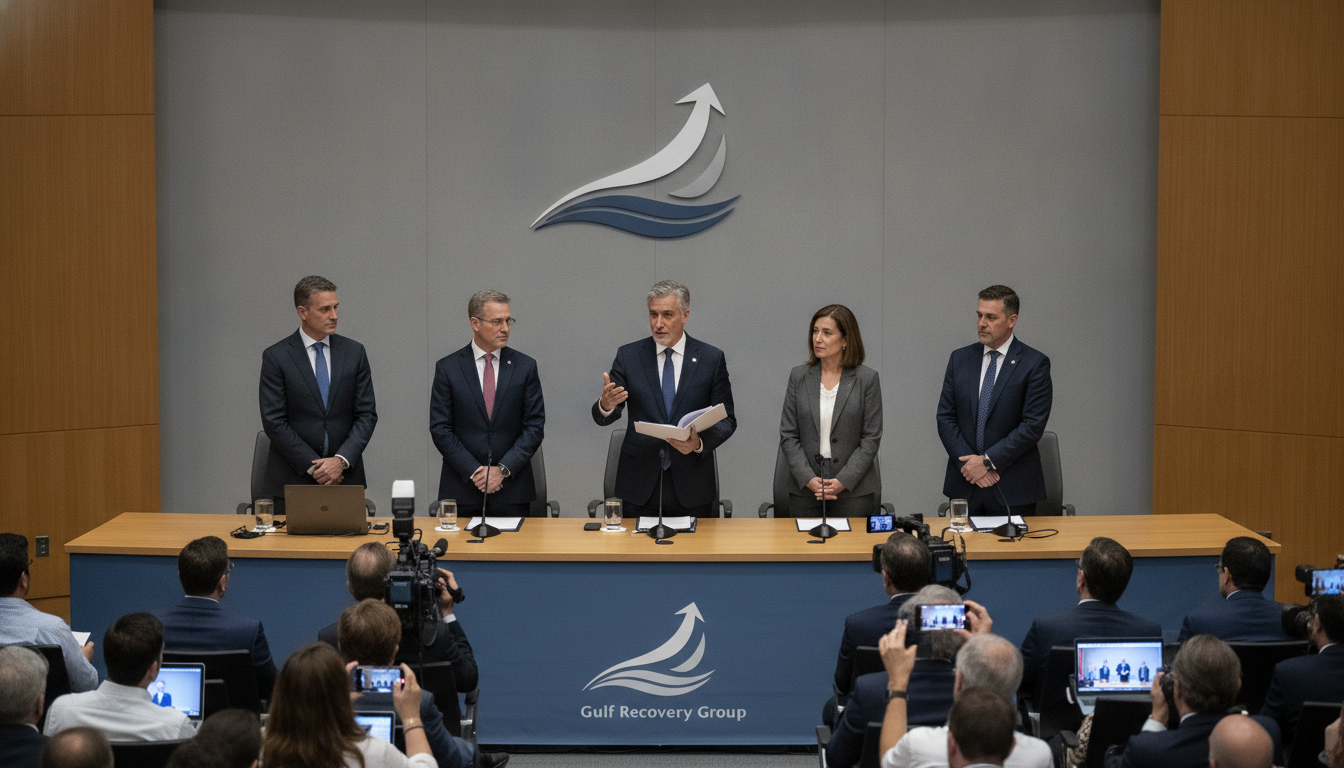
Investment recovery Abu Dhabi: Allegations of a boiler‑room scheme prompt mass claims and recovery efforts
Meta description: Gulf Recovery Group and affected investors in Abu Dhabi pursue investment recovery Abu Dhabi after alleged boiler‑room operations left clients claiming hundreds of millions lost.
A growing wave of investors in Abu Dhabi is seeking redress under the banner of investment recovery Abu Dhabi after allegations surfaced of a coordinated boiler‑room operation that persuaded clients to transfer large sums into high‑risk accounts. The claims, brought to public attention by a specialist recovery firm, say Hundreds of millions were reportedly routed through aggressive sales tactics and non‑transparent platforms. Authorities, recovery advisers, and affected clients have begun a multi‑front response that mixes case reviews, transaction analysis, and formal complaints.
The unfolding situation has moved quickly from private grievances to organized legal action and public campaigning for restitution. Recovery advisers describe an initial phase of fact‑finding that aims to establish whether the activity meets the legal threshold for fraud or financial misconduct. Investors and advisors say the volume of alleged losses and the pattern of sales techniques are consistent with what market regulators classify as boiler‑room behavior.
Allegations of a boiler‑room investment scheme
Alleged victims report that high‑pressure phone sales, misleading presentations, and persistent solicitations were used to push investments into opaque products. Those who now seek recovery say they were encouraged to make repeated transfers, often after promises of expedited returns and guarantees that later proved unfounded.
Recovery specialists have characterized the operation as bearing the hallmarks of a boiler‑room: scripted pitches, limited time offers, and avoidance of transparent documentation. Investors assert that once funds were transferred, communication slowed or stopped entirely, leaving account balances frozen or invested in illiquid positions.
Statements collected from clients describe a mix of professional and retail investors, with many recounting similar sequences of contact, persuasion, and eventual loss. That commonality has provided the foundation for coordinated recovery work and for compiling evidence to present to banks and regulators.
Reported scale: claims of hundreds of millions in losses
Several recovery advisers and claimant representatives estimate the aggregate loss at the center of these complaints runs into the high hundreds of millions, according to materials reviewed by their teams. While exact figures remain subject to independent verification, the scale described has prompted urgency from those organizing affected investors.
The financial total cited by some claimants has elevated the matter from isolated complaints to a case of systemic concern. Larger aggregate figures complicate recovery prospects because funds may have been dispersed across multiple jurisdictions and intermediaries.
Recovery practitioners stress that headline numbers can fluctuate as further documentation is obtained and transactions are traced. For creditors and clients, establishing precise sums and the flow of funds is a critical early step in any recovery strategy.
Gulf Recovery Group and the “Sigma 1 Capital” campaign
A private recovery firm calling itself Gulf Recovery Group has taken a public role in coordinating outreach to impacted investors and in structuring case reviews. The firm’s materials describe a campaign focused on a trading and investment brand identified in documents as “Sigma 1 Capital” and related entities.
Gulf Recovery Group states its work includes compiling evidence, liaising with banks, and preparing complaints to financial regulators on behalf of clients. The group also highlights its role in advising clients on dispute preparation and on pursuing civil remedies where appropriate.
Representatives from the recovery firm caution that naming a commercial brand in public materials does not equate to a court determination of guilt. They say their role is to gather facts, assist clients to formalize complaints, and to push for accountability through existing legal and regulatory channels.
How case review and transaction analysis are being conducted
Claimant teams describe a structured process beginning with case intake and document organization, progressing to detailed transaction analysis and forensic review. Practitioners emphasize that reconstructing the chain of transfers and counterparty relationships is necessary to identify where recoverable assets may reside.
Transaction analysis typically involves obtaining bank statements, wire transfer records, and contractual documents that memorialize the investor relationship. Financial investigators then seek to trace funds through correspondent banks, trading accounts, and nominee structures to determine whether funds were misappropriated or wrongly transferred.
Where documentation is incomplete, investigators often rely on subpoenas, court orders, or cooperation agreements with financial institutions to fill gaps. The complexity of international payments and the use of layered intermediaries can lengthen the timeline for a complete forensic picture.
Support services offered to complainants and brokers’ complaints handling
Organized recovery efforts being led by advisers include procedural support such as document preparation, drafting formal complaints, and coordinating legal counsel. Victims report receiving assistance to lodge disputes with their banks and to file regulatory complaints where broker conduct is at issue.
Recovery teams also provide targeted support for complaints against intermediaries, including brokers and payment processors, by preparing case files that articulate alleged breaches of duty or regulatory requirements. This service aims to ensure complaints meet the formal thresholds that banks and regulators use to accept and investigate claims.
In parallel, some advisers offer ongoing client support that includes updates on investigative milestones, assistance in mediation talks, and guidance on litigation strategy when settlement is not achievable. This continued engagement is intended to keep clients informed and to preserve statutory or contractual timelines for claims.
Regulatory and legal avenues under consideration
Affected investors and their advisers are pursuing a range of options that include internal bank dispute mechanisms, filings with national financial regulators, and civil litigation in appropriate jurisdictions. Each route carries different evidentiary standards, timelines, and likely outcomes.
Regulators typically assess complaints to determine whether firm conduct breached licensing, disclosure, or anti‑money‑laundering rules, and they may impose sanctions or require restitution where violations are found. Civil courts, by contrast, focus on contractual breaches, tort claims, and the recovery of misapplied funds through tracing remedies.
Legal counsel assisting clients highlight the importance of timely action, including preservation of evidence and early engagement with banks to freeze remaining assets where possible. Cross‑border dimensions introduce additional complexity, as enforcement against offshore entities may require international legal cooperation.
Practical steps for investors seeking investment recovery Abu Dhabi
Advisers recommend that anyone who believes they were solicited into suspicious investments immediately compile all communications, contracts, and bank records related to the transaction. A clear, chronological account of calls, emails, and transfers improves the likelihood that investigators can trace funds and identify responsible parties.
Investors are urged to contact their banks to register formal disputes and to request transaction logs and recall procedures, while also obtaining legal advice on whether to pursue regulatory complaints or civil claims. Early reporting to financial authorities and law enforcement can be decisive in cases where assets are still movable.
Recovery specialists note that preserving original documents and resisting pressure to sign settlement agreements without independent legal review are essential. They also advise contacting vetted recovery advisers or legal counsel who can assess the matter and explain realistic prospects and costs.
Expert assessment of recovery prospects and timelines
Recovery experts caution that the path to restitution can be lengthy and uncertain, especially if funds were distributed through complex corporate structures or routed offshore. The potential for partial recoveries is real, and outcomes often depend on the speed of initial responses and the cooperation of intermediaries.
Nonetheless, targeted forensic accounting and timely legal measures have yielded recoveries in prior cases where investigators located remaining balances or where intermediaries accepted liability. Settlement negotiations and mediated resolutions are common outcomes when recoverable assets remain within banks’ control.
Professionals stress that expectations must be managed: while some clients may recover a meaningful portion of their funds, others may only achieve limited restitution after protracted proceedings. Transparency about likely timelines and success rates is a core part of any responsible recovery service.
A growing number of investors in Abu Dhabi are now consolidating their claims and pursuing coordinated action to improve efficiency and leverage in negotiations. Collective approaches can reduce individual legal costs and present a unified evidentiary case to banks and regulators.
Final paragraph: As formal complaints and recovery actions advance, investors, advisers, and authorities in Abu Dhabi continue to refine their strategies for tracing funds and seeking redress, balancing urgent legal steps with the careful forensic work required to identify and recover assets.
