
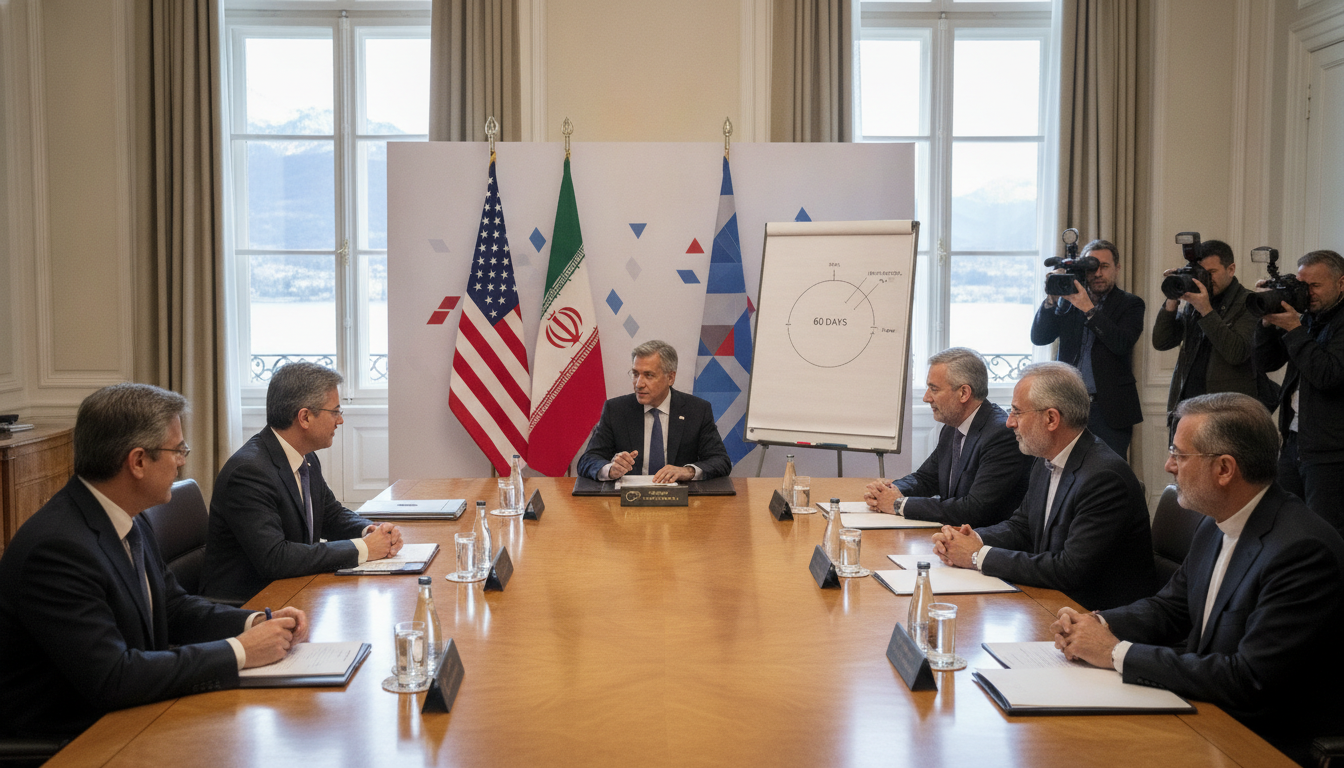
US-Iran talks in Switzerland produce 60-day roadmap as Qatar and Pakistan announce joint statement
Qatar and Pakistan say US-Iran talks in Switzerland yielded a roadmap to a final deal within 60 days, with high-level committees and working groups established to continue negotiations.
Qatar and Pakistan announce joint statement on US-Iran talks
Qatar and Pakistan issued a joint statement Monday after the first round of high-level US-Iran talks concluded at the Burgenstock resort near Lake Lucerne in Switzerland.
The ministers described the opening day as positive and constructive, noting tangible progress and agreement on mechanisms to carry negotiations forward.
The talks were held under the framework of a memorandum of understanding signed in Islamabad and involved senior representatives from the United States and Iran alongside the two mediators.
Creation of a high-level committee to oversee mediation
The joint statement said the parties agreed to establish a high-level committee to provide political oversight of the mediation efforts.
The committee will receive periodic reports from the chief negotiators and will supervise specialized working groups on core issues.
This oversight structure is intended to ensure coordination between political direction and technical negotiation teams as talks advance.
Working groups to address nuclear file, sanctions and disputes
According to the statement, negotiators formed dedicated working groups to tackle the nuclear dossier and sanctions-related matters.
A separate follow-up and dispute-resolution working group was also created to manage implementation and any disagreements that arise.
These groups will be led by the chief negotiators and are tasked with preparing detailed technical recommendations for the high-level committee.
60-day roadmap aims to produce a final agreement
The mediators said the high-level committee endorsed a roadmap targeting a final agreement within 60 days.
That timeline is designed to allow an immediate resumption of technical talks and rapid progress on outstanding technical and political issues.
Officials emphasized the need for momentum in the coming weeks to translate early diplomatic gains into a comprehensive settlement.
Maritime safety and communications channel for Strait of Hormuz
Part of the joint statement focused on measures to prevent incidents at sea, including establishing a communication channel between the parties.
The channel is intended to reduce the risk of misunderstandings and ensure safe passage for commercial vessels through the Strait of Hormuz.
Mediators framed the maritime measures as practical steps to stabilise commercial traffic while broader political and security concerns are negotiated.
De-escalation mechanism includes Lebanon and regional actors
The statement indicated the creation of a working group to prevent escalation that will include the two principal parties and Lebanon, facilitated by the mediators.
This body aims to secure adherence to an agreed cessation of military operations in Lebanon as referenced in the memorandum of understanding.
Qatar and Pakistan also thanked other friendly countries for their support and contributions to the mediation process.
Technical negotiations to continue at Burgenstock throughout the week
Mediators said technical talks would proceed through the remainder of the week at the Burgenstock resort, with teams working across all agreed files.
Qatar and Pakistan pledged to continue their efforts to maintain a constructive negotiating atmosphere and to bridge differences where they emerge.
Both mediators expressed appreciation for the United States’ and Iran’s continued diplomatic engagement and their stated commitment to a peaceful settlement.
The joint statement underscores a cautious optimism and a structured approach to negotiations, balancing political oversight with technical detail and regional confidence-building measures.
