
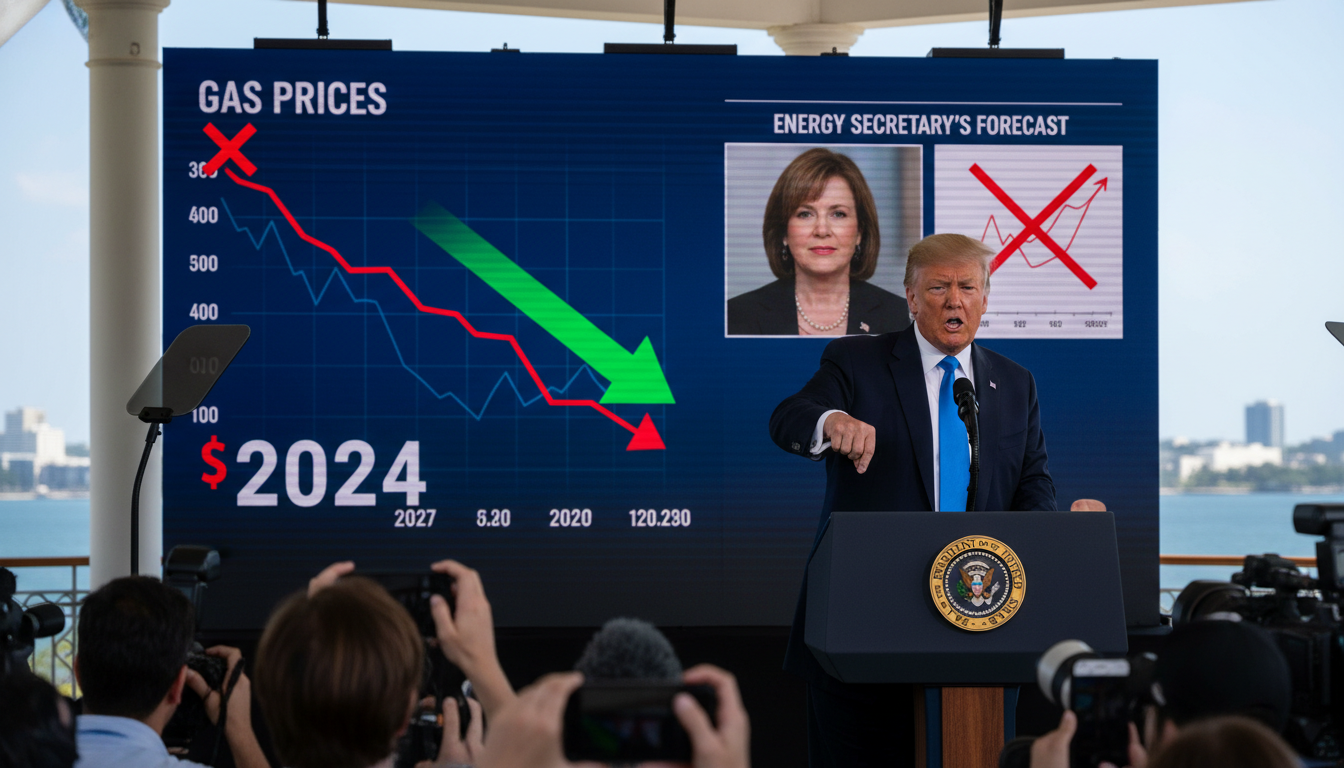
Trump Rejects Energy Secretary’s 2027 Gas Prices Prediction, Says Drop Will Follow End of Iran Conflict
Trump rejects Energy Secretary’s claim that gas prices won’t fall before 2027, saying they will decline once the Iran conflict ends amid rising consumer costs and midterm pressure.
President Donald Trump on Monday dismissed Energy Secretary Chris Wright’s forecast that gas prices would not fall before 2027, saying Americans should expect relief as soon as the conflict involving Iran comes to an end. The rebuke, delivered to a reporter from The Hill, came after Wright told CNN that a return to gasoline below $3 per gallon might not materialize until next year or later. Trump said Wright was “totally wrong” and reiterated that the path to lower gas prices is tied directly to the resolution of the Middle East crisis.
Trump Rebukes Energy Secretary’s Timeline
Trump told reporters he disagreed with the Energy Secretary’s timeline and blamed geopolitical instability for current price levels. He argued that a cessation of hostilities would quickly ease pressure on global oil supplies and result in lower pump prices for American motorists. The president’s comments aim to draw a direct line between foreign policy outcomes and domestic economic relief.
Chris Wright’s CNN Remarks on Price Trajectory
Chris Wright told CNN that while prices could fall to under $3 per gallon later this year, a significant decline “may not happen before next year” and that broader easing might stretch into 2027. He acknowledged that a resolution of the conflict would reduce upward pressure on fuel costs, but stopped short of offering a firm timeline. Wright’s remarks highlight uncertainty in forecasting when geopolitical shocks continue to reverberate through energy markets.
Oil Market Reaction and Price Data
Markets reacted swiftly to the news cycle, with global oil prices rising about five percent on the same day, reflecting sustained risk sentiment among traders. The American Automobile Association’s estimates put the national average for a gallon of regular gasoline at $4.04, up from $3.15 a year earlier. That year-over-year increase underscores the burden on households and businesses coping with higher transportation and logistics costs.
Political Stakes Ahead of November Midterms
Republicans, including Trump, face mounting pressure to demonstrate progress on inflation and consumer costs with the midterm elections looming in November. Lawmakers have repeatedly promised to lower pump prices as part of broader economic messaging, and elevated gasoline costs have become a focal point of voter discontent. With only months before voters head to the polls, energy prices are likely to feature prominently in campaign rhetoric and congressional debates.
Consumer Impact and Economic Indicators
Sustained fuel price increases ripple through the economy by raising costs for commuting, freight and goods, which can feed into broader inflation measures. Higher gas prices strain household budgets and can erode consumer confidence, particularly among middle- and lower-income families that spend a larger share of income on transportation. Policymakers watch these trends closely because persistent price pressures complicate monetary and fiscal policy decisions.
Outlook Hinges on Middle East Developments
Both the White House and energy officials tied any meaningful decline in gas prices to progress in resolving the Iran-related conflict and stabilizing regional supply risks. Analysts caution that stop-start ceasefires and uncertain peace talks make a clear timeline difficult to establish, leaving markets sensitive to headline risk. Without a sustained easing of geopolitical tensions, price volatility could continue to undermine short-term forecasts.
The debate between the president and his energy secretary underscores the challenge of communicating complex market dynamics to the public while under political deadlines. As officials from both parties navigate competing demands — assuring voters of relief while managing a fluid foreign-policy situation — motorists and businesses will be watching crude and pump prices closely for any sign that the high-cost era is easing.
