
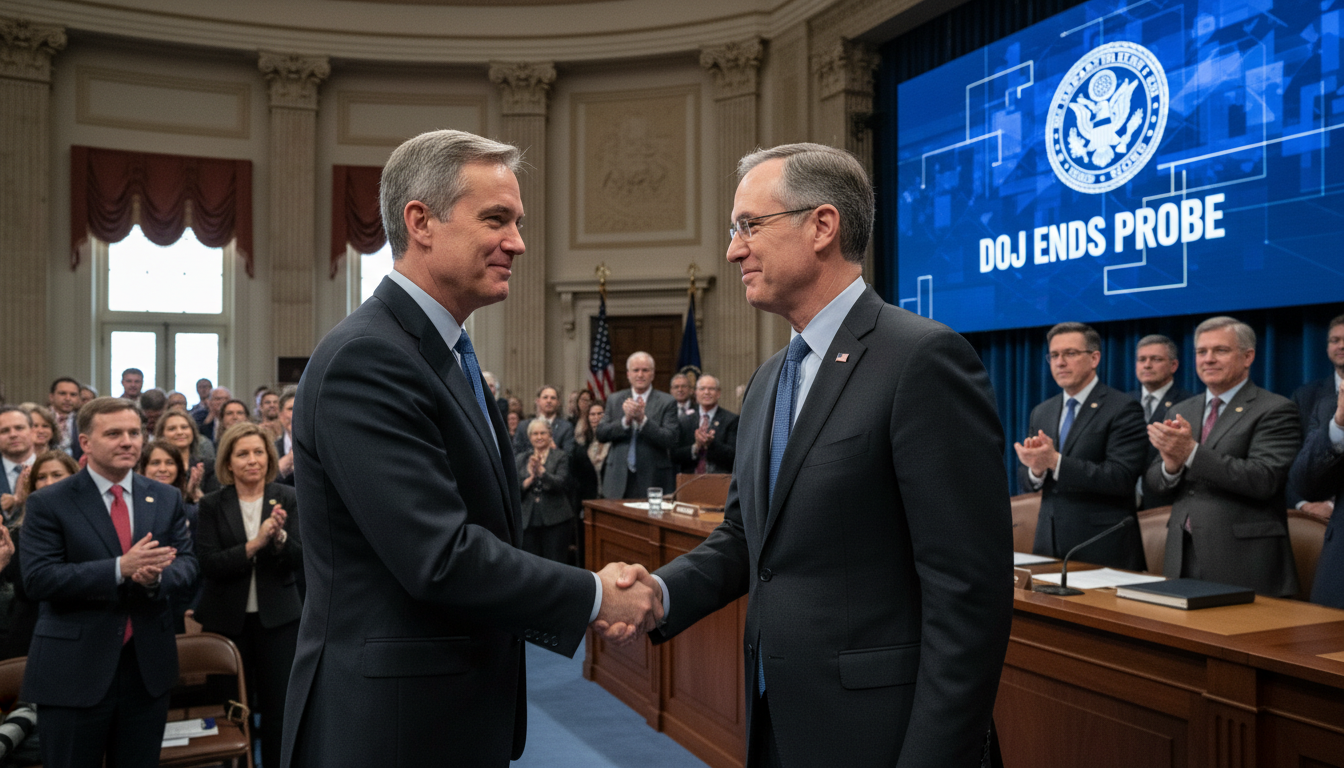
DOJ Ends Probe into Fed Renovations, Clearing Path for Kevin Warsh Confirmation
DOJ ends probe into Federal Reserve renovations, clearing the way for Kevin Warsh confirmation as Fed chair nominee; inspector general will lead the review. (151 characters)
The Department of Justice on April 24, 2026, announced it would end its investigation into the Federal Reserve’s Washington headquarters renovations, a move that clears a key obstacle to Kevin Warsh confirmation as the next Fed chair. The decision shifts scrutiny to the Fed’s Office of Inspector General and removes a principal point of contention that had stalled Senate action. With Jerome Powell’s term set to expire on May 15, 2026, the development accelerates the timeline for the leadership transition at the central bank.
DOJ withdraws as inspector general takes lead
US Attorney for the District of Columbia Jeannine Pirro said her office would cease its probe and asked the Federal Reserve’s internal watchdog to assume responsibility for examining cost overruns on the renovation project. Pirro framed the handover as a jurisdictional shift, noting the inspector general has the authority to hold the Fed accountable to taxpayers. The inspector general’s review is expected to focus on budgetary and procurement practices used during the refurbishment.
The DOJ’s withdrawal does not amount to an assertion of the Fed’s innocence or guilt, but it does narrow the investigative scope to an internal audit rather than a criminal inquiry. Officials emphasized that the inspector general’s access and expertise make it the appropriate body to audit the agency’s internal spending decisions. Timing for the inspector general’s report has not been publicly announced.
How the move affects Kevin Warsh confirmation
By ending the probe, the DOJ removed the primary pretext cited by some senators for deferring a confirmation vote on Kevin Warsh. Senator Thom Tillis had explicitly said he would oppose any vote until the investigation was resolved, effectively blocking action in committee. With the matter now transferred to the inspector general, Justice Department officials indicated there is no longer a legal basis to maintain the subpoenas that had complicated the confirmation process.
President Donald Trump nominated Warsh in January to succeed Powell, and the nominee faced a contentious Senate Banking Committee hearing earlier in the week. Republican supporters signalled readiness to move toward a full Senate vote once the investigative roadblock was lifted, which could enable a rapid confirmation before Powell’s term expires on May 15, 2026.
Senate reaction and partisan scrutiny
Republicans praised Warsh during the committee hearing, portraying him as experienced and ready to lead the central bank, while Democrats raised concerns about his ties to the White House and transparency around his finances. Senator Elizabeth Warren, the committee’s ranking Democrat, questioned Warsh’s independence and suggested the nominee might align too closely with presidential preferences on monetary policy. Warsh repeatedly asserted that he would act independently if confirmed.
The partisan split played out publicly as Democrats pressed for assurances and more detailed disclosures, and Republicans countered that the nominee’s policy record and experience as a former Fed governor warranted swift action. The narrow margins in the Senate underscore how a handful of votes could determine the outcome of the confirmation.
Court findings undermined the DOJ case
A federal judge, James Boasberg, quashed subpoenas issued to the Federal Reserve after prosecutors struggled to show evidence of criminal misconduct related to the renovation project. In a closed-door hearing in March, a prosecutor conceded the government had not found proof of a crime, and subsequent court filings described the evidentiary basis as weak. The judge said the record presented was “thin and unsubstantiated,” prompting questions about the viability of a criminal referral.
Prosecutors’ efforts included an unannounced visit to a construction site at the Fed complex, an action that drew criticism from the defense and Fed representatives as inappropriate. Those encounters, and the court’s findings, diminished momentum for pursuing a criminal investigation and bolstered arguments for transferring oversight to an internal auditor.
Nominee’s testimony and White House pressure
During his Senate appearance, Warsh told lawmakers he never promised the White House any particular interest-rate decision and pledged to act independently of presidential direction if confirmed. The nominee’s comments came after President Trump publicly stated he would be disappointed if the Fed did not move to cut rates quickly. Warsh’s assertion of independence aimed to allay fears that the Fed chair could become subject to political pressure.
Critics pointed to past public statements and financial disclosures to question whether Warsh had adequately separated his private interests from public duties. Supporters countered that his prior service on the Fed’s board provided him with institutional knowledge and a record of engagement on monetary policy that would serve the country well.
Broader implications for Federal Reserve leadership
The removal of the DOJ investigation from the confirmation equation reduces legal uncertainty around the leadership transition at the world’s most influential central bank. If confirmed, Warsh would inherit a complex policy landscape, balancing inflation dynamics, financial stability concerns, and global economic pressures. Market participants and international counterparts will be watching for signals about the Fed’s policy stance and governance practices after the transition.
The inspector general’s forthcoming review will likely influence public perceptions of the Fed’s stewardship of taxpayer funds and could prompt reforms in procurement and transparency. How rapidly the Senate moves on Warsh’s nomination will determine whether the new chair is in place before or after Powell’s term ends on May 15, 2026, with implications for continuity at the Federal Reserve.
The Justice Department’s decision to end its probe and hand oversight to the Fed’s inspector general marks a pivotal moment in the confirmation process and shifts attention back to the Senate and the questions it raised about governance, independence and financial disclosure.
