
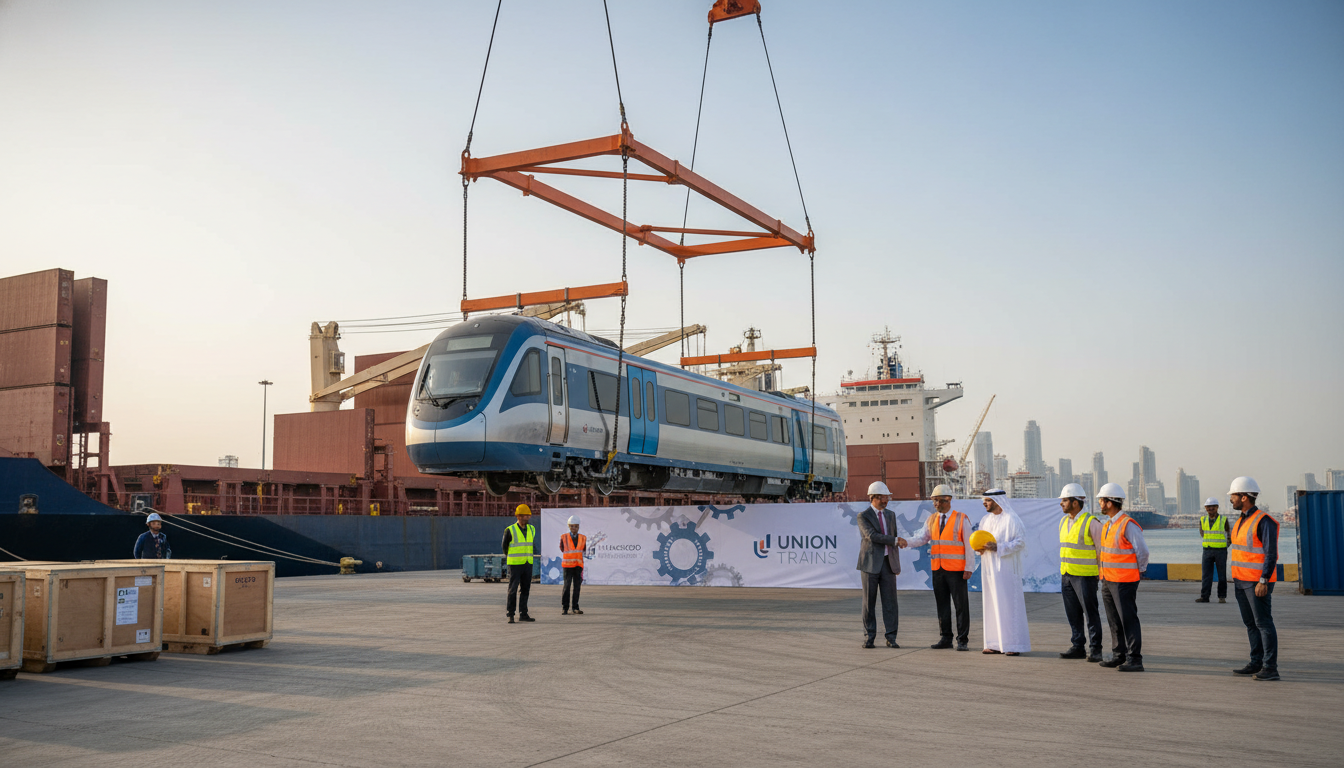
Al Masaood and Etihad Rail Freight Launch First Rail Transport for Car Shipments in UAE
Al Masaood Automobiles and Etihad Rail Freight completed the UAE’s first rail transport for car shipments, moving Nissan vehicles from east coast ports to Abu Dhabi’s ICAD dry port.
Al Masaood Automobiles and Etihad Rail Freight have completed the United Arab Emirates’ first dedicated rail transport for car shipments, marking a new chapter in the nation’s logistics practices. The operation moved a consignment of Nissan vehicles from east coast seaports directly to the ICAD dry port within Abu Dhabi Industrial City, establishing a rail-linked corridor for ready-to-drive cars. This pilot underscores a shift toward integrating rail freight into automotive supply chains to improve delivery reliability and operational efficiency.
Details of the inaugural movement
The shipment involved ready-to-drive Nissan vehicles transported from eastern seaports to the dry port at ICAD, reducing handling stages between arrival and final delivery. The consignment was coordinated by Al Masaood Automobiles, the authorised distributor for Nissan, Infiniti and Renault across Abu Dhabi, Al Ain and the Al Dhafra region. Etihad Rail Freight, the freight arm of Etihad Rail, provided the rail logistics and terminal handling that enabled direct transfer from port to inland depot.
The operation removed several transshipment steps that typically occur with road-only delivery, shortening transit times and lowering the risk of damage during handling. Company officials described the movement as a proof of concept for deploying rail as a mainstream option for transporting high-value finished vehicles across the UAE.
Statements from company executives
Irfan Tansal, Chief Executive Officer of Al Masaood Automobiles, said the initiative reflects the company’s focus on end-to-end customer experience, including the reliability of the vehicle handover. He noted that every stage of a customer’s journey matters, and faster, more predictable arrivals are central to that commitment.
Omar Al-Subaie, Chief Executive Officer of Etihad Rail Freight, described the shipment as demonstrating the core purpose of rail freight: delivering a scalable, dependable and precise transport solution. He highlighted the national rail network’s design to boost resilience and efficiency across the logistics sector and said the success of the trial validates that vision in practice.
Operational advantages and efficiency gains
By moving vehicles directly by rail to the ICAD dry port, both partners achieved improved scheduling accuracy and lowered fleet movement complexity. Rail transport offers consistent transit windows that are less affected by road congestion and can reduce the number of intermediate touches required for customs clearance and cargo handling. These features are particularly valuable for finished vehicles, where condition on delivery and timing are critical.
The consolidated movement also allows for larger volumes per transit event, improving fuel efficiency per unit and offering potential cost advantages over long-haul road transport. Etihad Rail Freight’s network can link ports, industrial zones and inland depots, creating an integrated spine for multimodal movements.
Implications for UAE automotive logistics
The move positions rail as a viable alternative for dealers and manufacturers seeking predictable, scalable shipping solutions within the UAE. For authorised distributors like Al Masaood, integrating rail options can enable tighter delivery windows to showrooms and end customers, which in turn supports sales and after-sales operations. The demonstration suggests broader application potential, including imports of complete vehicles and movement of high-value parts or return logistics.
Industry observers say adoption of rail for vehicles could spur refinements in containerisation, loading systems and terminal handling to optimise vehicle-specific requirements. As rail becomes more embedded, stakeholders across ports, customs and inland logistics will need to coordinate processes to fully realise time and cost efficiencies.
Future plans and network potential
Both organisations indicated the operation could be expanded to cover additional routes and larger volumes as market demand justifies it. Etihad Rail Freight is positioned to scale services across the national network, linking major ports and industrial hubs and offering scheduled freight services tailored to sector needs. Al Masaood signalled interest in using rail for further inbound flows and integrating rail-based schedules into its distribution planning.
Broader adoption will depend on commercial terms, terminal capabilities and alignment across government and private sector logistics partners. If scaled, rail transport for car shipments could reduce heavy truck movements on national highways and support UAE sustainability goals by lowering emissions per tonne-kilometre.
This first operational movement of finished vehicles by rail reflects growing momentum to diversify logistics modalities in the UAE. The collaboration between Al Masaood Automobiles and Etihad Rail Freight points to practical benefits in efficiency, predictability and capacity that may encourage other dealers and freight forwarders to consider rail as part of their multimodal strategies.
