
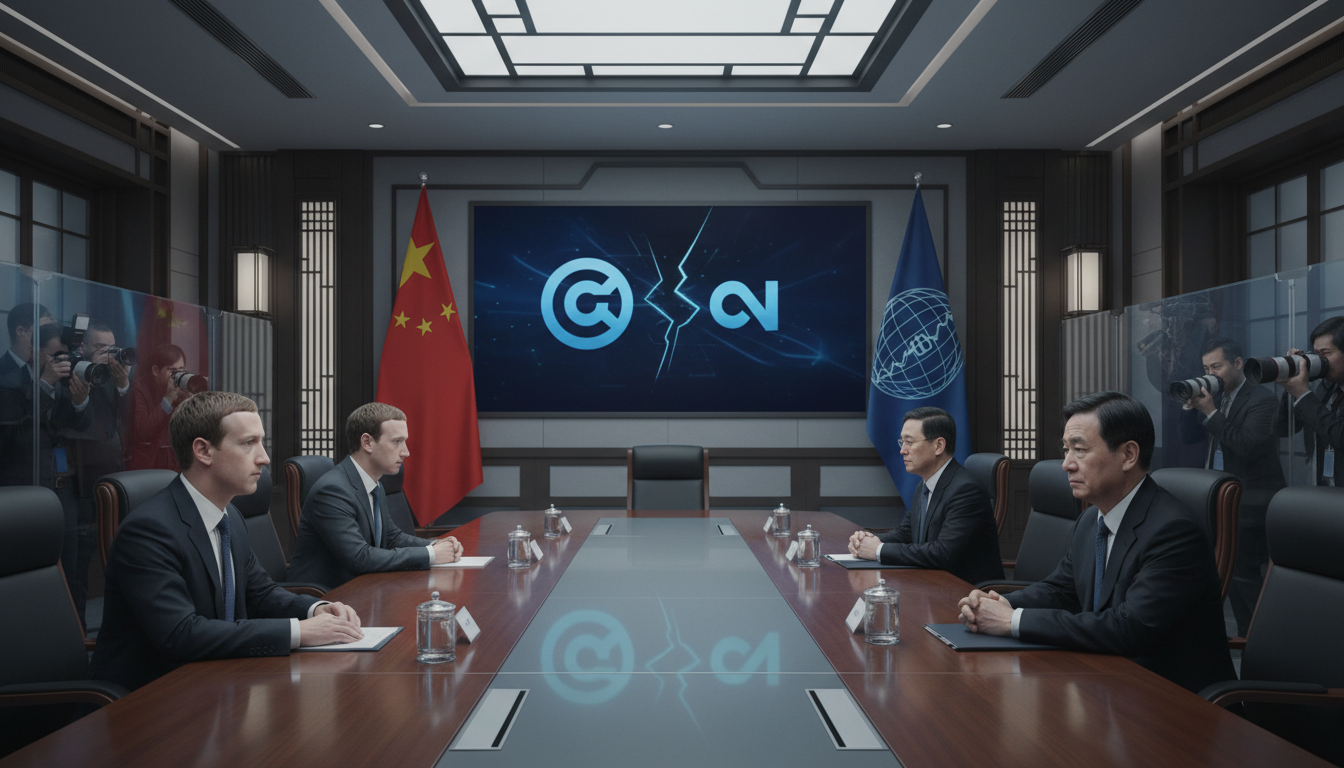
China Orders Unwinding of Meta Acquisition of Manus
China’s regulators ordered the unwinding of the Meta acquisition of Manus, saying the December deal violated foreign investment and technology export rules. The decision, issued by the National Development and Reform Commission, instructs the parties to withdraw the transaction and bars foreign investment in Manus, a Singapore-incorporated AI firm founded by Chinese engineers. The move signals intensified controls on cross-border AI deals and raises fresh questions about how tightly Beijing will police the transfer of talent, technology and corporate control.
NDRC instructs parties to withdraw Meta acquisition of Manus
The National Development and Reform Commission notified Meta and Manus that the transaction must be reversed, citing prohibitions on foreign investment in the target and alleged breaches of export-approval requirements. Chinese regulators said they reviewed the deal after opening an investigation earlier in the year and concluded that approval conditions for certain technologies had not been met. The order gives Beijing a direct mechanism to force an unwind, though officials did not set out a timetable or procedural steps for implementation.
Regulatory rationale centers on foreign investment and export controls
Authorities framed the decision around two legal pillars: restrictions on foreign ownership in sensitive technology firms and rules governing the export of technologies deemed strategically important. Chinese regulators have been tightening oversight of artificial intelligence and related fields, and the Manus case was treated as a precedent-setting test of those policies. Officials said the company had links to a Chinese parent and maintained affiliated operations in Beijing and Wuhan, factors that regulators said justified scrutiny under national security and export-control frameworks.
Practical hurdles complicate any reversal of the deal
Unwinding the Meta acquisition of Manus presents immediate operational and legal complications because teams are already integrated and work is ongoing, according to people familiar with the arrangement. Manus personnel have been reported to operate alongside Meta researchers in Singapore, making disentanglement both technically and commercially difficult. Beyond personnel, questions remain about intellectual property, data residency and ongoing contracts, all of which would need negotiated solutions if the parties are to separate without protracted litigation.
Chinese AI founders face harder choices on location and funding
Industry observers say the Manus decision will reverberate across China’s technology ecosystem by making it harder for founders to straddle domestic and overseas markets. Start-up executives who register entities offshore to attract foreign capital while maintaining Chinese operations may now confront greater regulatory risk and possible restrictions on mobility. Consultants and venture investors warn that the ruling will force many teams to choose between accessing foreign funds and preserving access to China’s large domestic market.
Implications for Meta’s talent strategy and business ties
For Meta, the order severs a direct link to a team that the company had sought to integrate into its global AI effort, complicating plans for cross-border research collaboration and recruitment. The company has invested heavily in artificial intelligence and has cultivated relationships with advertisers and partners in China, a contributor to its revenue mix in recent years. The unwind could disrupt Meta’s pipeline for talent and regional partnerships, and it may prompt the firm to reassess how it structures future acquisitions involving personnel with ties to China.
Timing adds diplomatic and commercial significance
Beijing’s ruling arrived weeks before a planned meeting between the Chinese leader and the U.S. president, amplifying its political resonance and drawing attention from international investors. The timing underlines how commercial transactions in advanced technology increasingly intersect with diplomatic agendas and economic sovereignty concerns. Market participants and policy analysts are watching to see whether Beijing will apply the same scrutiny consistently, and how foreign firms will respond when key hires and acquisitions trigger regulatory review.
The Manus case underscores a broader shift in cross-border technology governance: countries are asserting tighter controls over where advanced AI capabilities can be developed, who can own them, and how they move across borders. As the industry digests the regulator’s order to unwind the Meta acquisition of Manus, companies, investors and researchers will need to weigh legal, commercial and political factors more carefully when structuring international AI collaborations.
