
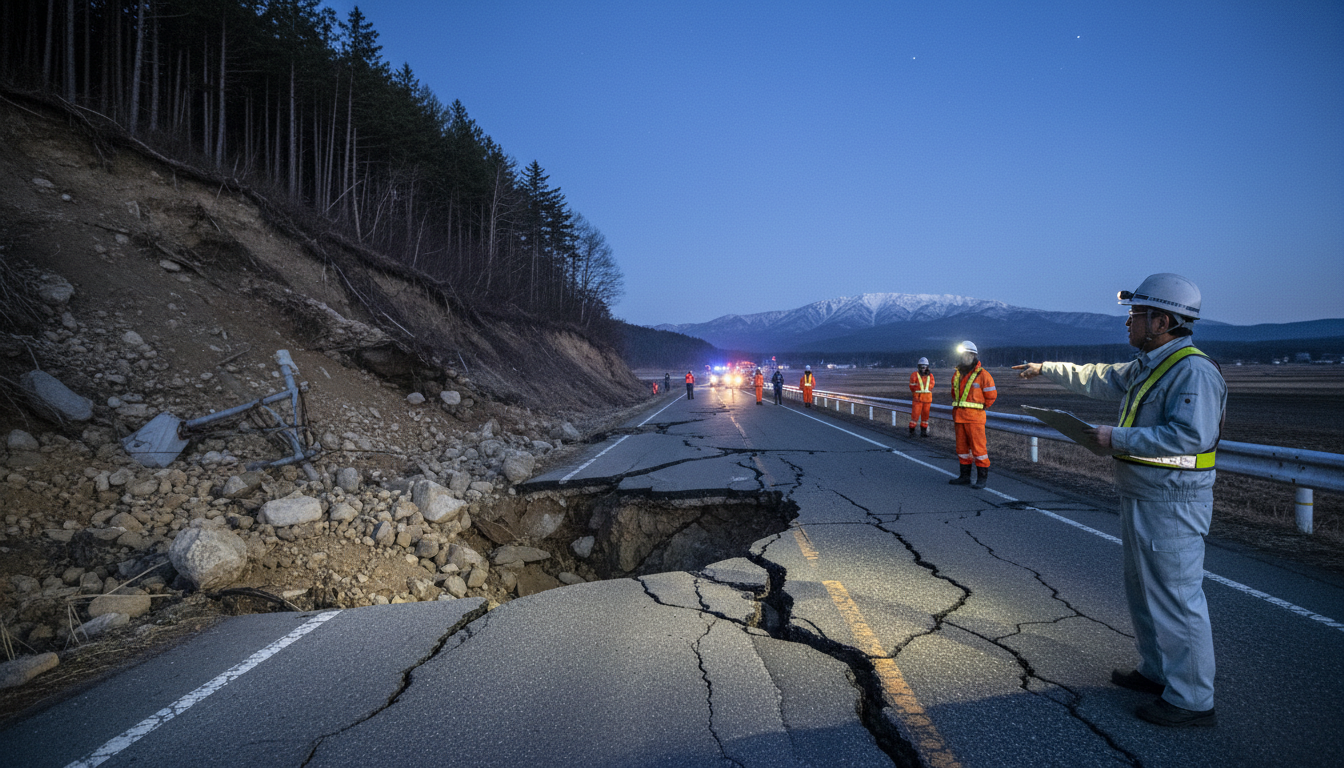
6.1-Magnitude Japan Earthquake Shakes Hokkaido Near Sarabetsu
A 6.1-magnitude Japan earthquake struck near Sarabetsu, Hokkaido, on April 27, 2026 at 5:23 a.m. Japan Standard Time, the United States Geological Survey reported.
6.1-Magnitude Quake Strikes Near Sarabetsu
A strong earthquake measuring 6.1 on the moment magnitude scale struck off the coast of Hokkaido early on April 27, 2026. The U.S. Geological Survey placed the epicenter about 11 miles (roughly 18 kilometres) west of Sarabetsu, with the initial shake reported at 5:23 a.m. Japan Standard Time. Officials and seismologists rapidly began reviewing monitoring data to assess the event and any immediate risks.
Local agencies have not yet released comprehensive damage assessments in the immediate aftermath, and reports of injuries or structural damage remained limited as authorities continued to gather information. Residents across parts of Hokkaido described feeling the tremor, and emergency responders were placed on alert to investigate affected communities.
Location and Timing Details
The quake’s epicentre was located offshore, approximately 11 miles west of the small town of Sarabetsu in northeastern Hokkaido. Japan Standard Time for the event was 5:23 a.m. on Monday, April 27, 2026, which corresponds to the early hours of the same calendar day in Japan. The offshore location initially focused scrutiny on coastal and near-coastal communities for potential shaking and secondary effects.
Because seismological data are collected and analysed across multiple observatories and time zones, the U.S. Geological Survey provided supplementary timestamps in Eastern Time for global reference. Those timestamps were used in the immediate tracking products and maps issued as scientists consolidated readings from regional networks.
Seismological Assessment and Possible Revisions
The initial magnitude estimate comes from automated processing and may be updated as seismologists review additional waveform data and apply refined models. It is common for earthquake magnitudes and depth estimates to be revised hours after an event when more comprehensive station coverage and manual analysis are completed. The USGS indicated that revisions to the reported magnitude and the published shake-severity maps were possible as aftershock and waveform information was integrated.
Analysts examine multiple parameters — including depth, fault mechanism, and the distribution of shaking — before finalizing magnitude and intensity products. Any adjustments would be announced by the scientific agencies responsible for the monitoring, and those updates can affect aftershock forecasts and hazard assessments for the region.
Shake Intensity and Geographic Reach
Preliminary shake maps released by the U.S. Geological Survey show areas where the Modified Mercalli Intensity reached level 3 or higher, a category typically described as “weak” shaking. These intensity maps are intended to indicate where the quake was most likely felt, though shaking perceptions vary with local geology, building types, and distance from the epicentre. The agency cautioned that felt reports may extend beyond the shaded regions on initial maps.
Although intensity level 3 is generally associated with light movements and minimal damage, the distribution of stronger local shaking — particularly near the epicentre — remains a focus of ongoing analysis. Authorities and residents often rely on both instrumental intensity maps and crowd-sourced felt reports to build a clearer picture of impact zones.
Aftershock Monitoring and Short-Term Window
Seismologists will monitor the area closely for aftershocks in the hours and days after the main tremor, applying a standard observation window that typically includes events within 100 miles and seven days of the initial quake. The USGS noted that its aftershock datasets were being updated in near real-time; at the time of early reporting, aftershock information had been timestamped for reference in Eastern Time on Monday, April 27, 2026. Earlier shake-data snapshots used by analysts included timestamps in Eastern Time as well, reflecting the international coordination of seismic monitoring.
Aftershocks can range widely in size and frequency, and their occurrence can prompt further local advisories if they pose a risk to structures already weakened by the main event. Emergency services and infrastructure operators generally prepare for a period of heightened seismic activity following a significant magnitude event.
Authorities’ Response and Public Guidance
Local emergency management and municipal authorities moved to assess any immediate damage and to coordinate inspections of critical infrastructure, utilities and public facilities. Public safety communications urged residents to remain cautious, follow official guidance, and report any damage or unusual conditions to local disaster-response lines. Where appropriate, officials recommended standard safety measures such as securing heavy furniture, checking gas and water lines, and staying tuned to official channels for updates.
No tsunami advisory was noted in initial reports tied to the preliminary data, and coastal communities were advised to heed any future notices should the situation change. The presence or absence of secondary hazards such as landslides or coastal impacts depends on a range of factors that authorities continue to evaluate.
Scientists and disaster managers emphasized that the situation remained fluid and that official updates from monitoring agencies should be followed. The USGS and Japanese meteorological and seismological agencies are the primary sources for revised magnitudes, intensity maps, and any public warnings that may be issued.
In the coming days, further analysis and on-the-ground assessments will clarify the full extent of shaking and any infrastructure impacts, and authorities advised residents in Hokkaido and nearby prefectures to remain vigilant as aftershock activity is monitored and recorded.
