
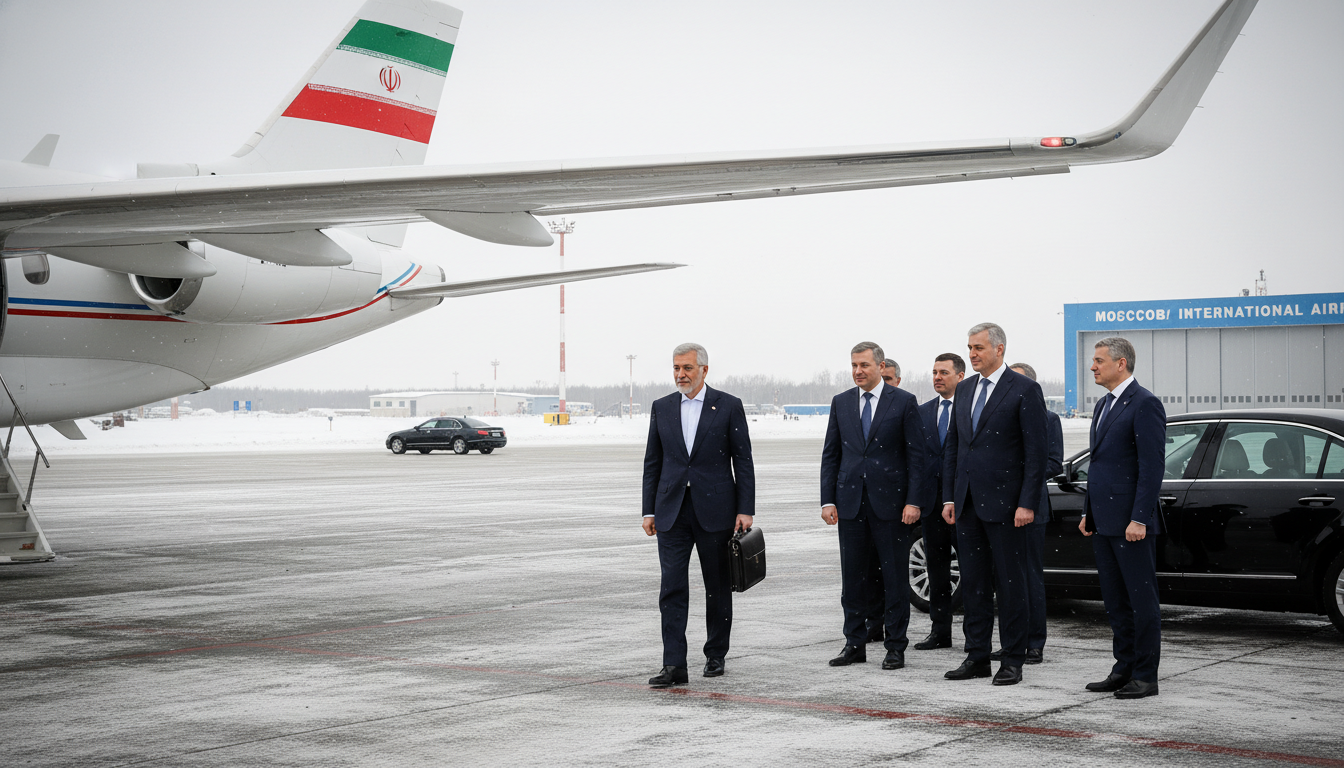
Abbas Araghchi flies to Moscow as mediators pass written messages to Washington
Abbas Araghchi travels from Islamabad to Moscow as mediators relay written messages to Washington amid an extended ceasefire and regional energy tensions.
Iranian senior diplomat Abbas Araghchi departed Islamabad on Sunday en route to Moscow, the Iranian Ministry of Foreign Affairs said, in a move aimed at keeping diplomatic channels open between Tehran and Washington. Araghchi’s visit follows a brief stop in Muscat and a series of high-level meetings in Pakistan, underscoring active but cautious mediation efforts. The trip signals continued regional diplomacy even as a permanent settlement to recent hostilities remains out of reach.
Araghchi’s itinerary and Moscow visit
Iran’s foreign ministry said Araghchi left Islamabad for Russia where he is scheduled to meet “senior officials,” though Moscow did not confirm whether a meeting with President Vladimir Putin was planned. The itinerary included an earlier visit to Muscat and multiple face-to-face sessions with Pakistan’s leadership, reflecting a rapid shuttle diplomacy approach. Officials framed the Moscow leg as part of a broader effort to explore options for reviving discussions while preserving Iran’s stated red lines.
Pakistan and Oman act as intermediaries
During his stop in Islamabad, Araghchi met Pakistan’s military chief, Prime Minister Shehbaz Sharif and Foreign Minister Ishaq Dar, meeting key figures involved in mediation. He also visited Muscat, a traditional venue for confidential exchanges involving Tehran, and returned briefly to Islamabad before departing for Moscow. Pakistani and Omani roles underscore the use of third-party channels to convey positions between Tehran and Washington when direct contact is constrained.
Written messages relayed to Washington
Iranian state-affiliated news outlets reported that Tehran transmitted written messages to U.S. officials through Pakistan, outlining “red lines” on issues including nuclear policy and the Strait of Hormuz. The reporting clarified these transmissions were not part of formal negotiations but represented positions Tehran wanted conveyed to American interlocutors. Mediators described the messages as a way to test whether Washington would respond to concrete proposals or engage in further indirect diplomacy.
Ceasefire extended but a final deal remains distant
U.S. authorities said the ceasefire agreed on April 7 has been extended indefinitely, halting much of the direct fighting that erupted after strikes in late February. Despite that extension, diplomats and analysts caution that a permanent settlement has not been reached and that core disputes remain unresolved. Both sides remain guarded, with continued military posturing and reciprocal measures complicating prospects for a swift diplomatic breakthrough.
Economic and strategic stakes in the Strait of Hormuz
Reporters and analysts say Iran’s actions have effectively disrupted traffic through the Strait of Hormuz, a critical route for global oil and gas shipments, and that these disruptions have driven commodity prices higher. Washington has responded with its own blockade of certain Iranian ports, intensifying economic and logistical strains on regional trade. The interplay between security measures and energy markets raises the stakes for Gulf states, which remain vigilant about supply security and maritime safety.
U.S. response and cancelled envoy mission
Plans for envoys to travel to Islamabad — including a scheduled visit by representatives Steve Witkoff and Jared Kushner — were called off after the U.S. president decided to cancel the trip, saying there was little value in meetings “about nothing.” The U.S. leader told broadcasters he still preferred Tehran to initiate contact, asserting that Washington “has all the cards” but would accept a call or visit if Iran chose to pursue talks. U.S. officials subsequently maintained that the cancellation did not amount to a return to open hostilities, while underscoring continued readiness to engage under certain conditions.
Scepticism in Tehran and possible outcomes in Moscow
Araghchi publicly expressed reservations about Washington’s sincerity, saying he had “yet to see if the U.S. is truly serious about diplomacy,” comments that reflect caution in Tehran’s negotiating posture. Observers expect the Moscow meetings to focus on gauging Russian willingness to support de-escalatory measures or to serve as a conduit for further messaging between Tehran and Washington. How Moscow responds could shape the next phase of mediation, either helping to bridge gaps or reinforcing existing alignments that complicate direct U.S.-Iran engagement.
The coming days will be watched closely by regional capitals and energy markets as diplomats test whether indirect channels can produce tangible steps toward a durable settlement. Araghchi’s exchanges in Moscow and the reactions from Washington will be pivotal in determining whether the ceasefire evolves into substantive negotiations or remains a fragile pause in hostilities.
