
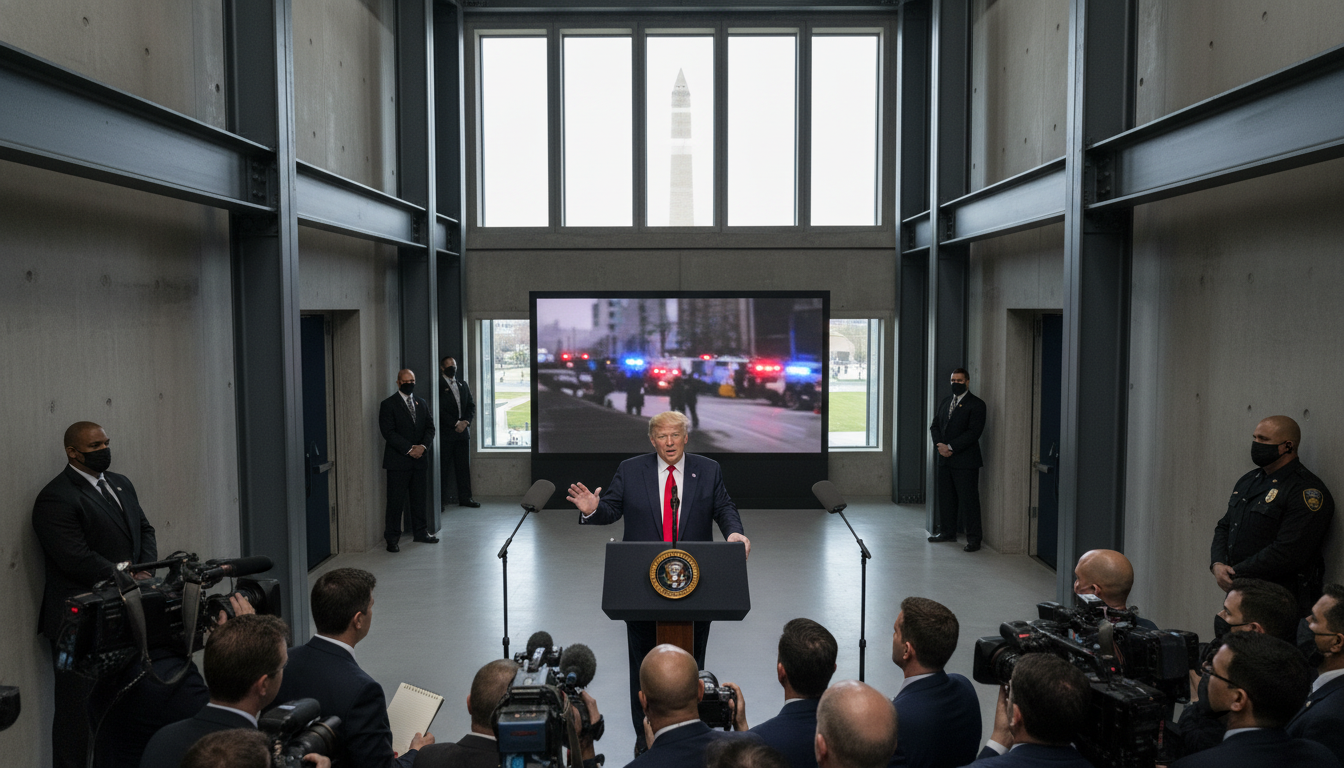
Trump says White House ballroom would have prevented Washington dinner shooting
Trump says the planned White House ballroom would have prevented a shooting at a Washington reporters’ dinner, after a gunman breached security and shots rang out.
President Donald Trump said on Sunday that a shooting at a Washington dinner for capital reporters would not have occurred if the planned White House ballroom had been completed. The incident, at a hotel on Saturday night, involved a man who breached security screening, multiple shots fired and the president being escorted to a secure location by armed Secret Service agents. Trump described the proposed venue as a “super-secure” facility and used the episode to defend continued construction at the White House. Officials and law enforcement are continuing a probe into how the suspect got past screening and what charges may follow.
Shooting at reporters’ dinner
A gathering of journalists, held at a Washington hotel on Saturday evening, was disrupted when a man forced his way past security screening into the event. Several shots were fired, witnesses reported, prompting immediate panic and an urgent law enforcement response at the scene. Event attendees were evacuated while hotel and federal officers converged on the location to secure the area and render aid as needed. No official casualty figures have been released publicly by law enforcement as of Sunday morning.
Trump links incident to White House ballroom plan
Speaking hours after the incident, President Trump said the shooting underlined the need for the controversial White House ballroom project he has championed. He asserted that the “super-secret military” ballroom, currently being constructed at the executive residence, would have provided a level of protection that would have prevented the breach. The president’s comments framed the security upgrade as a direct response to immediate threats against gatherings involving officials and press. Administration aides reiterated that the project is intended to bolster operational security for high-profile events.
Security response and presidential evacuation
According to multiple accounts, Secret Service agents moved swiftly to secure the president and other protectees when shots were reported inside the hotel venue. The president was escorted to a safe location by armed guards while tactical units contained the area and detained the suspect. Hotel staff and law enforcement coordinated to clear rooms and ensure there were no remaining threats to guests or officials. Local police said they were assisting federal authorities and that a formal statement on the suspect’s identity and motive would follow once investigators complete initial interviews.
Investigation underway at Washington hotel
Federal and local investigators have launched a joint inquiry into how the suspect gained access past security measures at a high-profile event. Agents are reviewing surveillance footage, witness statements and screening logs to determine whether protocol failures occurred prior to the breach. The Justice Department and the Secret Service typically take the lead in incidents involving threats to the president, and prosecutors will evaluate charges based on evidence gathered. Authorities have cautioned that the investigation remains active and that details may change as new information is confirmed.
Political debate intensifies over White House construction
The shooting immediately reignited debate over the White House ballroom project, with supporters pointing to security concerns and critics citing cost and transparency issues. Lawmakers and commentators have increasingly scrutinized the scope, funding and oversight of work inside the executive residence. Some members of Congress have demanded additional briefings from administration officials about the project’s security benefits and its impact on public funds. The episode has sharpened partisan commentary, with defenders arguing that incidents of this kind illustrate the practical need for enhanced protective facilities.
President Trump’s public remarks tied the event directly to broader discussions about executive security and the appropriateness of constructing a dedicated secure ballroom. The administration has characterized the venue as essential for hosting official functions while maintaining a heightened security posture. Opponents have questioned whether such measures should be pursued without fuller public accountability and congressional review.
The investigation and political debate are likely to continue through the week, as officials provide updates and lawmakers seek clarification about both the shooting and the construction project. Security protocols at public events involving government officials are expected to come under renewed review.
