
Bennett and Lapid merger forms Yachad under Bennett as unified challenge to Netanyahu
Bennett and Lapid merger creates Yachad under Naftali Bennett, uniting centrist and moderate right voters to challenge Netanyahu in Israel’s October election.
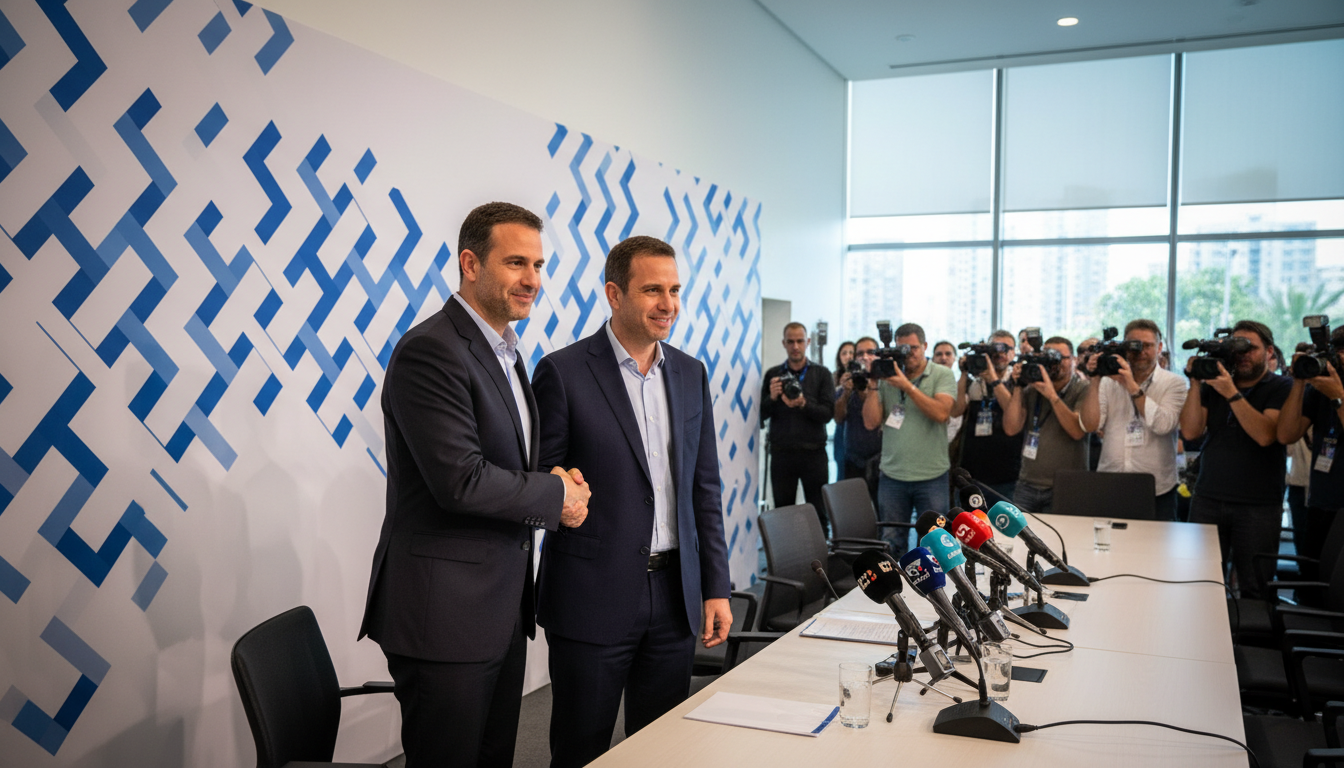
Yair Lapid and Naftali Bennett announced on Sunday that they will merge their parties into a single political movement, a Bennett and Lapid merger aimed at presenting a united alternative to Benjamin Netanyahu. The new party, to be called Yachad — Hebrew for “together” — will be led by Mr. Bennett and combines Bennett 2026 with Mr. Lapid’s Yesh Atid. The move is pitched as a bid to repair national divisions and consolidate votes ahead of an election slated for October at the latest.
Bennett and Lapid launch Yachad under Bennett’s leadership
The two leaders framed the merger as the first concrete step toward rebuilding consensus after years of polarising politics. They said the combined list would be led by Mr. Bennett, while drawing support from both the liberal center and moderate right. In a televised news conference they presented their differences as complementary and urged voters to set aside factional disputes.
Mr. Bennett said the alliance marked the end of extreme partisanship, declaring, “The era of polarization is over.” Mr. Lapid described his partner as a conservative who respects liberal norms and the rule of law, stressing that the coalition would emphasise governance and stability. Both emphasised that the merger was intended to broaden appeal to Israelis disillusioned with existing options.
Parties unite to broaden appeal across the political spectrum
Strategically, the Bennett and Lapid merger is designed to attract voters from across the spectrum who are uneasy with the current government’s trajectory. The partners aim to draw in centrist voters concerned about civil liberties as well as moderate right-wingers prioritising security and territorial integrity. Their pitch is explicitly pragmatic: to assemble a coalition capable of outpolling Likud and forming a workable government.
Campaign messaging will likely highlight moderation, competence and unity as contrasts to the ideological mix of Mr. Netanyahu’s coalition. The alliance must balance competing priorities, from judicial safeguards to firm security policies, if it hopes to sustain a coalition after the vote. That balancing act will be central to Yachad’s platform and its appeal to undecided voters.
Promises on investigation and security posture
A cornerstone of the new party’s early commitments is accountability for failures surrounding the October 2023 Hamas attack, and a pledge to open an independent inquiry. Mr. Bennett said a commission of inquiry would be established “on Day 1” under a government he leads, signalling an attempt to address public anger over intelligence and policy lapses. The promise is meant to soothe calls for oversight while signalling seriousness on national security matters.
On security, Bennett has sought to reassure conservative voters by ruling out territorial concessions, insisting any government he heads would not cede ground to adversaries. Both leaders, however, avoided detailed positions on several flashpoint issues at the announcement, including settler violence in the West Bank and the long-term status of Gaza. Their relative reticence on those matters suggests campaign messaging will prioritise unity and competence over immediate policy specifics.
Impact of October 2023 war on government’s standing
Mr. Netanyahu’s government has seen its standing erode since the October 2023 attack and the subsequent protracted conflict in Gaza. The war and related clashes with Iran and Lebanon have undercut pledges of decisive victories and left many Israelis frustrated by the human and political costs. Public anger has also focused on perceived intelligence failures and a lack of transparent accountability.
Those sentiments have created an opening for parties that promise both firm security and institutional repair. Yachad’s founders believe the electorate may respond to a message that pairs competence on security with credible pledges of investigation and institutional safeguards. Whether that calculus will overcome entrenched party loyalties remains the central political question in the months ahead.
Electoral math and challenge to Likud
Polling referenced by the pair shows Likud as the largest single party, with the potential to capture 25 or more seats in the 120-member Knesset, but the broader right-wing coalition has lost some cohesion. By combining their lists, Mr. Bennett and Mr. Lapid hope to increase their odds of surpassing Likud’s seat totals and securing the right to form a coalition. Under Israel’s parliamentary rules, the largest party that can build a viable coalition typically gets first opportunity to form a government.
The merger could change coalition dynamics by reducing fragmentation among anti-Netanyahu forces and offering a clearer choice for voters seeking an alternative. Still, success will depend on how other centrist and left-wing parties respond, and whether Yachad can translate its initial momentum into durable support across Israel’s diverse electorate. Campaign organization, candidate placement and policy detail will be decisive in the months before ballots are cast.
Past alliances and lessons from the 2021 ‘change government’
Bennett and Lapid are no strangers to joint ventures; their previous cooperation paved the way for the short-lived “change government” that unseated Mr. Netanyahu in 2021. That coalition united ideologically disparate parties, and included a rotation agreement that saw Mr. Lapid serve as caretaker prime minister after Mr. Bennett stepped down. The government collapsed after about a year amid defections and political strains, a history their critics will cite as a cautionary tale.
Both leaders have indicated they took lessons from that experience, arguing that a single, merged party can avoid the fragility of a loose coalition. By consolidating lists and leadership, they aim to reduce incentives for defections and create clearer discipline. Observers will watch whether institutional changes and campaign discipline can deliver a more stable outcome this time.
The Bennett and Lapid merger marks a significant reconfiguration of Israel’s opposition landscape and sets the stage for a high-stakes campaign ahead of the October election. Whether Yachad can sustain unity, attract a decisive bloc of voters and translate promises of accountability into political reality will determine its impact on Israel’s next government.
