
Qatar Warns Strait of Hormuz Must Not Be Used as a Bargaining Chip Amid Stalled US–Iran Talks
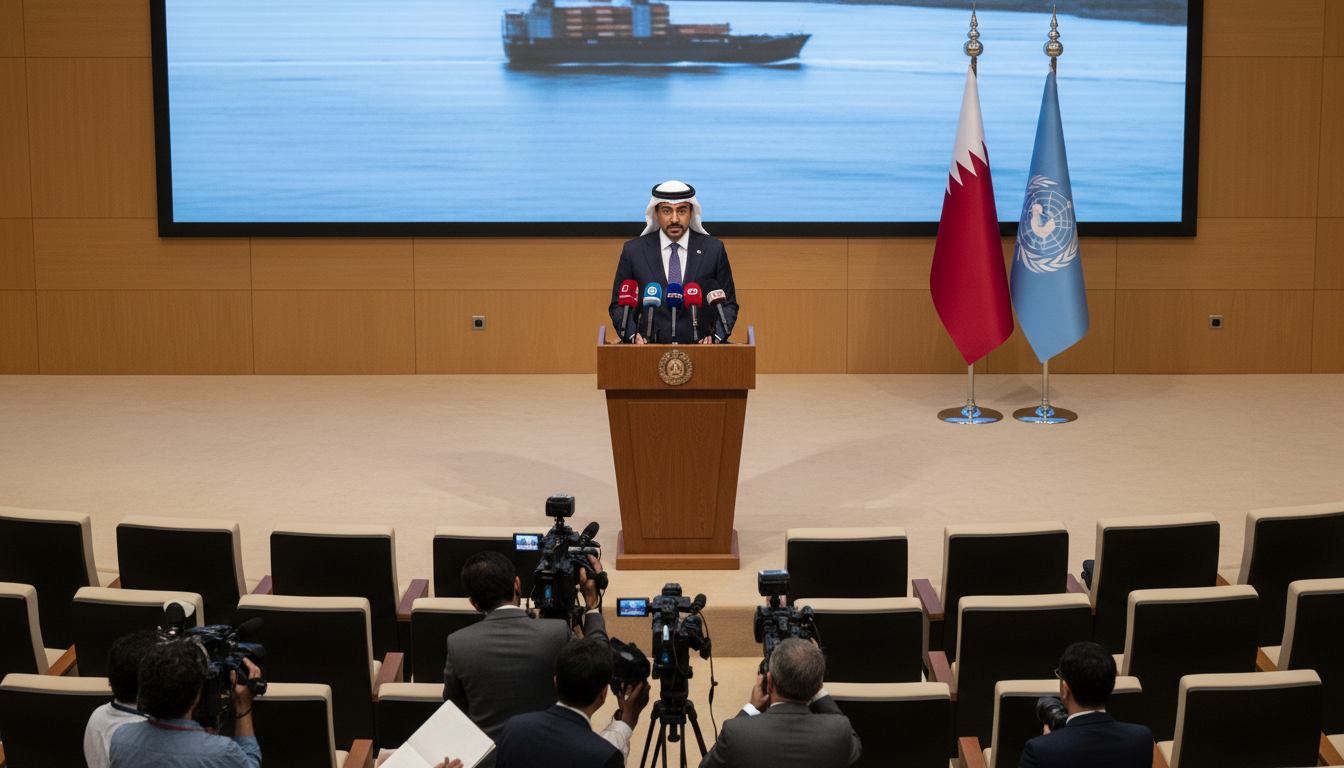
Qatar urged against using the Strait of Hormuz as a bargaining chip, saying the vital waterway must be protected as US–Iran peace talks stall, spokesman Majed al-Ansari said on April 28, 2026.
Qatar’s statement came during a routine weekly briefing on April 28, 2026, when foreign ministry spokesman Majed al-Ansari told reporters that the Strait of Hormuz “must not be used as a bargaining chip.”
The warning was framed against the backdrop of stalled negotiations between the United States and Iran, and was presented as a call for de-escalation and maritime security.
Qatar issues warning on Strait of Hormuz
Majed al-Ansari made the comments at a weekly press briefing in Doha, emphasising that the security of international sea lanes is a regional and global concern.
He framed the Strait of Hormuz as an asset that should not be instrumentalised in bilateral or multilateral disputes, urging parties to avoid actions that could jeopardise safe navigation.
The foreign ministry’s message was succinct and aimed at deterring the use of the chokepoint as leverage, the spokesman said.
Qatar’s position highlights a wider diplomatic effort by Gulf states to preserve maritime stability amid tensions linked to negotiations involving Tehran and Washington.
Details of al-Ansari’s remarks
Al-Ansari said the Strait of Hormuz “must not be used as a bargaining chip,” a phrase that underlines Doha’s opposition to any coercive measures impacting maritime freedom.
He did not, in the public briefing, specify which actors Qatar believed might seek to leverage the waterway, nor did he provide additional operational details.
The statement reiterated longstanding concerns in the Gulf about security incidents affecting commercial shipping and energy shipments.
By foregrounding the issue in a public briefing, Doha signalled that it views the matter as urgent and requiring diplomatic attention rather than military escalation.
Stalled US–Iran negotiations and regional risk
The comments arrived as talks between the United States and Iran continued to stall, a factor that has heightened regional sensitivity to any action that could be perceived as pressure or retaliation.
Diplomatic impasses can increase the temptation for parties to exploit strategic geography, which in turn raises the risk of miscalculation and disruption.
Analysts note that when negotiations lose momentum, signaling and leverage often move to other domains, including economic and maritime arenas.
Qatar’s intervention underscores concern among Gulf states that the maritime domain should remain insulated from such tactics while diplomacy proceeds.
Strategic importance of the Strait of Hormuz
The Strait of Hormuz is one of the world’s key maritime passages, linking the Persian Gulf with the Gulf of Oman and the Arabian Sea.
Regional authorities and international maritime bodies have consistently emphasised the need to keep it open and secure for commercial traffic and energy exports.
Any threat to the safe passage of vessels through the strait would have immediate consequences for shipping routes and for markets that depend on uninterrupted transit.
Qatar’s reminder reflects a shared interest among littoral states in preserving the continuity of trade and the predictability of maritime operations.
Regional diplomatic responses and calls for restraint
Qatar’s appeal for restraint is likely to resonate with other Gulf governments that favour diplomatic solutions and continuity in trade flows.
Officials in the region routinely advocate for dialogue and multilateral frameworks to address security concerns without resorting to coercive measures.
International partners have, in past instances, urged de-escalation when tensions threatened maritime safety, and Doha’s statement aligns with that wider diplomatic posture.
The emphasis on avoiding the instrumentalisation of the strait signals a preference for negotiation and conflict prevention among regional stakeholders.
Implications for UAE and Gulf trade routes
For Gulf economies, including the United Arab Emirates, stability in and around the Strait of Hormuz is critical to trade, energy logistics, and investor confidence.
Ports, shipping lines, and commodity markets closely monitor developments that could affect transit times, insurance premiums, and supply chains.
Governments across the Arabian Peninsula maintain contingency planning and regional coordination mechanisms to respond to potential disruptions.
Qatar’s call for the strait to be shielded from political bargaining is intended to support those efforts and to encourage continued diplomatic engagement.
Qatar’s April 28, 2026, statement by foreign ministry spokesman Majed al-Ansari serves as a clear appeal to preserve maritime security amid a period of diplomatic uncertainty between the United States and Iran.
The warning underscores regional concern that strategic waterways should not become instruments of pressure, and it reinforces calls for restraint and continued diplomacy to prevent escalation.
