
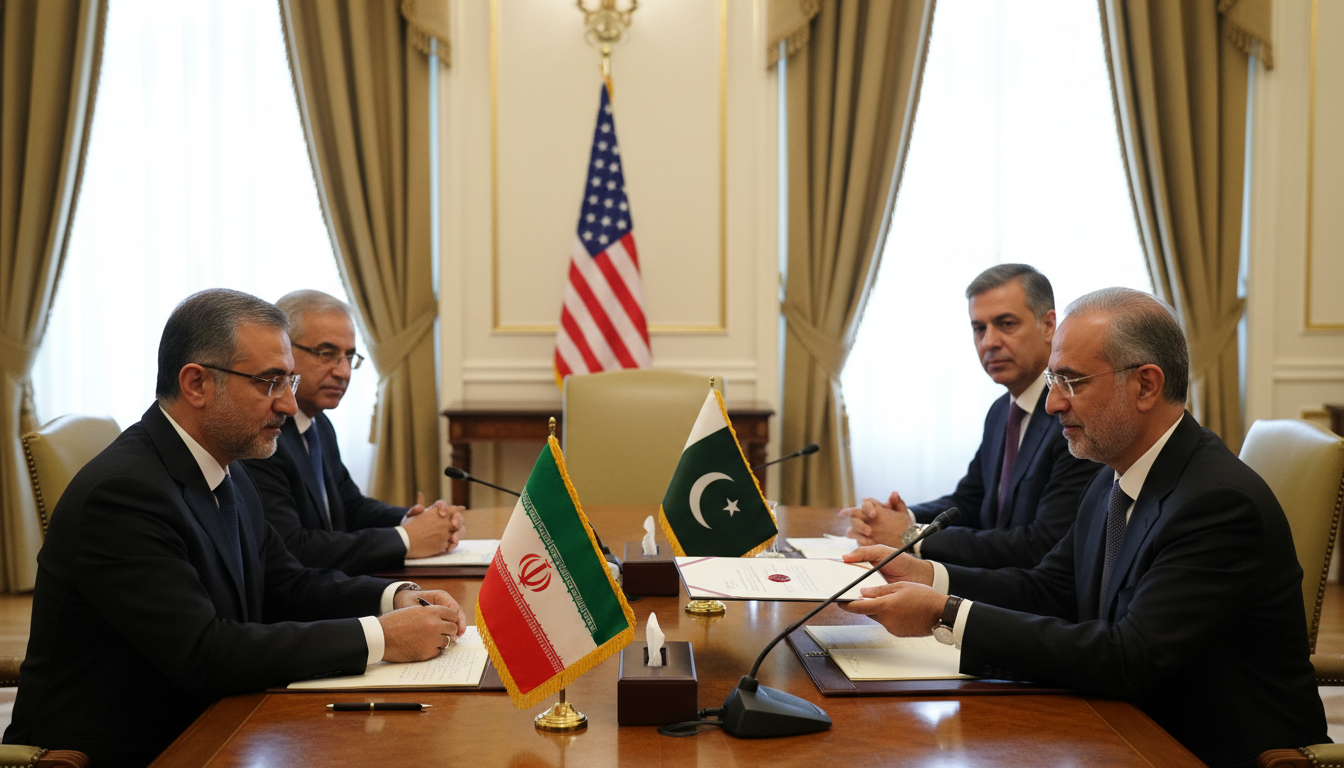
Iran response to US proposal delivered via Pakistani mediator, report says
Iran response to US proposal arrives through Pakistan; talks will focus on ending regional hostilities under a phased agreement, IRNA and Bloomberg report.
Iran delivered its response to the latest US proposal aimed at ending the war, the Islamic Republic News Agency (IRNA) reported on Sunday, May 10, 2026. The communication was passed to Washington through a Pakistani intermediary, and, according to Bloomberg’s reporting of the IRNA dispatch, the proposed negotiations would initially concentrate on bringing an end to hostilities in the region. The development marks a rare public confirmation that Tehran has formally engaged with an American initiative mediated by a third party.
Iran Delivers Response via Pakistani Mediator
IRNA said Tehran’s reply reached the United States through Pakistan, which has acted as a back channel in recent weeks. Officials in Islamabad have not publicly detailed the content of the transmission, but the disclosure signals a reopening of discreet diplomacy between adversaries.
The use of Pakistan as conduit reflects both proximity and trust among regional interlocutors, allowing messages to move without direct public contact. Observers say this method reduces immediate political pressure on negotiators and provides plausible deniability for sensitive exchanges.
US Proposal Focuses on Ending Regional Hostilities
Bloomberg’s summary of the IRNA report said the US proposal would steer talks toward ending the war in the region as the first phase of a longer process. That initial focus is designed to secure an immediate reduction in violence, humanitarian access, and safe corridors for civilians.
A phased approach would allow negotiators to separate an urgent cessation of fighting from more complex issues such as sanctions relief, security guarantees, and political arrangements. Diplomats note that agreeing to a first phase could build confidence for subsequent rounds of talks on enduring agreements.
Pakistan’s Role as Intermediary Explained
Pakistan has been positioned as a facilitator in the recent exchange, leveraging diplomatic channels and longstanding ties with Tehran. Islamabad’s involvement offers a practical route for communication at a time when direct US‑Iran diplomacy remains politically sensitive.
Historically, Pakistan has mediated between regional powers on security matters and has channels into both Washington and Tehran that other actors lack. Its intermediary role is likely to continue while both sides assess whether to move from messages to formal meetings.
Implications for Gulf Security and Humanitarian Access
A successful first-phase agreement to end hostilities would have immediate consequences for Gulf security, trade routes, and the safety of civilians in conflict zones. The UAE and other Gulf states have emphasized the importance of stability for economic resilience and the uninterrupted flow of energy shipments.
Humanitarian organizations stand to benefit if ceasefire measures include clear provisions for aid corridors and protections for civilians. Regional governments and relief agencies will be watching any text for concrete steps that permit the delivery of food, medical supplies, and reconstruction assistance.
Diplomatic Timetable and Next Steps
If Iran and the United States remain committed to the mediated process, diplomats expect a period of technical exchanges to translate the broad proposal into negotiable language. This could involve working groups on ceasefire monitoring, prisoner exchanges, and the mechanics of verifying compliance.
Negotiators may convene in third‑party locations with low political visibility, and progress would likely be incremental rather than immediate. Each side will seek domestic buy‑in, making parallel consultations with allied capitals an essential component of the next phase.
Political Obstacles and Verification Challenges
Despite the overture, significant obstacles remain that could stall or derail talks. Hardline factions inside Iran, regional proxy networks, and domestic political constraints in Washington could all complicate follow‑through. The credibility of monitoring and verification mechanisms will be a central sticking point for both parties.
Verification arrangements would need to address accusations of clandestine support to non‑state actors and ensure neutral reporting on ceasefire violations. Without robust and mutually acceptable oversight, any agreement risks being fragile and short‑lived.
The IRNA report that Iran has formally replied to the US proposal through a Pakistani intermediary represents a notable diplomatic step, but it does not guarantee a rapid resolution. Negotiators face a complex sequence of technical drafting, regional consultations, and political approvals before any lasting de‑escalation can be secured. The coming weeks will test whether this mediated exchange can translate into verifiable calm on the ground or whether deeper political hurdles will prolong the conflict.
