
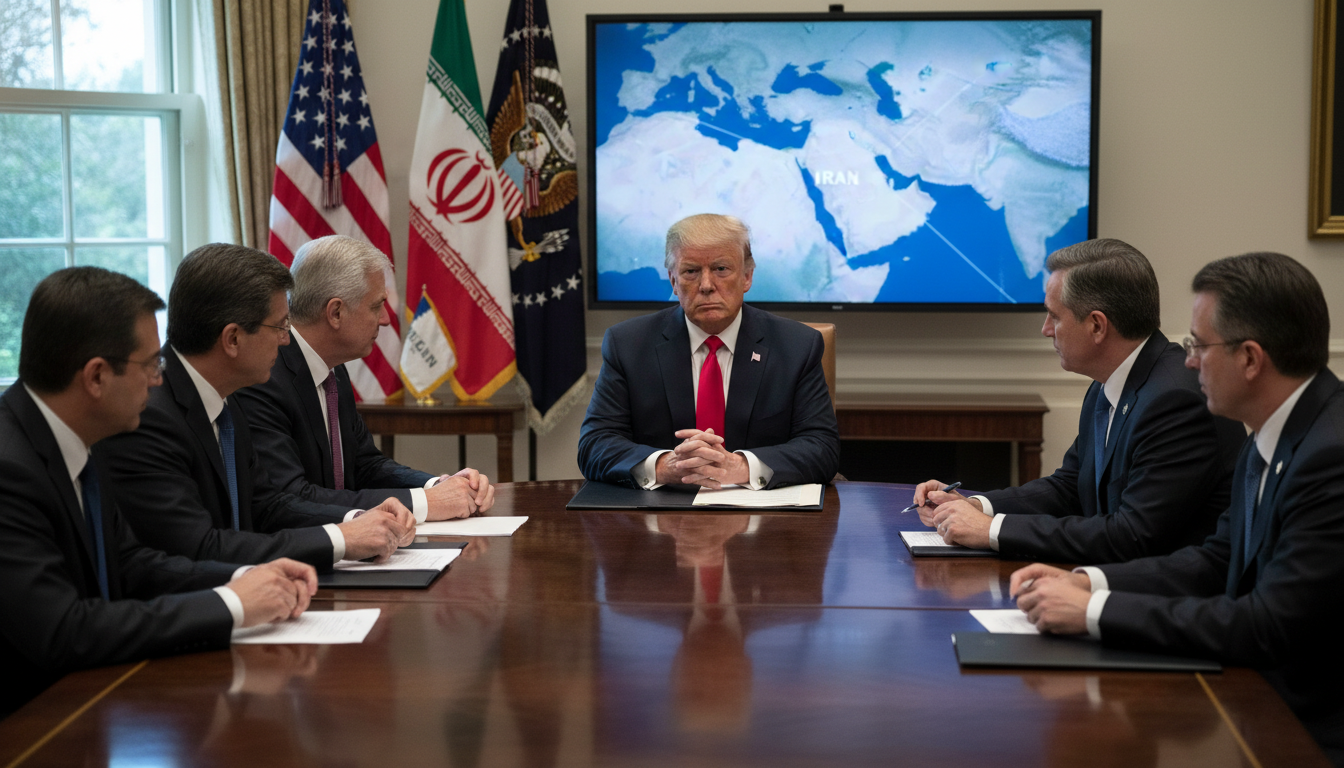
Trump Delays Military Strike to Extend Iran Negotiations
Trump delays military strike to pursue negotiations with Iran, saying the US would accept an agreement that prevents Tehran from acquiring a nuclear weapon.
President Donald Trump said Monday that the United States would be satisfied if it could reach an agreement with Iran that prevents Tehran from obtaining a nuclear weapon. Trump announced the postponement of a military strike planned for Tuesday to allow more time for diplomacy and talks with Iranian officials. The move signals a temporary shift from immediate military action toward continued negotiation over Iran’s nuclear program.
Trump Announces Delay of Strike
President Trump made the decision public on Monday and framed it as an opportunity to pursue a diplomatic solution with Tehran. He said the United States would accept a deal that ensures Iran does not develop a nuclear weapon, emphasizing negotiation over immediate force. The announcement followed a period of heightened tensions and came shortly before a planned operation that was set for the following day.
Reason Given: Time for Negotiations
The White House presented the delay as a tactical choice to open the door for further talks rather than an abandonment of pressure. Administration officials described the pause as a measured step designed to test whether Iran would engage seriously at the negotiating table. Trump’s comments underscored a stated preference for a negotiated settlement that would halt Iran’s nuclear ambitions.
The president framed the potential agreement in narrowly defined terms, focusing specifically on preventing a nuclear weapon. He repeatedly stressed that the United States would be prepared to accept such an outcome, while also leaving open the option to resume military plans if talks fail. This dual message was aimed at signaling both diplomatic willingness and continuing resolve.
Details of the Planned Operation
Officials have not publicly released operational specifics about the strike that was scheduled for Tuesday, citing routine security restrictions. The announced postponement suggests that military planners had prepared options and timelines but were given orders to stand down temporarily. Pentagon spokespeople have historically declined to discuss precise plans while operations remain under consideration.
Observers noted that short-notice changes to military timelines are not uncommon when political leaders seek additional diplomatic outreach. Commanders must often balance readiness with shifting policy directives coming from civilian leadership. The delay, while temporary, reflects the intersection of military planning and high-stakes diplomacy.
Reactions from Washington and Tehran
Within Washington, responses were mixed: some lawmakers praised the attempt at diplomacy, while others warned that delay without concrete verification measures could undermine U.S. leverage. Senior members of Congress called for clear benchmarks and oversight to ensure that any negotiations produce verifiable limits on Iran’s activities. Analysts in the capital urged close monitoring of Iran’s compliance with any interim agreements.
Tehran did not provide an immediate official response to the announcement, and statements from Iranian officials were limited in the hours following the delay. Regional capitals and allied governments were reported to be closely tracking developments, emphasizing the broader diplomatic stakes. Diplomatic channels between the United States and regional partners are likely to remain active as leaders assess the implications of the pause.
Regional Security Implications
The decision to delay a strike has immediate implications for security calculations across the Middle East, where nations have been weighing the risks of military escalation. Allies in the Gulf expressed relief at the reduction in immediate tensions while reiterating calls for a clear and enforceable outcome. Regional security analysts cautioned that any window for negotiation will be closely watched and that missteps could quickly reopen the prospect of military action.
Energy markets and global investors also reacted to the news, as reduced short-term risk of conflict can ease upward pressure on oil prices and regional market volatility. However, many experts warned that the situation remains fragile and that diplomatic progress will depend on rapid, substantive engagement from both sides.
Next Steps and Diplomatic Outlook
The administration signaled readiness to continue negotiations and said it would judge progress on the basis of concrete commitments from Iran. Officials indicated that follow-up meetings and diplomatic outreach would be scheduled in the coming days to test Tehran’s willingness to agree to verifiable constraints. The White House emphasized that the postponement is conditional and reversible if talks do not yield acceptable results.
Foreign ministries and international organizations are expected to monitor any proposed agreement for verifiability and transparency. The path forward will hinge on whether negotiators can translate the temporary pause into durable terms that address proliferation concerns. For now, the United States retains both diplomatic and military options as leverage in ongoing discussions.
The announcement that Trump delays military strike to allow negotiations with Iran marks a pivotal moment in a tense standoff, with policymakers now navigating the narrow path between diplomacy and force.
