
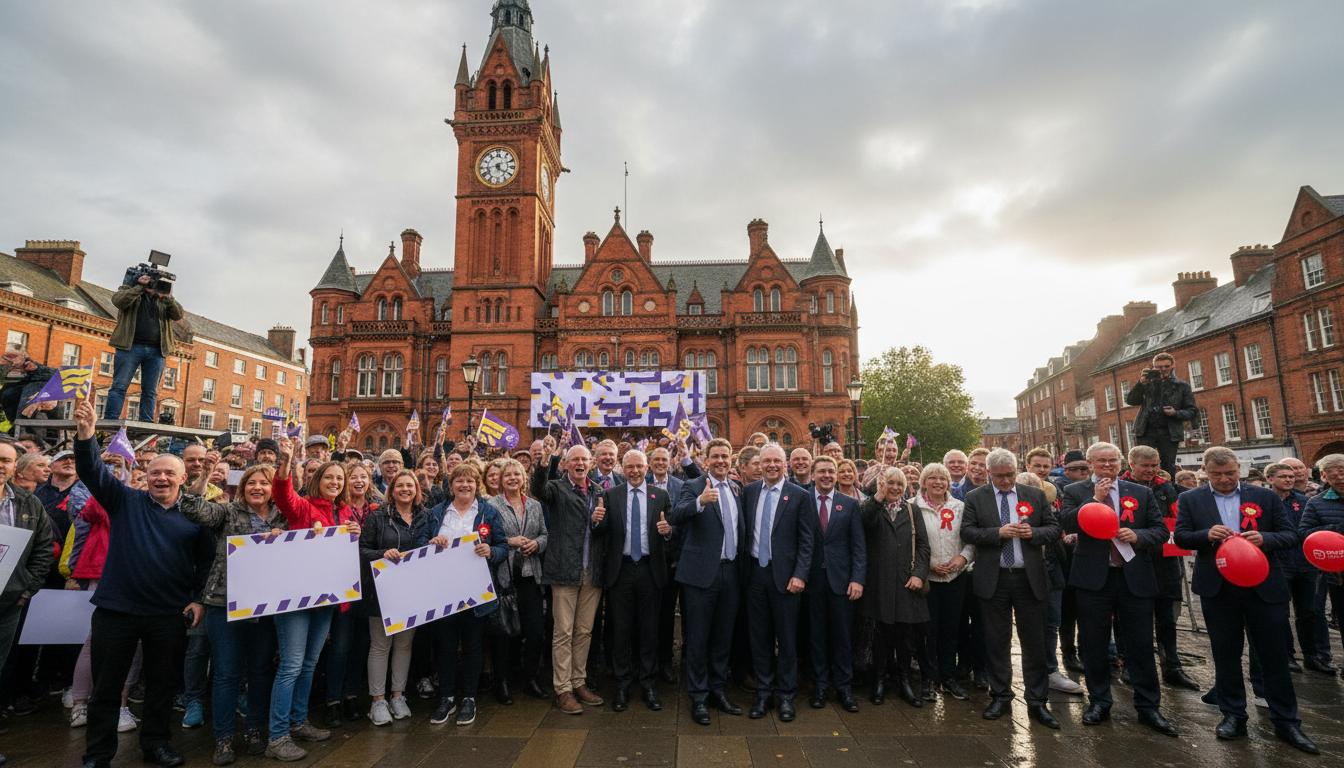
Reform UK surge reshapes England’s council map as Labour endures heavy local defeats
Reform UK surge delivers more than 1,300 councillors across England, while Labour loses roughly 1,400 local seats in a dramatic voter rebuke that reverberated in Wales and Scotland.
Britain’s local elections produced a stark political realignment as Reform UK captured an unprecedented number of council seats and Labour suffered widespread losses across municipal and devolved ballots. Voters punished the governing party over economic grievances, immigration policy and international issues, delivering gains for the anti-immigration Reform movement, the Greens, Liberal Democrats and independents. The scale of the shift raises fresh questions about party strategy ahead of the next general election and the resilience of Britain’s two-party system.
Reform UK wins hundreds of council seats
Reform UK’s candidates secured more than 1,300 municipal positions across England, turning the party into a dominant force on many local councils. In several boroughs the party leapfrogged older rivals by capitalizing on single-issue appeal and concentrated support where multiple parties split the vote. The surge gave Reform control of councils for the first time in some areas and established it as a durable presence on the British right at the local level.
One striking example was the London borough of Havering, where Reform began the week with no representation and emerged with a large majority after winning 39 of 55 seats. The party’s overall vote share in the borough was about 36 percent, but because opposition votes were fragmented Reform translated a plurality into a commanding council majority. Conservatives, who previously held all 23 of their council seats, were left with no representation there after the count.
Labour’s local wipeout and voter grievances
Labour lost roughly 1,400 local seats in the same contests, a setback that party officials acknowledged reflected public anger over living standards and policy choices. Defeated councillors reported that Keir Starmer’s name and the party’s national stance came up repeatedly on doorsteps, with voters linking local contests to broader national concerns. The magnitude of the losses prompted internal debate about tactics and messaging as Labour seeks to rebuild trust with key communities.
Prime Minister Keir Starmer responded to the results by acknowledging voter frustration and pledging to remain in post while planning a reset of priorities. He told supporters he would not “walk away and plunge the country into chaos,” and signalled that a refreshed policy agenda would be set out formally in the coming King’s Speech. The party has also appointed two veteran figures as unpaid advisers, a move intended to steady Labour’s campaign and offer political counsel.
Wales and Scotland show devolved shifts
The elections also altered the political picture in Britain’s devolved nations, with Labour losing control of the Welsh Parliament after more than two decades in power. That loss marks a significant reversal for a party that governed Wales continuously since 1999 and underscores regional dissatisfaction on issues under devolved authority, such as health and education. In Scotland, Labour’s influence declined further as the Scottish National Party maintained dominance and Labour tied with Reform in second place in vote tallies in some areas.
Those results demonstrate the multipolar nature of current British politics, where regional dynamics can diverge sharply from the national picture. Devolved assemblies now face the prospect of more fragmented chambers and new coalitions, forcing parties to negotiate power-sharing arrangements on routine policy areas. Local electorates appear increasingly willing to use devolved ballots to express dissatisfaction with national leadership while also rewarding insurgent and smaller parties.
First-past-the-post magnifies breakthroughs
Britain’s first-past-the-post electoral system amplified the effect of concentrated minority support, allowing candidates to win seats with vote shares well below a majority. In many wards candidates prevailed with 30, 25 or even 20 percent of ballots because the remainder of the vote was divided among several rivals. That dynamic enabled Reform and other insurgent forces to convert concentrated backing into disproportionate seat gains.
Political analysts say the system was designed for a two-party era and struggles to accommodate the splintered results now common in local and devolved races. The absence of proportional representation means that splintered opposition can unintentionally hand control to a party with only a plurality. As turnout patterns and tactical voting evolve, this structural feature of British elections will remain a central factor in translating public sentiment into political power.
Implications for Keir Starmer and Labour leadership
While Labour retains a comfortable majority in the UK Parliament, with 403 seats cited in immediate post-election tallies, the local rebound for rivals has intensified debate inside the party over leadership and strategy. More than two dozen Labour lawmakers publicly urged a change at the top after the losses, arguing that a new approach is necessary to win back disaffected voters. Mr. Starmer has resisted calls to step down and plans to outline renewed priorities in Parliament, but internal pressure is likely to persist.
Reform’s national parliamentary presence remains small for now, with only a handful of MPs at Westminster, yet its local foothold creates a new electoral terrain that Labour must navigate. Party strategists will need to address both material issues—cost of living and public services—and emotive topics that currently boost Reform’s appeal. The coming months will test whether Labour can translate a national governing majority into regained local trust ahead of the next general election.
Local councils face fragmented mandates and coalition politics
Across England, newly elected councils will confront the practical challenge of governing with fractured majorities or single-party takeovers that arrived via narrow pluralities. In many municipalities, Conservatives, Labour and centrist parties lost ground to a mix of Reform, Greens, Lib Dems and independents, creating an unfamiliar landscape for local decision-making. Councils may be forced into ad hoc coalitions or uneasy working arrangements to pass budgets and manage services.
For residents, the immediate concerns are pragmatic: bin collections, social care, school places and local infrastructure. Council leaders on all sides will be judged quickly on delivery and the ability to form stable working relationships. The political realignment at the ballot box has produced new governing maths that will shape everyday life in communities across England.
The election results signal a realignment in British local politics that will reverberate into national strategy and the calendar for the next general election.
