
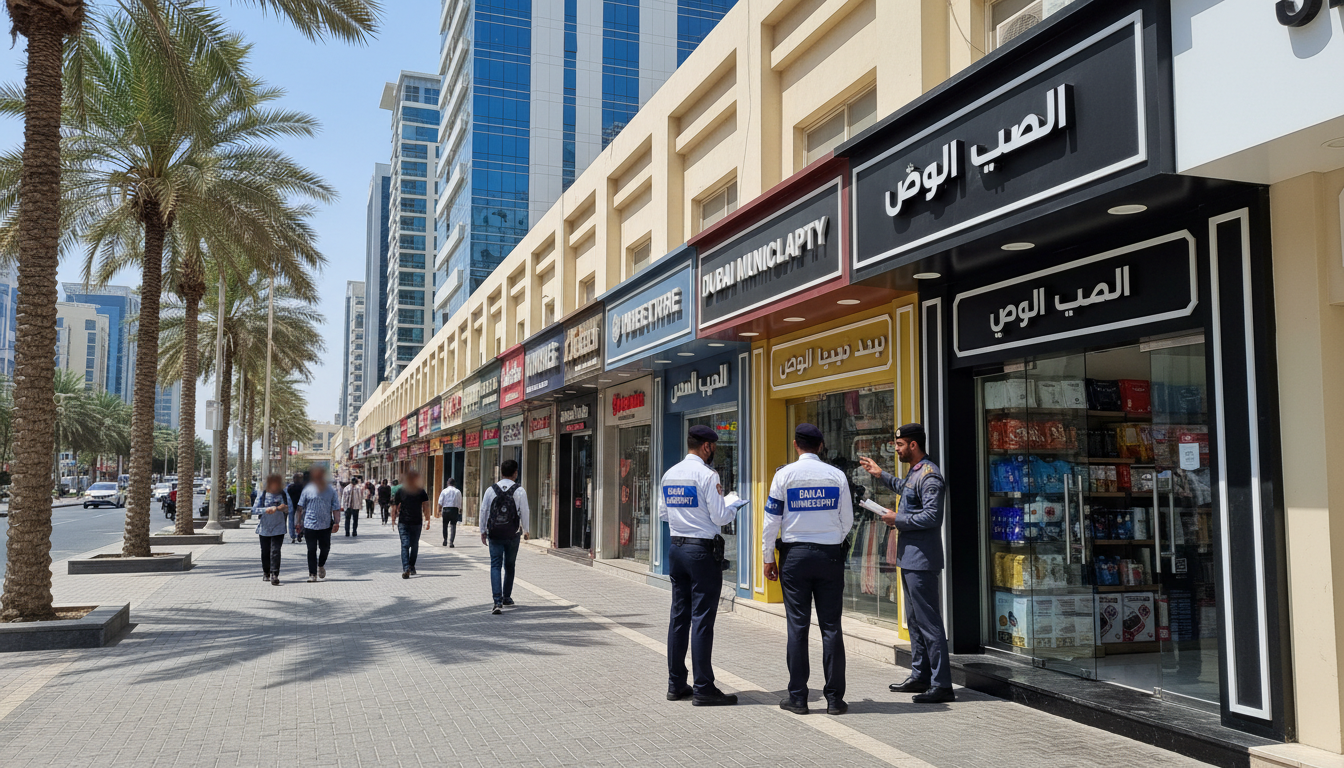
Dubai storefront signage rules tightened under 2024 technical guide
Dubai tightens storefront signage rules as Economy and Tourism enforces 2024 technical guide limiting animated displays, dimensions, projections and lighting.
Dubai’s Department of Economy and Tourism has begun enforcing stricter Dubai storefront signage standards under a 2024 technical guide, aiming to reduce visual pollution and improve traffic safety across the emirate. The new measures emphasize a single, fixed trade name per shop, ban animated or changing content, and set clear limits on size, projection and lighting for nameplates. Business owners are being asked to comply with the guide issued in coordination with Roads and Transport Authority, Dubai Municipality and Madaa Media to align shopfronts with the emirate’s urban vision.
One trade name per facade
The technical guide requires a single trade name on each storefront, prohibiting multiple names or overlapping advertisements on the same façade. This measure is intended to create visual consistency along commercial streets and reduce clutter that can distract motorists and pedestrians.
The rule also spells out that horizontal signage is required, with Arabic positioned above and English below, and only one side of the sign may project from the façade. Vertical or tall nameplates that run along the height of a shopfront are not permitted under the new specifications.
Prohibition of animated and variable content
A key restriction in the guide is the ban on content that is variable or animated, including videos and moving images, on nameplates. Authorities say this “content stability” requirement aims to limit distractions that can contribute to traffic incidents and undermine the emirate’s aesthetic standards.
Signs that change content dynamically remain regulated under separate digital advertising frameworks, but nameplates bearing a business trade name must remain static in both design and messaging at all times.
Dimensional and visibility controls
The guide sets precise parameters to ensure sign dimensions remain proportional to the height and width of each shopfront, forbidding excessive height, width or thickness that would disrupt streetscape harmony. Approved measurements must be respected to maintain consistent visual scale across retail corridors.
Lighting and brightness are strictly controlled, with permitted luminance levels and measurement methods specified in the document. Installers must use approved devices to verify brightness and avoid highly reflective white backgrounds that increase glare.
Restrictions for upper-floor offices and clinics
Specific prohibitions apply to offices, clinics and other commercial units located above the ground floor. The guide disallows placing nameplates on balconies or on external façades for premises situated above one storey, limiting exterior signage primarily to ground-level retail units.
This measure is designed to preserve architectural lines and reduce sign proliferation on multi-storey buildings, while ensuring that visual identity for upper-floor tenants is managed through interior-facing or directory-based solutions.
Permitting, inspection and enforcement role
The Department of Economy and Tourism confirmed it will issue permits for trade name signs and oversee inspections to ensure compliance with the technical guide. Inspectors will assess conformity to size, projection, lighting and content rules and take corrective action where necessary.
Authorities have called for cooperation from landlords, shop owners and sign fabricators to comply with the guide’s requirements, stressing that consistent enforcement is essential to meet the directives of the emirate’s steering committee on preserving Dubai’s civic appearance.
Alignment with Dubai Urban Plan 2040
Officials say the storefront signage measures are part of a broader push to enhance Dubai’s global image and to implement the strategic objectives of the Dubai Urban Plan 2040. The guide is positioned as a technical tool to balance commercial visibility with public realm quality and road safety priorities.
The coordination between the Department of Economy and Tourism, Dubai Municipality, Road and Transport Authority and Madaa Media reflects a cross-agency effort to standardize outdoor advertising and street-level branding in line with long-term urban planning goals.
Retailers and property managers are being urged to review existing shopfront signs and prepare for inspections, including recalibrating lighting levels and replacing noncompliant fixtures. Many are expected to consult authorized sign consultants to confirm that materials, dimensions and mounting methods meet the guide’s standards.
The Department emphasized that compliance will support Dubai’s aesthetic objectives and help reduce visual clutter in commercial districts. By enforcing static, proportionate and appropriately lit nameplates, authorities aim to preserve the emirate’s polished streetscape and improve safety for drivers and pedestrians. The department encouraged businesses to contact the relevant permitting office to regularize signs and to avoid ad-hoc decorations and overly bright lighting that conflict with the technical guide.
