
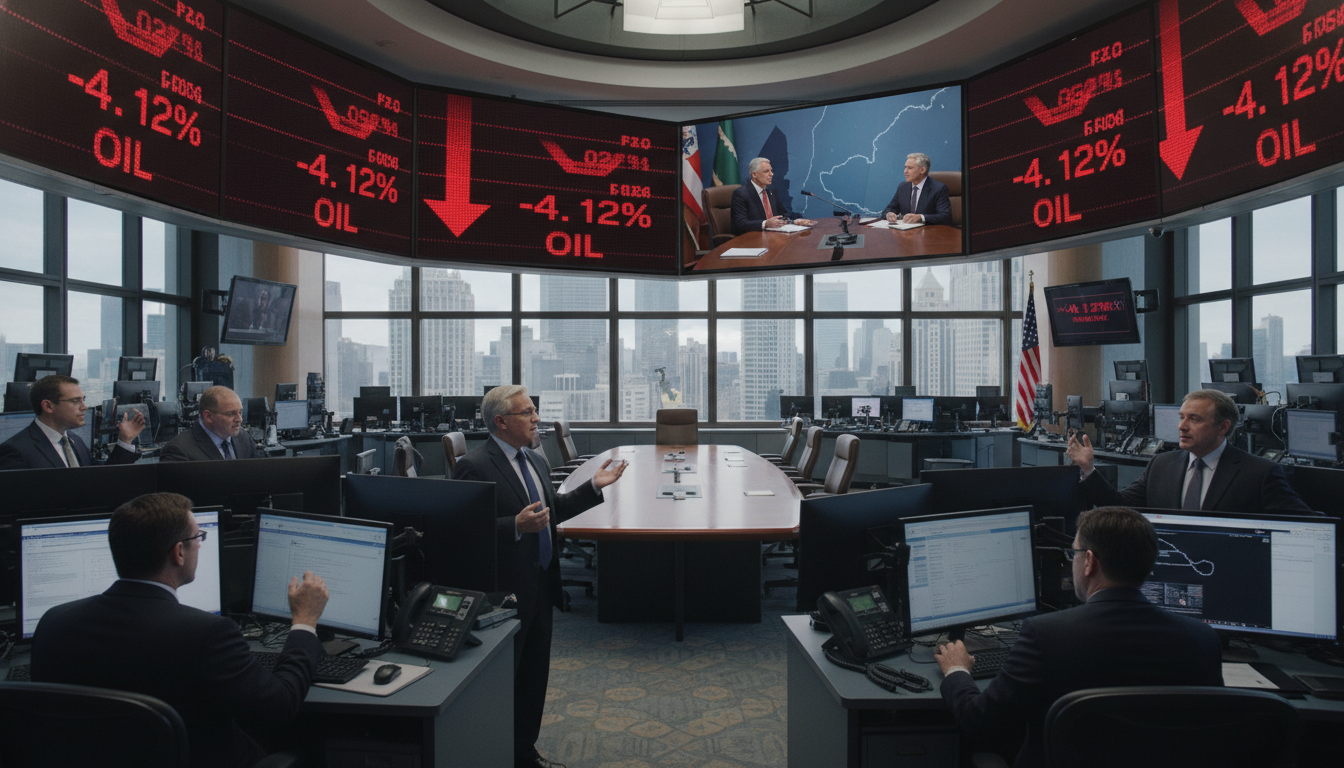
Oil prices drop over 4% to two-week low as US-Iran talks raise hopes on Strait of Hormuz
Oil prices fall over 4% to two-week lows as US-Iran memorandum talks on the Strait of Hormuz raise optimism, sending Brent to $99.10 and WTI to $92.24.
Global oil prices tumbled more than four percent on Monday, slipping to their lowest levels in two weeks amid growing market optimism that the United States and Iran are nearing a memorandum of understanding that could ease tensions around the Strait of Hormuz. The pullback was led by Brent crude and US West Texas Intermediate, which both hit session lows earlier in the day before modestly trading off those troughs. Traders cited public remarks indicating substantial progress in negotiations as a key driver of the risk-off move in energy markets. The decline narrowed the recent premium investors had been paying for supply disruptions in the Gulf.
Brent and WTI slide to two-week lows
By 08:22 GMT, Brent futures had fallen $4.44, or about 4.3 percent, to trade near $99.10 per barrel, while US WTI dropped $4.36, or roughly 4.5 percent, to around $92.24 per barrel. Both benchmarks recorded their weakest levels since May 7 during the session, reflecting a sharp reassessment of near-term supply risk. The size of the move underscored the market’s sensitivity to diplomatic developments in the Middle East and to statements from senior officials.
Market participants said the combination of headline-driven optimism and already-reduced risk premia left the market vulnerable to a sharp correction once any credible sign of progress emerged. Volatility remained elevated, and traders indicated they would watch for confirmation that talks translate into concrete, verifiable steps on the ground.
Market optimism tied to reported US-Iran memorandum progress
The slide in oil prices followed public comments by US President Donald Trump on Saturday indicating that Washington and Tehran had completed “a large part of negotiations” on a memorandum intended to reopen the Strait of Hormuz. Traders interpreted the remarks as signaling a reduced probability of further escalation in Gulf shipping lanes, which had supported higher energy prices in recent weeks. The prospect of a diplomatic breakthrough pushed investors to pare back positions that had been betting on continued supply disruption.
Analysts cautioned, however, that market sentiment can turn quickly and that verbal progress does not guarantee a final, enforceable agreement. Many traders said they would require more detailed disclosures or tangible steps toward de-escalation—such as changes in naval postures or formal diplomatic confirmations—before fully discounting the geopolitical risk premium.
Disagreement over key issues keeps uncertainty around the Strait
Despite reported progress, key disagreements between the two sides remain, including unresolved details about security arrangements and operational control in the Strait of Hormuz. Market sources noted that while a memorandum could reduce the likelihood of immediate closures or blockades, any residual ambiguity would leave room for episodic disruption. The strategic sensitivity of the waterway means even partial or temporary solutions can materially affect shipping patterns and insurance costs.
Before recent tensions, roughly 20 percent of global seaborne oil and liquefied natural gas shipments transited the Strait, making it one of the world’s most critical chokepoints. That historical flow underpins why investors have reacted strongly to any suggestion the passage might be reopened or secured under a formal arrangement.
Implications for Gulf producers and shipping insurers
A credible memorandum that lowers the risk of interdiction through the Strait would likely ease price premiums for oil originating from Gulf producers and could reduce short-term shipping and insurance expenses. Energy exporters in the Gulf could see narrower differentials on cargoes that had been trading at higher spreads due to perceived transit risks. Shipowners and insurers could likewise adjust their voyage and war-risk assessments if the security outlook visibly improves.
Still, market analysts stressed that operational and contractual frictions could linger even after an agreement is announced, meaning benefits would probably be phased in rather than instantaneous. Refiners, traders, and logistics firms will monitor implementation closely to assess how quickly flows normalize and whether storage and tanker imbalances begin to unwind.
Investor positioning and the near-term outlook for oil prices
Following the price drop, analysts expect traders to recalibrate positions amid a mix of headline sensitivity and fundamental supply considerations. Near-term oil prices will likely be influenced by any additional statements from US and Iranian officials, the pace of on-the-ground security improvements in the Strait, and routine market data such as inventory releases and refinery throughput. Some market participants warned that a failure to formalize or implement an agreement could prompt a rapid re-tightening of prices if tensions flare again.
Longer-term direction will depend on whether diplomatic progress proves durable and whether physical flows through the Strait return to prior levels. For now, investors appear to be favoring a cautious retracement that prices in better odds of a diplomatic resolution while leaving open the possibility of renewed volatility.
The oil market’s swift response to diplomatic cues underlines how closely energy prices remain tied to geopolitical developments in the Gulf, and traders say they will continue to monitor official statements and operational reports for confirmation that any reported breakthrough leads to sustained easing of regional risk.
