
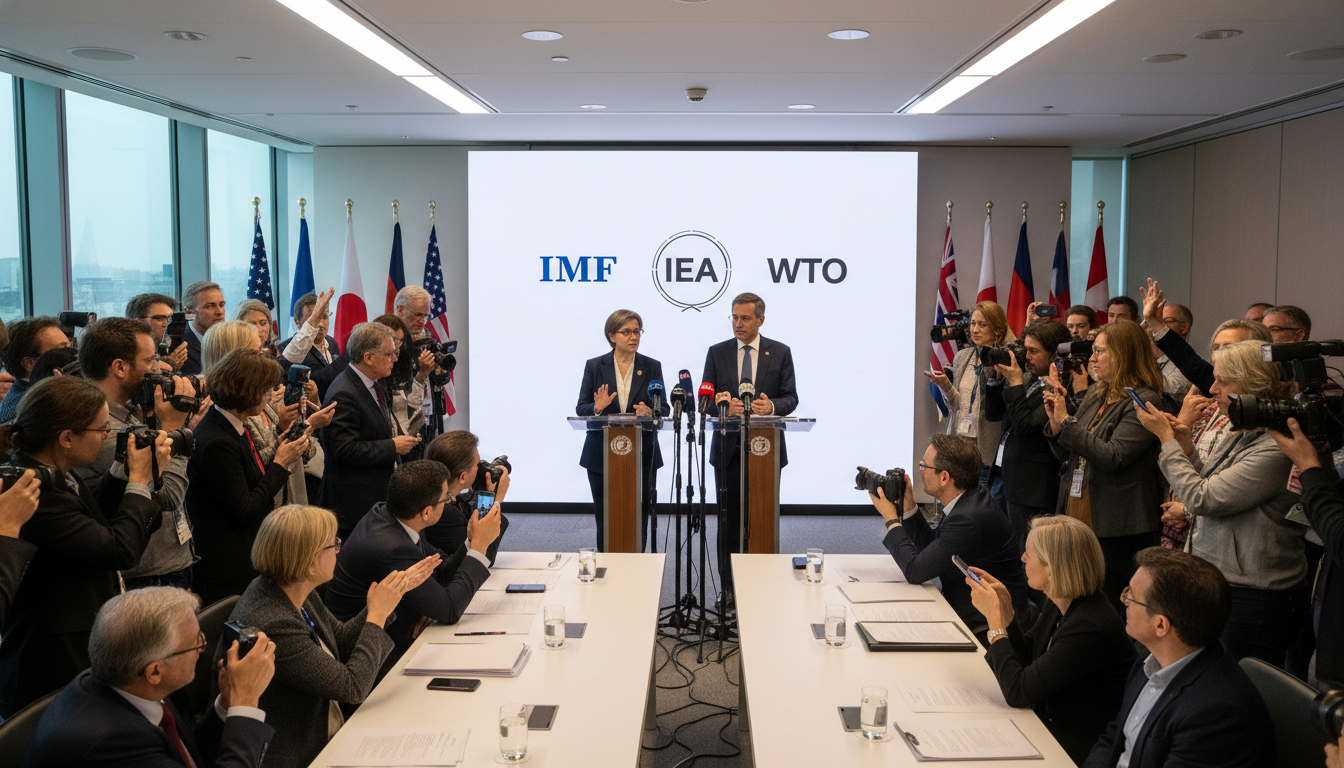
Risk of oil shortage this summer if Strait of Hormuz navigation does not return
IMF, IEA and WTO warn of an oil shortage this summer if navigation through the Strait of Hormuz does not resume, threatening global energy security and markets.
International agencies issue joint warning
A trio of international bodies — the International Monetary Fund, the International Energy Agency and the World Trade Organization — issued a joint statement raising the prospect of an oil shortage this summer. Their leaders said a significant drop in seaborne shipments through the Strait of Hormuz has accelerated the pace at which global crude stocks are being consumed. The joint alert links the inventory decline directly to the disruption of shipping through the vital Gulf waterway and signals growing concern about near‑term energy security. Officials warned that unless maritime traffic normalises swiftly, market strains could intensify ahead of the peak summer demand season.
Record drawdown in global oil inventories
The agencies reported that global oil inventories are falling at an unusually rapid rate, driven in large part by the loss of cargoes that normally transit Hormuz. This record‑pace drawdown reduces the cushion available to absorb supply shocks and increases the potential for price spikes. Lower stock levels also limit the ability of refiners and national authorities to manage regional imbalances without tapping emergency reserves. The statement stressed that continuing depletion through the late spring and early summer would leave markets particularly exposed.
Shipping disruptions tied to Strait of Hormuz traffic
Maritime analysts and the three organisations linked the shipment shortfalls to disruptions affecting vessels that use the Strait of Hormuz, a chokepoint for a sizable share of the world’s seaborne crude exports. When transits slow or are diverted, cargoes take longer to reach consuming regions and some shipments may be cancelled or rerouted. Extended voyage times and insurance costs can further reduce delivered volumes and raise logistical costs. The cumulative effect has been a material reduction in the flow of oil that markets had been expecting for the season.
Market volatility and broader economic implications
Traders already sensitive to supply tightness could react sharply to continued shipments losses, amplifying price volatility in global oil markets. Higher fuel costs would feed into inflationary pressures, weighing on household budgets and business operating costs across importing and exporting economies. The IMF highlighted that sharp energy price movements can slow economic resilience and complicate monetary policy choices for central banks. For the Gulf region, prolonged uncertainty could disrupt refining margins and export revenues even as governments consider short‑term measures to stabilise markets.
Mitigation measures under consideration
Policymakers and industry participants are weighing a range of responses to ease short‑term pressures and restore supply confidence. Options cited include coordinated releases from strategic petroleum reserves, temporarily increasing shipments via alternative corridors where capacity allows, and accelerating cargo insurance and security arrangements to facilitate safer transits. Diplomacy and efforts to restore regular navigation through the Strait of Hormuz were emphasised as the most durable solution to prevent a supply gap before demand peaks. The agencies urged transparent information‑sharing between producing and consuming countries to reduce uncertainty.
Timetable and urgency before Northern Hemisphere summer
The warning underscored a narrow window to address the disruption ahead of the Northern Hemisphere’s summer demand peak, when consumption typically rises for transportation and cooling. Officials noted that delays in restoring normal shipping patterns would leave little time for inventories to rebuild before the busiest months. Markets respond quickly to forward‑looking signals, meaning that even the expectation of constrained summer supply can alter trading dynamics today. The agencies called on stakeholders to act promptly to avoid a scenario in which physical shortages and financial market turbulence reinforce one another.
Urgent coordination among energy producers, shipping operators and international institutions will be key to averting a supply squeeze, the statement concluded, and the coming weeks will be critical in determining whether markets can navigate the risk without major disruption.
